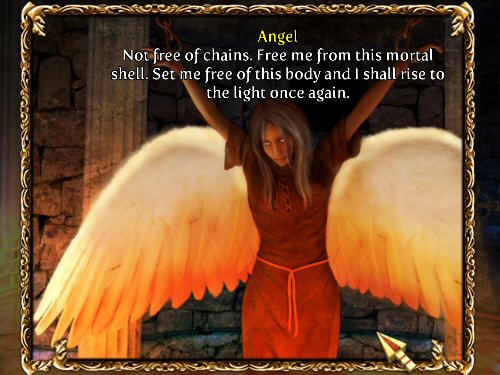
The premise of Where Angels Cry caught my eye while I browsed our Gamers Gate press account for things to play. A missing monk and a religious medieval mystery surrounding a monastery in the Alps require your presence and sleuthing skills. You take on the role of a monk, secretly sent in to investigate the disappearance of Brother John and this statue which seems to be crying blood.
The game takes the form of a point and click adventure with hidden object mechanics. However, while you are tasked with finding items that blend into the backgrounds, you are never given a proper list of what to find. Once you find your initial personal items, you travel to the monastery.
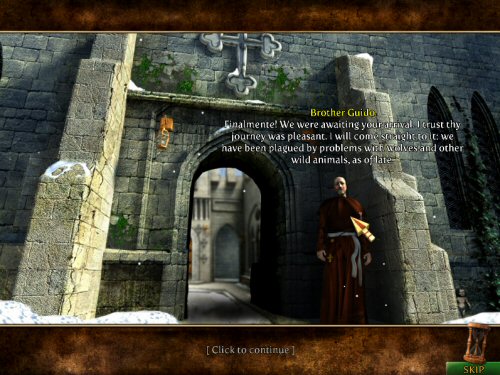
Upon your arrival, you are greeted by monks who request your help in their menial tasks. You will be asked to help in the garden picking tomatoes and planting vegetables, helping in the kitchen with dinner preparations, care for the horses and so on. I did a lot of going back and forth between scenes to find the items I needed or try to figure out what I was missing. I managed well without hints for a while, since some things are self-explanatory.
For example, the well is clearly missing a bucket and we need to water the garden. The obvious choice is to look around for a bucket. Not so obvious is discovering that the mechanism is frozen solid and we need to find a way to melt the ice, by bringing a source of heat to it.
While in any area, you can click the hint button and the arrow will point you to where you need to go, but it won’t show you directly what item you need if you’re in the right area to pick it up (much like any hidden object game, which will circle or flash the object you are looking for). At some point I had to find someone’s missing tools, but had no idea how many there were and what they could be, so I basically went around clicking anything I could that looked like a tool.
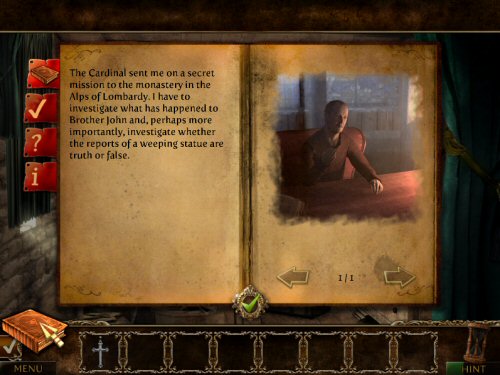
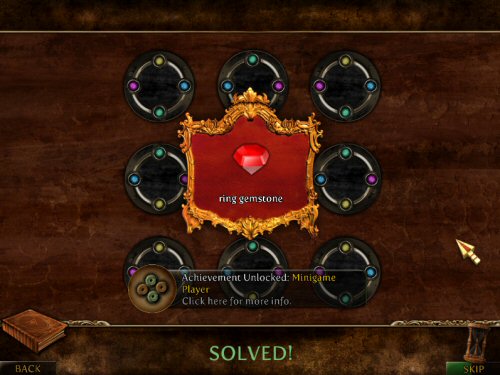
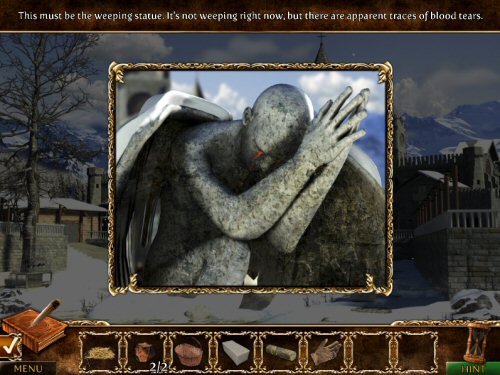
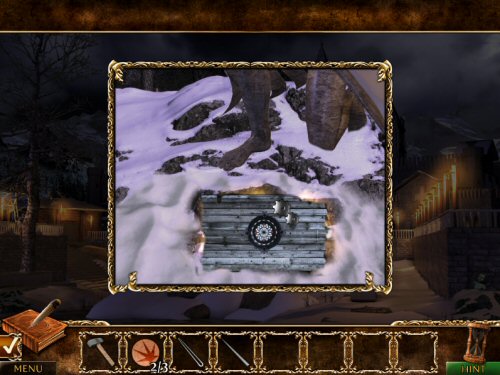
As you talk to people and discover things, your journal will fill up with information and illustrations. Clues that you need to solve puzzles will sometimes be found in letters or drawings that you find in your adventure. The task section of the journal will show you what is active on your to do list, and clicking any of these topics will reveal more hints about how to progress with each action.
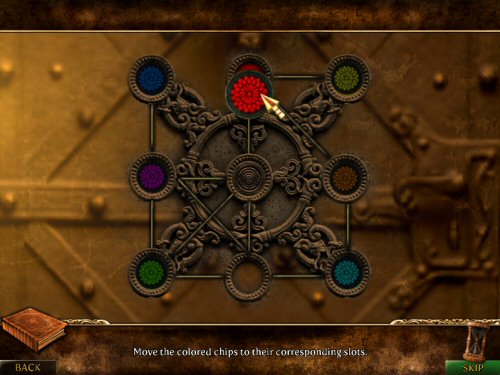
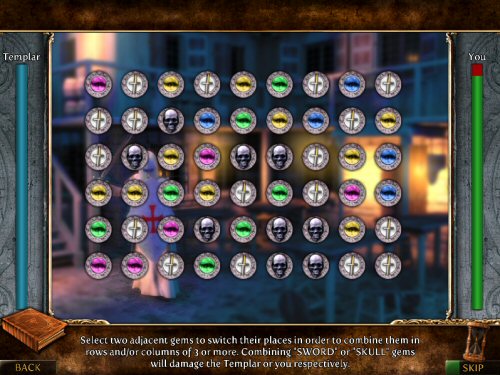
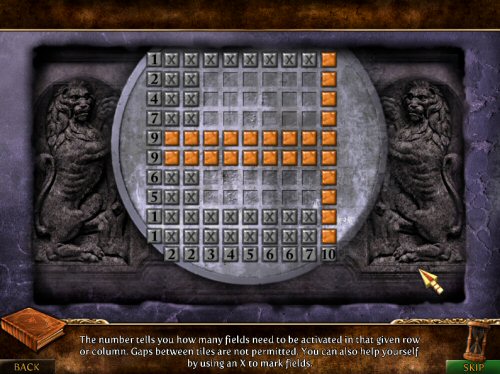
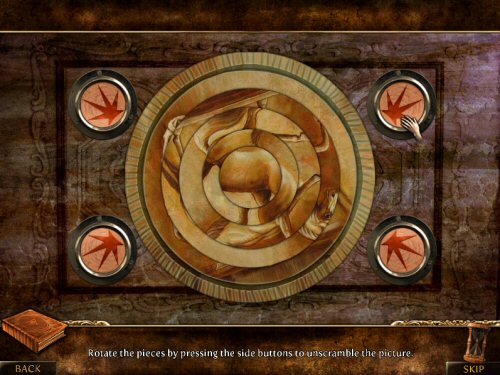
Aside from exploring, talking to people and finding things, you will discover plenty of puzzles and mini-games. Several of the puzzles involve finding pieces and placing them in the appropriate slots, moving pieces to certain positions, but others are more creative and rely on observation skills, and of course, finding items to use them in the right places. I particularly liked the puzzles with a grid where every row and column had a number and you have to calculate the position of the squares (a bit like Minesweeper but not quite). At some point there is even a sword fight with a Knight Templar where you play something like Puzzle Quest: match three or more skulls or swords to deal damage before you run out of health.
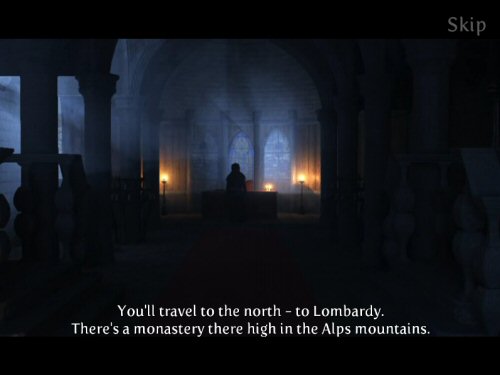
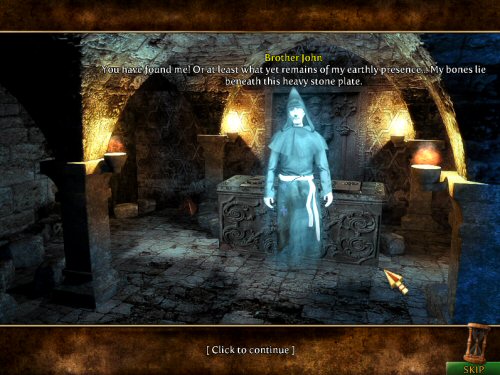
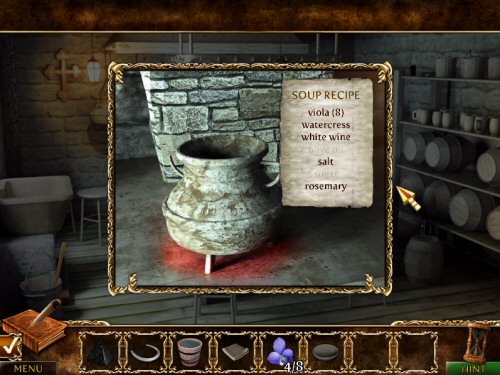
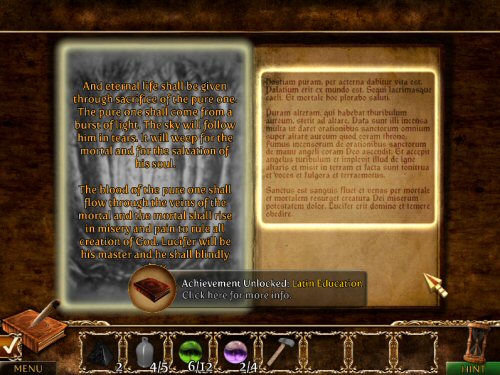
On a more technical aspect, the music was pleasant and some of it quite magical (Harry Potter style, if I may add). The sound effects were appropriate and I was pleased to see voice acting throughout the adventure – even if some of the voices sounded a bit silly. The scenarios are wonderfully detailed, and animated sequences were a nice added touch, with the 3D cinematics adding a little extra to the storytelling. Speaking of story, that is indeed the strongest point in the game. I really enjoyed it, and even if I finished the game under three hours, it was interesting to see how the mystery unfolded. The ending could have used a little something more, though.
Overall, I am pleased with Where Angels Cry. Don’t think of it as a hidden object game though, as it’s truly a point and click adventure with a good story, plenty of puzzles to be solved, collectibles to find and achievements to unlock.