
Reviewed by Rebecca Wigandt
I promised myself that when I wrote a review for Killing Floor I wouldn’t mention Left 4 Dead more than three times. I’m saying it up here as a disclaimer, so you can count with me as I go along and keep me honest.
Tastes change when you get older. Remember how much you hated the taste of whisky when you were six and your father would give it to you at parties to make you quiet down? Isn’t it ironic that, at 30, you can’t get enough of the stuff? No? Just me?
Anyway, I’ve always had an ambivalence about shooters, and while I wouldn’t say I never played them, they became games of last resort for me on the PC when there wasn’t a great RPG or strategy game to hold my attention. I do remember the dawning days of Wolfenstein 3D and the host of related imitators, then Doom, and so on. In those days, though, an FPS was largely a one-player affair; it wasn’t until Doom that you really had the specs for a LAN party on something like that, and even then, it wasn’t until Duke Nukem that my gaming friends and acquaintances were regularly playing in anything beyond a 1P context.
The advent of multiplayer killed a lot of my enjoyment of FPS as time went on. Originally, the emerging genre interested me as a showcase of evolving graphics technology and the increasing sophistication of real-time gaming; from a pure entertainment perspective, I enjoyed pitting myself against increasingly smarter AI, tricks and traps, and immersing myself in the menacing and increasingly vivid game worlds.
FPS gaming very quickly became more about the multiplayer experience, though, and increasingly the single player experience was visibly deprioritized in level design and complexity of play. Plenty of titles barely offered a single player experience, and when they did, it was often little more than a cut-your-teeth training ground for the LAN/online play where we were expected to spend most of our time.
Insert snide remark about girls not liking competitive play here. Yeah, I know. I tried, though, I really did. I went to dozens of LAN parties with endless deathmatches, and while it was fun from time to time (certainly collecting sound clips for funny .RTS files added to the experience), it got increasingly less friendly. The language of the culture became increasingly about being abusive and denigrating to those who didn’t have 18 hours a day to get as good at repetitive hand motions (supply your own innuendo here). Game design started to appear almost formulaic- the same configuration of pistol, shotgun, something rapid-fire, rocket launcher and sniper weapon dressed in different graphics. Yes, it was a formula that worked. Yes, it sold millions and spawned an entire previously non-existent culture of credible competitive gaming. But I was turned off. I like competing with my friends, but I like cooperating with them more. We had the most fun during the FPS revolution playing Quake 3 in team deathmatch and stacking the odds against us with dozens of bots. We had fun coordinating strategy, watching each other’s backs, getting plenty of action blowing stuff up, and 13-year old boys weren’t cursing at us over crappy voiceover technology.
There hasn’t been a ton of PC shooters in recent years that fostered both cooperative play AND pitted the participants against an external (read: game-generated) adversary worth dealing with. Games like Team Fortress introduced the concepts of player specialization (classes) and integrated tactics, but were all still essentially a contrived sort of virtual football with rockets. Mostly, I wrote off the idea of a good cooperative shooter until Left 4 Dead (one!) came along. Despite its limitations, I fell in love; here, at last, was my chance to get together with some friends and impress everyone with my extensively useless knowledge of small unit tactics. Imagine my joy at being able to direct a squadmate to pop a corner, and not for the purpose of shooting another friend in the face! There was the ultimate in trendy adversaries, the zombie, in all their messy glory. The faceless hordes were overwhelming, the specialist zombies were maddeningly cunning, and the various difficulty levels progressively ramped up the intelligence and strength of this foe, making a cohesive team increasingly essential to survival.
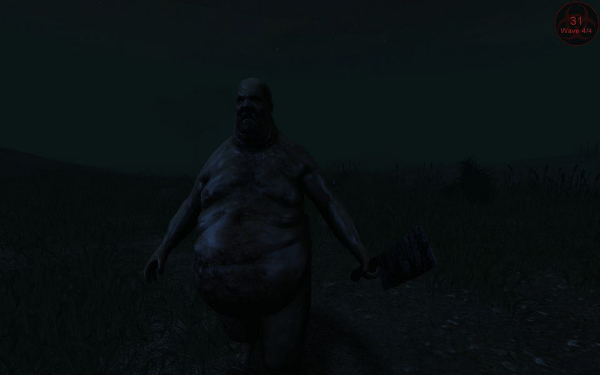
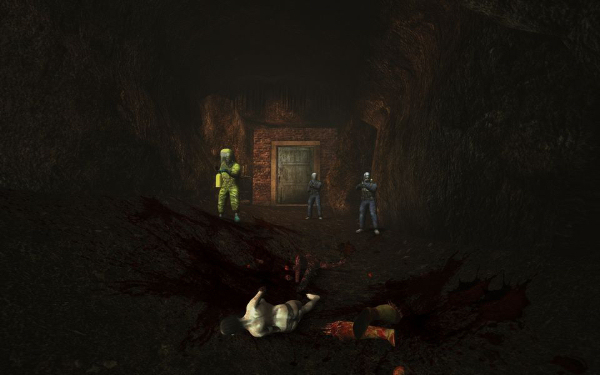
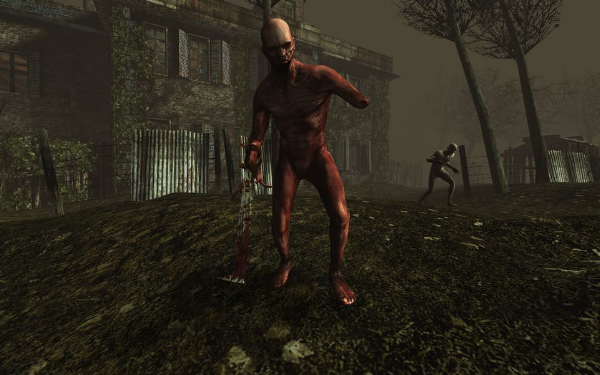
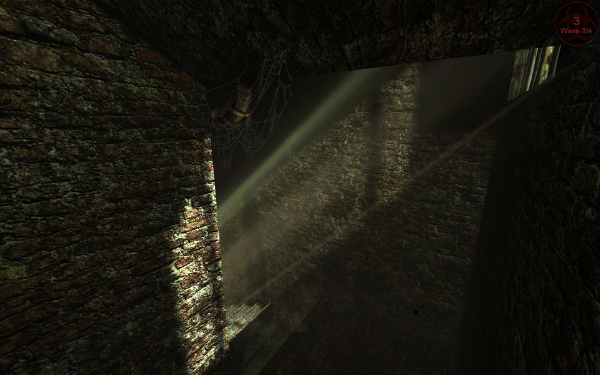
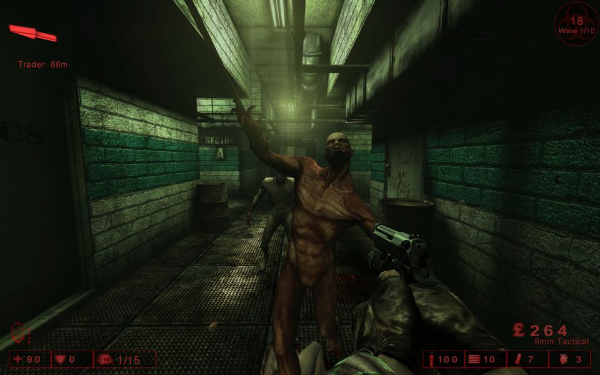
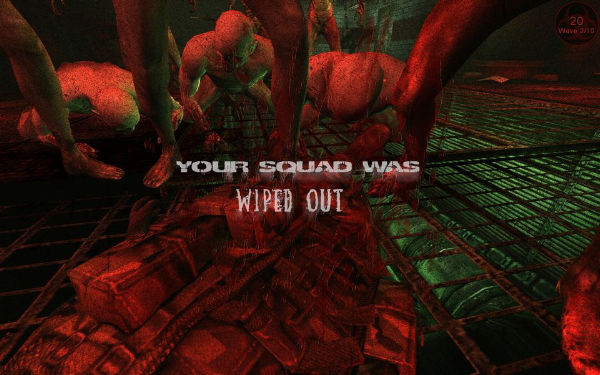
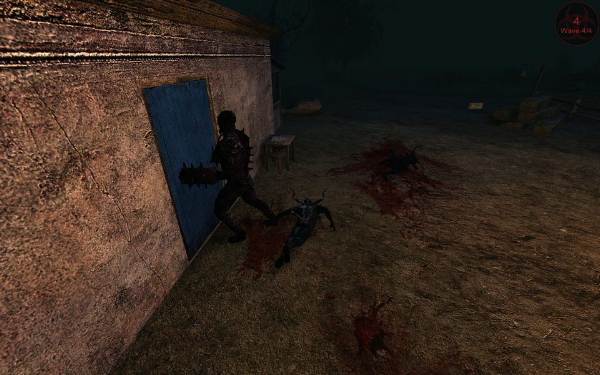
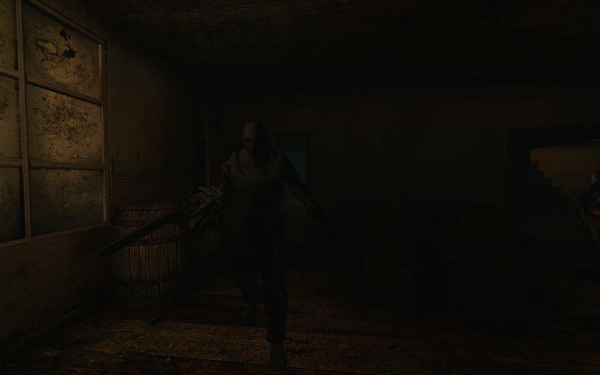
Enter Killing Floor by Tripwire. Billing itself as a “survival horror” game, Killing Floor is clearly riding the tail of the rising star of “zombie shooters,” but has a feel and gameplay style of its own. Where L4D (two!) emphasizes resource management, scarcity, coordination of observing the environment and compels the team to stay in (forward) motion, Killing Floor places a greater focus on rapid acclimation to the terrain, identifying semi-permanent strategic positions, and coordination of firepower. The admittedly simplistic plot of Killing Floor depicts a Great Britain devastated by a Resident Evil-flavoured monster epidemic. Foes range from hordes of traditional “clots” that advance on you en masse to grapple and immobilize you to huge Skrakes with masks and chainsaws to Flesh Pounders who are just humongous, unfairly durable heaps of gross muscle and sinew in, I think, either some kind of powered exoskeleton or really strange fitness gear. There’s eight kinds of foes, including the Patriarch who greets you at the end of each series of waves of attacks with a big gun and stomach tentacles, and who would really like to have a word with you about what you’ve been doing.
If it sounds familiar, it’s because Killing Floor began life several years ago as a full-conversion mod for Unreal, and continues to use Unreal technology in its stand-alone commercial version on Steam.
Gameplay is about surviving several waves of attacks- as set by your ‘game length’ preference, going up to 11- of monsters whose numbers are determined by the size of your team. You always know how many are left in each wave, and how many waves are left, which can impact your management of ammunition and purchases from “the trader,” who appears for a brief period of time (depending on difficulty level) between waves to sell you additional weaponry and replenish your stocks of ammunition and body armor. Additionally, each team member is always equipped with both a medical injector and a welding torch that replenish their supply over time. Sadly, the game does not incorporate the humorous consequences of accidentally using the wrong one at the wrong time. The injector can be used to heal yourself or, more energy-efficiently, a teammate. The welder can be used to seal closed doors, preventing passage, and maintain the strength of those barricades as enemies batter on it.
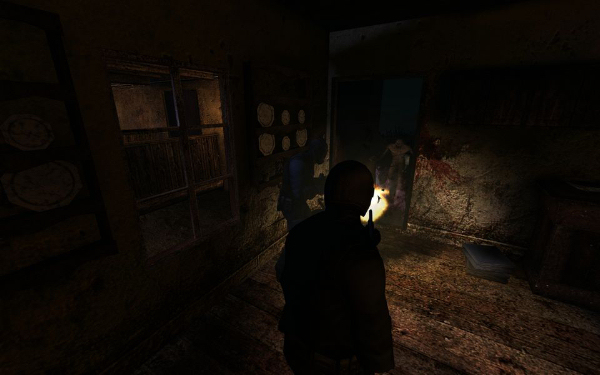
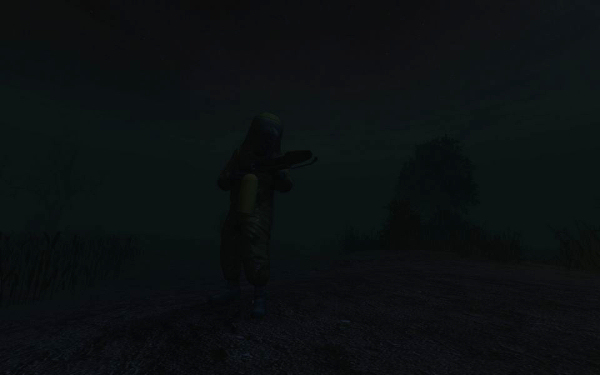
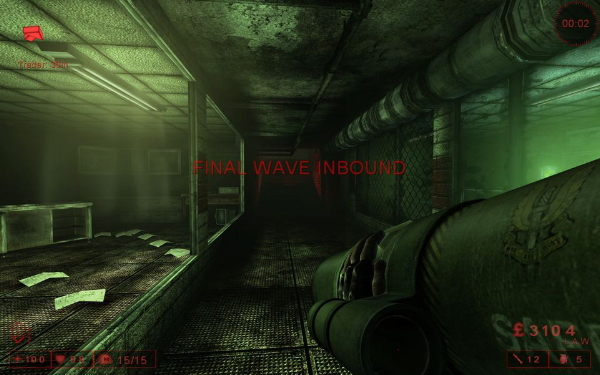
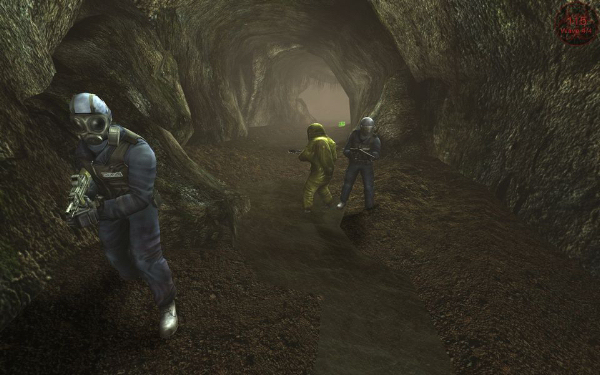
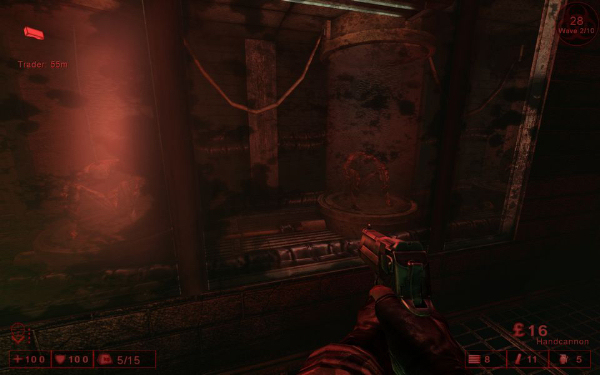
There’s a number of weapons available, both standard fare and some refreshing variety- two sorts of semiauto pistols, two sorts of shotguns, a bullpup assault rifle (with an AK-47 on its way in the upcoming expansion), a flamethrower, a powerful scoped crossbow ala Half-Life 2, and a thoroughly impractical and devastating LAW rocket launcher. There’s also a surprising variety of melee weapons- a tactical knife, machete, axe, chainsaw, and (forthcoming) katana, all with a different balance of speed, striking power, and reach. Some of my less subtle friends have particularly appreciated the variety (and practicality) of melee weapon offerings, something usually given short shrift in shooters. It’s also worth mentioning that both the 9mm tactical and .50 cal pistols can be two-fisted (never mind the logistics of firing a pair of .50 cal handguns one-handed). I don’t prefer this, though, for reasons of gameplay that I, as something of a firearm purist, find quite refreshing (and unique) about Killing Floor: there is NO aiming crosshair, or even the option of one. All aiming is done by use of either the weapon object’s own iron sights or scope or pure LOS if you’re shooting from the hip.
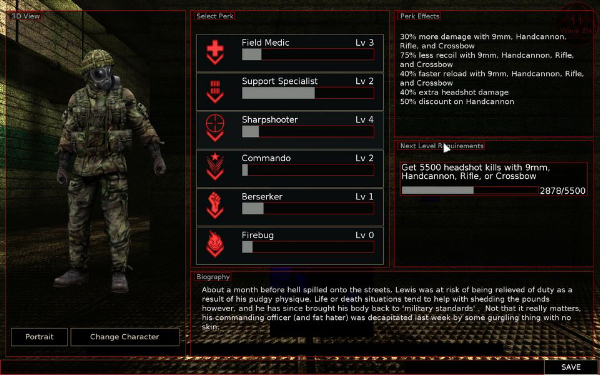
Another unique feature that’s been particularly popular- and a clever incentive for frequent replay- is the system of “perks” that each player can accumulate on their accounts. All your actions throughout single and multiplayer play- inflicting headshots, using certain weapons, healing other players, welding doors, etc.- are tracked in a sort of cumulative experience system that carries across games and raises the levels of various perks- Field Medic, Sharpshooter, Support Specialist, Commando, Berserker, and Firebug. At the beginning of each wave of a game, you may choose to activate the benefits of a given perk- increased damage resistance, for example, or greater damage with a favored weapon- for the duration of that wave and switch afterwards if you like. This system has been quite well-received amongst the people I’ve played with, as it rewards and reinforces our specialized styles of play and make each of our strong points increasingly valuable to a well-balanced team.
Most of Killing Floor’s shortcomings stem from its simplicity of design, and they won’t bother everyone equally. There’s absolutely no coherent plot, though there’s the thin veil of one in the text descriptions accompanying each map. There’s no sense of progress or meaningful continuity between each game session: gameplay is a simple flowchart of pick a map, fight off a wave, go to the trader, repeat for each wave, fight patriarch, load another map. The in-game character voiceovers are clever, situational, and often mildly amusing, but are extremely limited (having, as far as I can tell, a single voice actor) and get repetitive quickly.
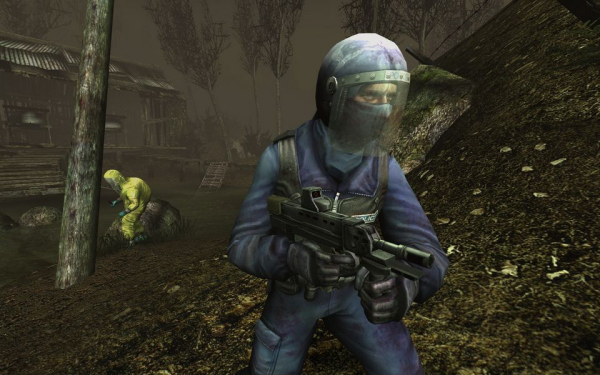
Despite having about a dozen characters to choose from, there isn’t a single female character in the offerings, nor is there evidently any intention of ever introducing one (despite already having female voice actress talent with the trader), which is a humongous turn-off for me, especially with the absence of any kind of plot that would specifically exclude female combatants- British Metro Police and Army personnel, who form the bulk of the character models available, all have female participants in their real-life counterparts.
While we’re on the subject, and since you’re already here, the ‘clever’ in-game voice quips are rampantly misogynist. There isn’t much the trader says that doesn’t compare guns to phalluses, or to characterize herself as anything other than sublimating her sex-crazed personality (“I like the big ones, don’t you?” and “come and get me, boys” really grates after hearing it twenty times). Likewise, the female monsters are brazenly sexualized (why didn’t any of the male monsters both lose all their clothing and have their secondary sex characteristics enhanced?) to the point of grotesquerie. The straitjacketed, deformed, mostly unclothed Siren is mocked by the male character voices for being unappealingly ugly, rather than being able to make your head explode, whereas the distinctly male and equally unpleasant-looking Bloat is simply admonished to “mind that bloody great knife.” The vocal climate of the game is so cheerfully sexist that I typically turn the in-game commentary off out of irritation.
The core concepts are also pretty simplistic: find the two or three really good defensible positions on each map (anything that allows more than two points of approach is pretty much suicide from Normal difficulty upwards), go to the closest one, and dig in. The difficulty levels ramp up almost exponentially, creating a pretty sharp skill curve- it took me more than a week to convince my usual teammates to play on something more challenging than Beginner; the lowest level was pathetically easy for them, but Normal was virtually unplayable until they’d accrued at least a level or two of buffs from their pet Perk.
While Killing Floor offers a solo mode that’s actually playable, it’s a very different experience- the nature of having to cover multiple avenues of attack as a single person makes solo play much more about run-and-gun than multiplayer, and as such the mindset trained in single-player mode doesn’t prepare one very well for multiplayer tactics beyond giving you the essential familiarity with the maps.
Killing Floor will set you back $20, with a DLC pack of four more (male) character models running $2. A further expansion, purported to be free, will add the aforementioned AK-47 and katana to the weapon offerings and a new map. Having apparently listened to the loud voices of the Steam players community that continued game support and expansion is a strong expectation, Tripwire has unofficially committed to numerous further expansions with added content, including a rumoured campaign-style “story mode” of play. No mention of female models, though. Just so you know. In case I haven’t mentioned it already.
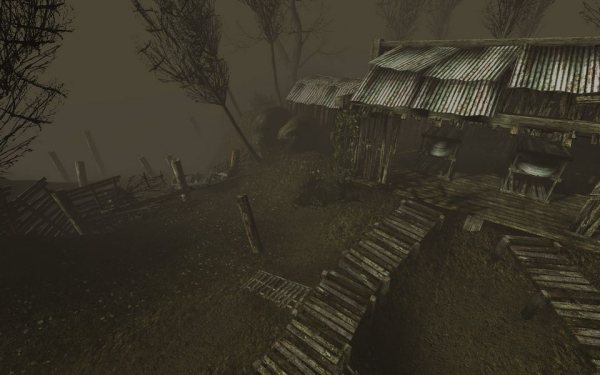
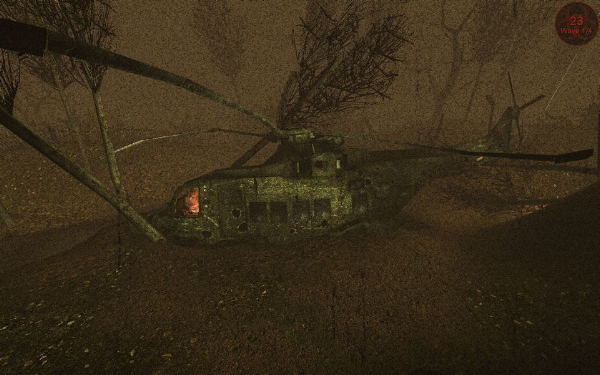
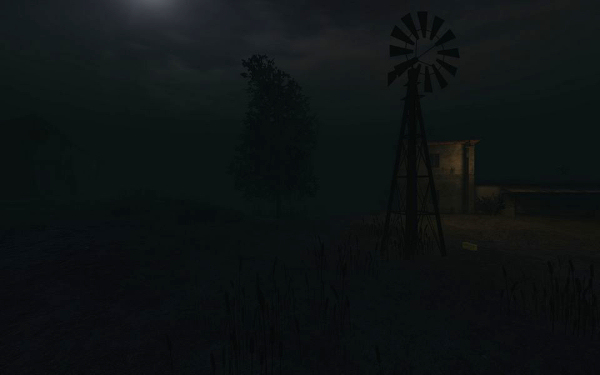
The price-point is just about perfect- the graphics are atmospheric, but not cutting edge (as a consequence, though, they’re pretty performance friendly, running smoothly at full-tilt on my machines that have a 9600-series graphics cards and upwards). Cooperative play has been very specifically and carefully considered on every level of game design, albeit for a somewhat simple game experience. There’s more than enough replay incentive to justify the $20 pricetag, but probably nothing higher than that barring some really game-expanding DLC.
Oh, look! Here I am at the end, and I’ve still got one mention of Left 4 Dead to go.
…and there it went.