
Time-management seems to be a hit concept for creating casual games. Pioneers such as Diner Dash and Cake Mania have inspired several other titles by using the same simple mechanics of performing tasks in a specific order, to make efficient use of time. Passport to Perfume also follows this cookie-cutter model, but adds a few other elements to the gameplay.
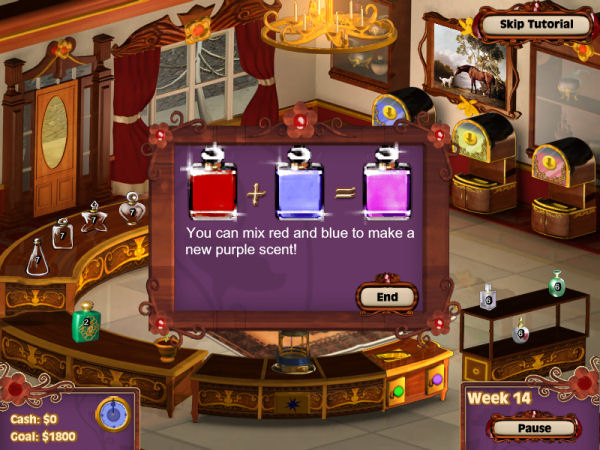
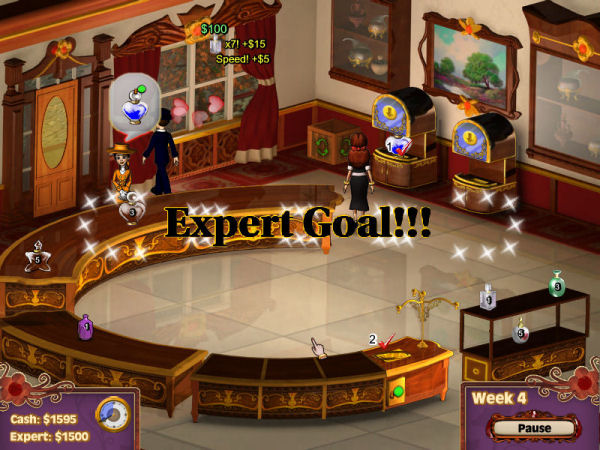
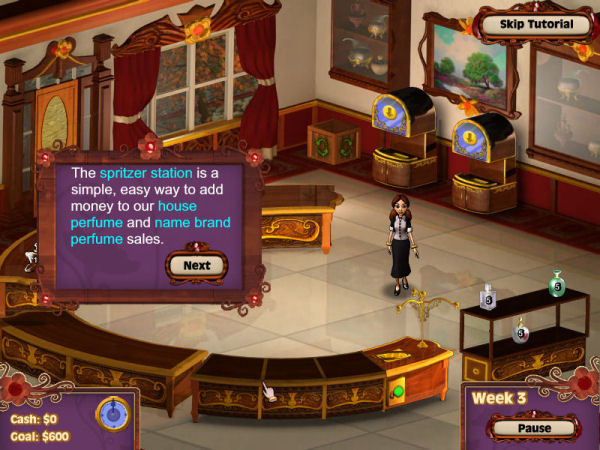
In Passport to Perfume you play as Sophia, a perfume maker and shop owner who is searching for the long-lost recipe to the perfume used by Marie Antoinette herself. Most of the game takes place in the perfumery, where you control Sophia and manage your customers’ requests. This part of the game is very similar to Cake Mania, since you must look at the customers’ thought bubbles to see what sort of perfume they want. They will ask for specific bottle shapes, perfume colors, and little extras such as glitter or a colored spritzer.
The shop has a few different areas: the perfume stations, the counter with all the empty bottles, a shelf with decorative bottles. As you progress, more becomes unlocked, such as extra perfume stations, the glitter machine and the spritzer station. All of this makes it even more difficult to coordinate customer requests, especially when you get new ingredients to make new perfume bases.
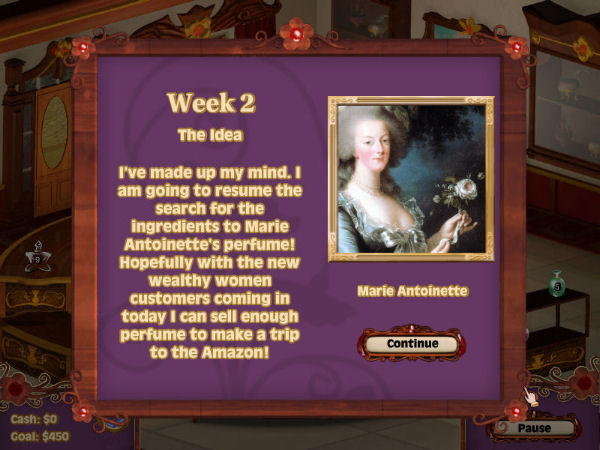
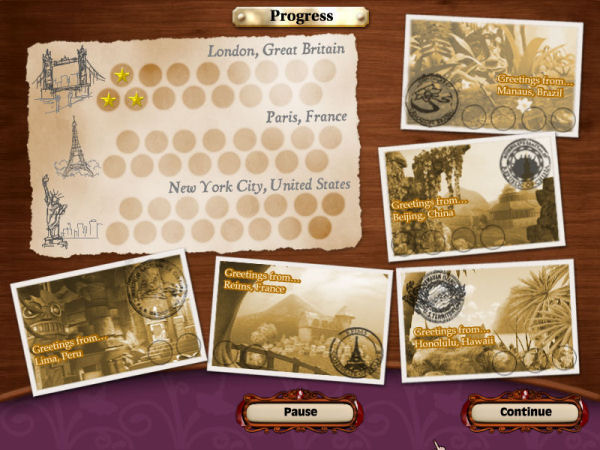
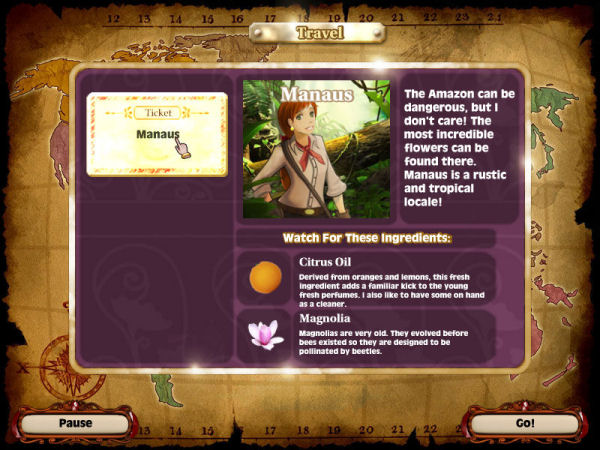
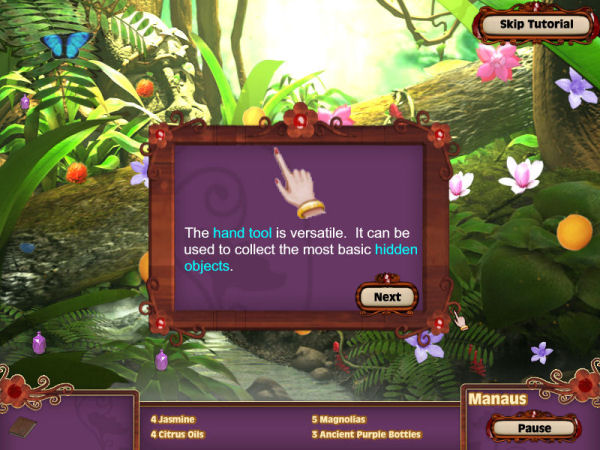
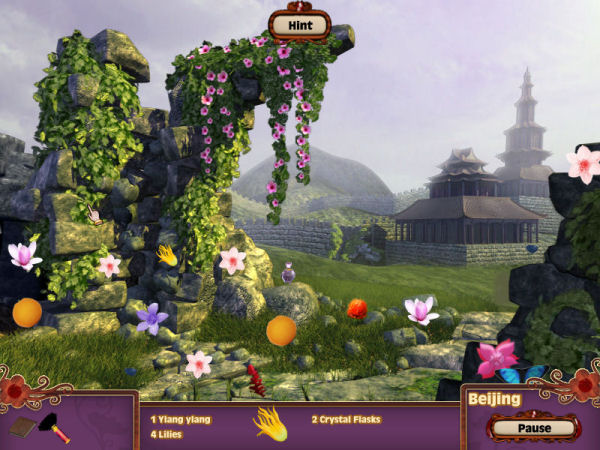
Every so often, Sophia will leave the store to travel the world and look for ingredients. This takes you to an object-finding game with a few modifications. Usually, you point and click to find whatever items are on your list, but there are also tools you must use to uncover hidden things. For example, a brush to remove dust and leaves, and a shovel to dig up some dirt spots. This is usually pretty straightforward and poses no challenge, but sometimes I found that particular dust spots would completely blend in with the background color, making it a very subtle change. The solution is to either brush the entire screen or use a hint. Regardless, you won’t really get stuck finding that last item.
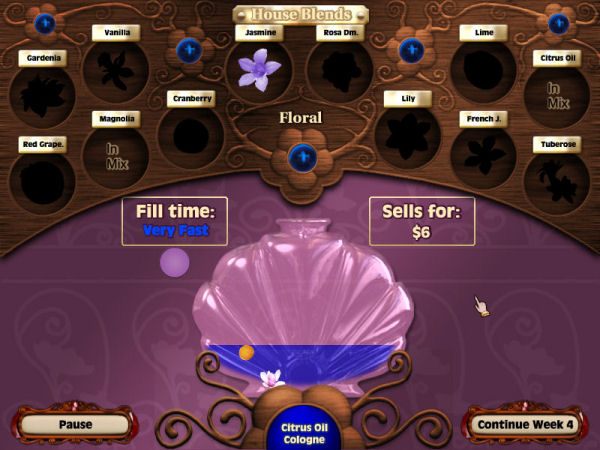
With the newly found items, you can create new perfumes. Depending on the type (Asian, Floral, Woody) and amount of ingredients you add to the flask, the perfume will be faster or slower to create and will come in a different color. The perfume stations at the store will them allow you to mix colors to create new ones (for example, mixing red and blue makes a purple perfume). When the customers start asking for color mixes, all hell breaks lose… so to speak. It becomes very challenging to get everything running smoothly, picking up the right bottles and placing them on the right stations. It’s really easy to mess up the color mixes, especially when you are carrying two different things. It’s also a bit annoying how you have to press the respective button on the machine to make it work, instead of just clicking on it.
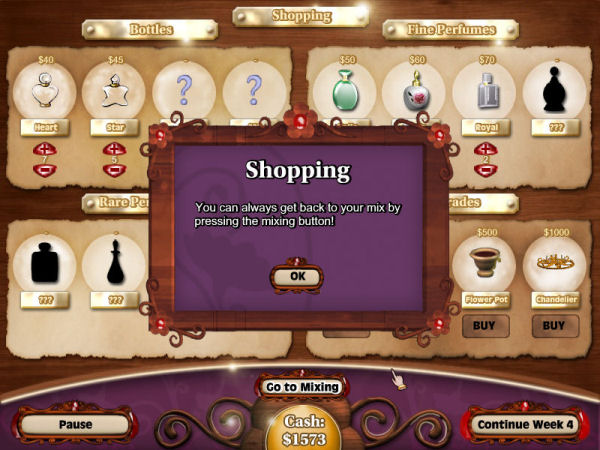
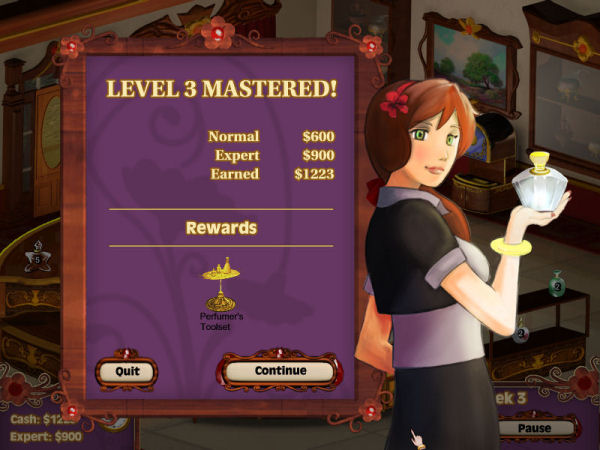
As you progress through the levels, the money you earn can be spent on upgrades, but you must remember to purchase stock first. Without stock, the customers will just leave since you can’t make what they request. Make sure you have at least 6 of each type of bottle first, then worry about purchasing upgrades such as speed for Sophie, upgrades for the machines or decorations for the store which help making the customers happy longer.
Even though Passport to Perfume isn’t innovative and borrows elements from other successful titles (even the travelling map reminds me of Chocolatier), the mix works well with the theme. My only complaint is probably with the presentation of the story, since it does seem very interesting. However, there are times where you have no idea who exactly is “speaking” anymore, since all you have is text (no voice) and no indication of who is saying what. But with 48 stages of increasing difficulty and 15 hidden item levels, plus the freedom of mixing and matching ingredients to create new fragrances, there is plenty of time to be well wasted in this game. If you are a fan of casual time-management games, you will definitely enjoy it.
Special thanks to Oonagh Morgan and Playfirst for providing a copy of this title.