
Written by Brandy Shaul
In our sector of the gaming industry, the mention of Konami normally elicits thoughts of Metal Gear Solid or Hideo Kojima. However, at Gen Con, the association between Konami and video games is fleeting at best, as their presence remains focused on the trading card universe, with this year showing support of two brands: the Blue Dragon RPCG (role playing card game) and the Yu-Gi-Oh 5D’s TCG.
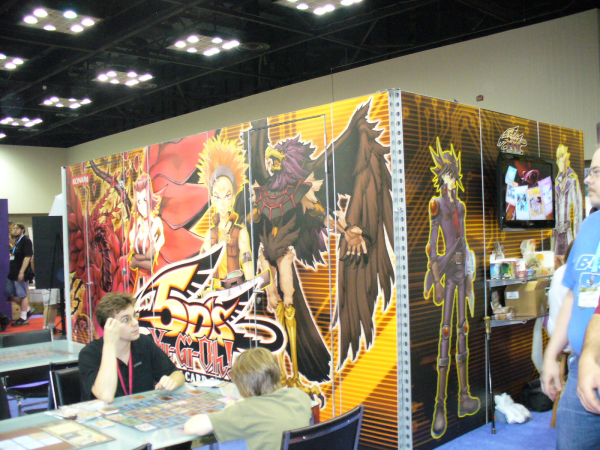
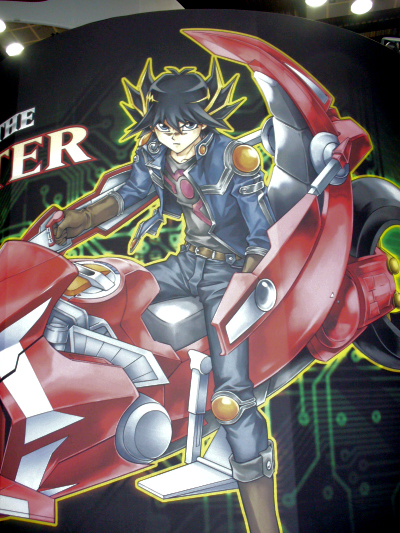
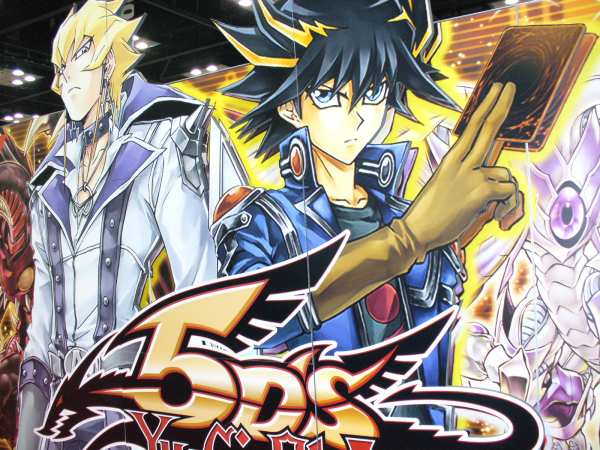
Konami ran a multitude of events for both card games at this year’s Gen Con, with options for skilled players and beginners, as well as tournaments reserved for specific age groups, letting everyone have a chance at the fun. Furthermore, Konami’s booth served as more than just a demo station, as gamers had a chance to take on one of the top Yu-Gi-Oh 5D players around in an effort to see if they could beat the master. Additionally any interested visitors had the option to be turned into game-legal 5D trading card via the camera/green screen set up in the corner of the exhibit.
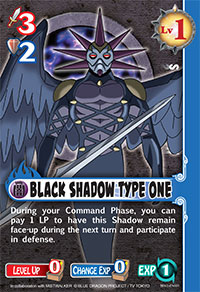
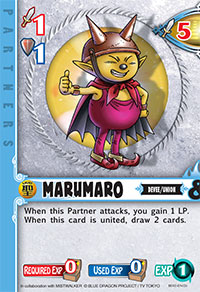
Regardless of the fact that I had already been introduced to the Blue Dragon RPCG last year at Gen Con, it was still the game that drew my immediate attention, as the simplistic gameplay mechanics make it perfect for hardcore video gamers who only occasionally make forays into the table-top world, or even for younger players who would have difficulty picking up the complexity of rules associated with UFS (Universal Fighting System) or even MtG (Magic: The Gathering).
Separating itself from more traditional card games, the Blue Dragon RPCG is just that – a role playing card game that combines the traditional mechanics of a trading card game with those from a video game or pen-and-paper RPG. As such, the game allows players to earn experience points (exp), level up their cards, and become exponentially stronger over time.
For those familiar with the Blue Dragon 360 video game, the characters and overall battle system should be pretty familiar. Each player must rely on their Shadow (the Blue Dragon, Minotaur, and so on), which serves as the in-game representation of the player.
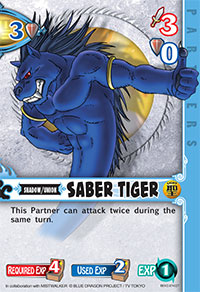 Setup is incredibly simple, with each player choosing a level 1 Shadow card to represent them, and drawing a hand of five cards. On each turn, players make their way through four basic steps. The first has players awakening their Shadows and adding additional cards to their hands. The second allows for the placement of cards from your hand into your battle area in front of you.
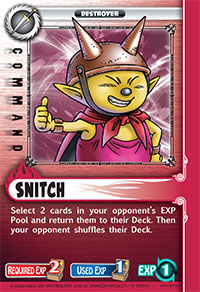
Aside from Shadows, these secondary card types come in the form of Partner cards that can assist your Shadow in battle, as well as Skill and Command cards, which can be thought of as accessory cards that are used to add defensive or offensive stats to your Shadow or Partners, as well as affect the placement or abilities of your enemies.
After your army is properly equipped and organized, you can attack, with the strength of an attack being calculated by adding up the original attack of the Shadow or Partner card doing the attacking plus any increases caused by skill or other card effects. The defense to an attack then is the sum of the defense stats for every member of an opponent’s team plus (or minus, if applicable) the changes in defense caused by various card effects.
If attack is greater than defense, the difference is the amount of life points the defender loses. Vice versa, if the defense is greater than the attack, the difference is the amount of life points the attacker loses. And obviously, if attack equals defense, no life points are lost.
This ends the basic flow of a turn, but there are more gameplay options available, some of which scream of traditional RPG sensibilities. Each card contains an amount of experience points that are available to you once they have been used, by being added, appropriately enough, to your experience pool.
These points are vital in that they not only allow you to use some of the strongest cards in the game (that actually require experience points to play in the first place), but also to level up your Shadow to a stronger beast. For example, to move from a level 1 Phoenix to a level 2 Minotaur, one would need to spend four experience points from their pool.
 While all of this may sound complex on paper, the game is intuitive in its execution, and is far more simplistic than most other TCGs on the market. However, the simplicity of gameplay does little to affect the amount of fun that can be had, as the lack of complexity actually adds to the satisfaction of winning, when you have truly outthought and outplayed your opponent to win.
While there are dozens of current options for TCG gaming available in the market today (and in fact, hundreds of previously released, but no longer supported titles that are still available to purchase), a player’s first step into this side of the gaming world can be a daunting one. But by being inspired by a video game in the first place, the Blue Dragon RPCG immediately has an edge up on its competitors, who will be drawn in by the name. Fortunately, for both Konami and fans alike, the game has what it takes to land the fish once it’s taken the bait.