
Written by Brandy Shaul
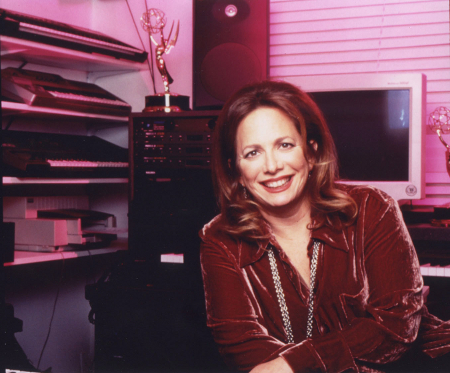
When creating a PS3 launch title like Untold Legends: Dark Kingdom, a game that is expected to show off the beefy power of the system, the score cannot simply be placed in the hands of an amateur. Luckily, the good people at Sony Online Entertainment knew this, and as such recruited one of the best: their resident composer Laura Karpman.
While the name Laura Karpman might not be immediately familiar to those more casual gamers out there, I can bet that her music is. Ever seen Spielberg’s TAKEN? Have you played EverQuest II? Yep, that’s Laura’s work that you probably find yourself humming to as you train your elf or warrior.
This four-time Emmy Award winner has again shown her merit as a composer by scoring the music for Untold Legends: Dark Kingdom, the action-RPG released this past November. We at Gamer’s Intuition were very lucky when we had the chance to ask Laura about her experience working on this and other projects…
GI: When did you first realize that music composition, specifically for entertainment and media, was a career you wanted to pursue?
Laura Karpman: My mother decided that I would be a composer when she was pregnant with me. And it was a good fit because it was something I started doing early on, when I was about 7. I always played and wrote music. I was studying composition at Juilliard with Milton Babbitt, when he suggested that I go to the Sundance Institute for their summer program for composers. There I discovered music technology that I found to be a really exciting and invigorating way to create music. I moved from New York back to LA, where I’m from, and began my career writing music for film & television. I got involved with video game music after I scored Spielberg’s TAKEN. The first game I scored was EverQuest II, which I had a ball working on and have been writing for video games ever since.
GI: You obviously have a lot of experience with film and television. Could you tell us a bit about the differences between composing for live-action projects as opposed to video games?
LK: The major difference is timing. When you are writing to picture there are specific markers that you have to hit. Frame by frame, timing is of the essence. A cue will last for a minute and twenty-five seconds and thirteen frames, and at a specific moment the music will need to turn, or an instrument will need to enter. In game music timing works differently. Because players can spend hugely varying lengths of time in different levels, zones, etc., the score’s timing is not as fixed. A musical cue for a specific environment or event can be anywhere from thirty seconds to four minutes long.
The range of experiences and emotions is huge in both mediums, but there is a slightly different mindset in writing video game music. You are thinking about an individual journey through a game rather than engaging a viewer in a particular set of dramatic experiences. It can be very rewarding to write and allow the music to unfold as it will, not necessarily leading to a singular moment or event.
GI: How were you approached about working on Untold Legends, and what was your initial thought process like, knowing how deep and dramatic a game you were helping to make would be?
LK: When I wrote the music for Untold Legends: Dark Kingdom I was the resident composer of Sony Online Entertainment. I had scored a lot of MMORPGs and I had a lot of experience writing music that was deep and dramatic. It’s really important to get to know a project at many different levels before I start working on it. I believe in thinking conceptually about work before I begin – thinking about what the ideas are behind the story, the way that players are approaching the game, what ways the music can interact with the story and game in interesting ways, etc. Before I started writing ULDK I read all of the scripts and texts associated with the game development. In asking questions and doing research, I happened upon the middle Scots text WILLIAM WALLACE by Blind Harry. This is the same text that Braveheart is based upon. This text and the ULDK text had a great deal in common, so I decided to set it for chorus and orchestra. I contacted a fantastic middle Scots scholar named Anna McHugh, a professor at Oxford University in the UK. I met with her, learned the pronunciations, and clarified the settings so that even if the player gleaned faint words, there was an essence of the ULDK story being told both through the game visuals and music.
GI: What sorts of information were you originally given about Untold Legends that helped you decide in which direction you wanted to go with the score? That is, were you given a script to go by since you were creating music that ultimately affects the mood of the title?
LK: Yes, the texts I received from SOE for ULDK were enormously helpful in guiding me to develop different moods for specific areas of the game. I had a constant exchange with SOE about specific characteristics of different bosses, which zones would follow other zones, etc. We wanted the main title to be memorable and epic. We very much tried to follow the script for the game in terms of dramatic content, and the thematic progress of musical ideas.
GI: I understand you took inspiration from a medieval poetry text. What inspired you to use that sort of piece, being that it’s something a lot of people probably aren’t familiar with?
LK: I did a lot of research to find a really unusual and appropriate text. I was looking for Old or Middle English to fit with the medieval hack and slash nature of the action. I knew I didn’t want to use Latin, because it has been used often, and I wanted to see if another language would work, The Middle Scots is obscure enough that the player won’t be distracted by understanding a straightforward English text.
GI: Once you were approached about creating the score, how long did it take from conception to recording, and on to the finished product?
LK: I started composing in late March and we finished the score in early July.
GI: If you would, tells us a bit about how it was to work with so many other talented artists, especially since you were all working in such a beautiful setting as the Czech Republic.
LK: I love recording in Prague. I had recorded EverQuest II in Dvorak Hall and was so glad to return there. The musicians are great, really into the music, and the hall is probably one of the greatest concert halls in the world. Prague is also a fascinating and inspiring town. Ironically, one of the characters in Untold Legends is based on the Hebrew tale of the Golem, and the Golem is buried there in the ancient Jewish cemetery a block away form where we recorded the score.
GI: Did you feel more pressure on this project overall than on others you’ve previously worked on?
LK: Perhaps a bit. I think a launch title is tough, and the PS3 is a deep machine. I know other people working on the game had a tremendous pressure to finish in time for the PS3 launch.
GI: In general, your music has been known to add a real depth of emotion to the projects they are for. What steps do you take to make sure this is the case?
LK: Thanks for that. I think gamers are smart and have good ears. Gamers love music, and I think that they enjoy intense complicated music. I do think my years working in film, television and the theater have helped me understand drama, and I enjoy bringing this experience into the gaming world.
And we definitely enjoy listening to it.
On behalf of Gamer’s Intuition, I would like to thank Laura for taking the time to talk to us. I know it’s been a great honor for myself, as well as the other girls here.
We look forward to hearing more from this talented musician, but until then, I’ll get back to humming along to EverQuest II…
To learn more about Laura Karpman and her music, visit www.laurakarpman.com.