
Written by Danielle Riendeau
It seems as if every other game today has at least some hybrid elements, some essence of another genre mixed in with the main game. After all, it serves to spice up gameplay by varying the elements, a little driving here, a little money-micromanaging mini-game there. But some games are true hybrids, taking on elements of two or more genres fully. Sometimes, these games become pioneers, starting an entirely new sub-genre in the process. Other hybrids started trends within the industry, introducing gamers to fresh takes on traditional gameplay, or offer strange and unique experiences only found when wildly different genres (like tactical strategy and pinball, for example) are combined. Here’s a look at some of the best and most revolutionary hybrid games of the past, proving that a little virtual cross breeding can be a very good thing.
Revolutionary Hybrids
Many of the conventions of videogame genres were still being formed back in the early 80’s, when sophisticated gameplay was still in its infancy. By the mid 80’s, the general landscape of genres had been established, and it stands to reason that developers who first blended different gameplay styles essentially created subgenres of games. Two of the first games to blaze the hybrid trail were Xanadu and Doki Doki Penguin Land; later to spawn sequels that fully expanded upon their revolutionary gameplay: and Penguin Land, respectively.
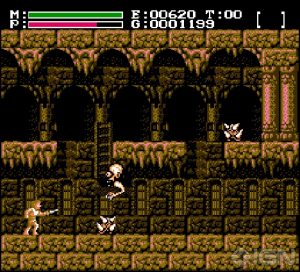 While RPG’s had been around for a while, the first game to truly marry action elements with an RPG was Xanadu (released in 1985 by Nihon Falcom as a sequel to Dragon Slayer), a full-fledged RPG that also boasted action based combat. The revolutionary ideas sparked in Xanadu were even better realized in the NES spin-off Faxanadu, a popular side-scroller that would serve as a model for action RPGs in the future. The hero could climb ladders, walk, and jump; and combat occurred in real time encounters with enemies, just like an action game. In true hybrid form, Faxanadu also had a great deal of strategy, depth, and RPG character building. The player’s nameless hero could be customized by purchasing items with golds (awarded by killing enemies, along with character-building experience points), equip and use bladed weapons against enemies, equip armor, and cast magic projectiles. And like any other RPG, he could get clues regarding the games events by speaking with townsfolk. Sounds familiar?
In fact, Faxanadu has a great deal in common with Zelda 2: The Adventure of Link, also considered something of an early hybrid action-RPG.
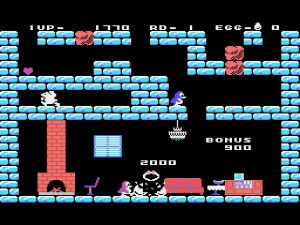 Another cross breed game that started its own genre was Doki Doki Penguin Land, released in 1985 for SEGA’s sg-1000. The father of action-puzzlers like The Lost Vikings, Wario Land series, and Mario vs. Donkey Kong; SEGA’s master system version Penguin Land blended an action-based interface with classic puzzle gameplay. In the game, players controlled a penguin tasked with safely getting an egg past all of the obstacles down to the bottom of the room. Players had to avoid polar bears, falling rocks, and gaps in the platforms, while tunneling through the ice to reach the bottom. True to its puzzle game nature, there were only so many ways down that didn’t involve getting boxed in or attacked by a bear, and the player had to constantly strategize and think ahead. On the action side, the game controlled much like a platformer, giving the player the ability to jump (a feature sorely lacking in many other action puzzlers).
Sharing the Love
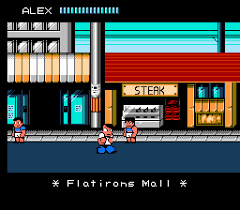 Some of the best and most nostalgia-inducing experiences have come from popular games that mixed it up back in the day. One of the best loved games of the NES era was River City Ransom (1989), which combined beat-em up action with RPG elements, in a time when the lines between genres tended to be drawn a bit more rigidly. Players took on the role of Alex or Ryan, high school kids who had to fight their way across town, facing off against the comical gangs holding up the territory. The Double-Dragon style gameplay was augmented by a heavy emphasis on character building, as the player’s performance in battle was determined by statistics and special fighting moves purchased in shops throughout the city. Money (collected from fallen enemies) could also be used on food – served memorably in restaurants with names like Merv’s Burgers – or even spa treatments to revitalize the character’s stats. The game is fondly remembered today, as evidenced by the amount of fan sites dedicated to showcasing its wonders (not to mention the backside inclusive screenshots from the game’s spa scenes).
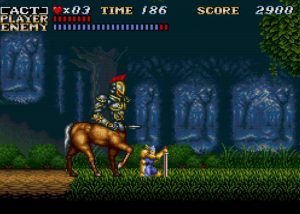 Back when the SNES was just getting its start, not many of the games were terribly original… or impressive. Actraiser stood out with its mix of sim-city-like strategy elements and side scrolling hack and slash action, making for a very different, and incredibly rewarding experience. In the game, players progressed through the action stages, freeing the land from evil. Once completed, they took on the role of an omnipotent cherub, flying around the newly freed land building a civilization. Players used spells and even natural disasters to shape the land and ward off monsters as they micro-managed the growth of their new villages.
The mix was original and incredibly well realized, and coupled with the astounding graphics and music (on the brand new SNES), Actraiser proved to gamers that hybrid games could become much more than just a sum of their parts. The game is fondly remembered, even today, as it graces several major “top games of all time” lists (including EGM’s).
Trend Starters
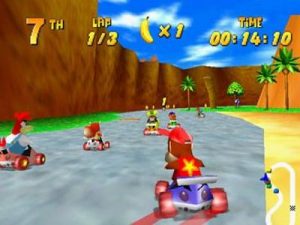 One of the most unique of Rare’s N64 heyday offerings was Diddy Kong Racing, an adventure/platformer and kart-racing hybrid. Though it looked similar to Mario Kart 64 (which was released earlier in the same year) it was actually organized more like Super Mario 64, with a huge overworld and several sub-worlds, all accessed by finding or winning Golden Balloons, functioning as the “stars” did in Mario’s revolutionary platformer. It even had boss races, hidden keys, minigames, and something called the silver coin challenge (wherein the player had to find 8 silver coins on the track as well as finish the race in 1st to earn the balloon for that course). Though Diddy Kong didn’t exactly inspire an entire genre, it did spark a trend that included the Crash Team Racing series, and the excellent (though largely forgotten) Beatle Adventure Racing on the N64.
One of the most interesting and arguably intuitive gameplay mixes involves blending a classic pinball game with action elements. Hudson Soft’s Alien Crush started the trend in 1989 (along with its successor, Devil’s Crush), and the style has seen something of a revival in recent years, with Pokemon Pinball in 1999, Mario Pinball Land in 2004, and Metroid Prime Pinball in 2005.
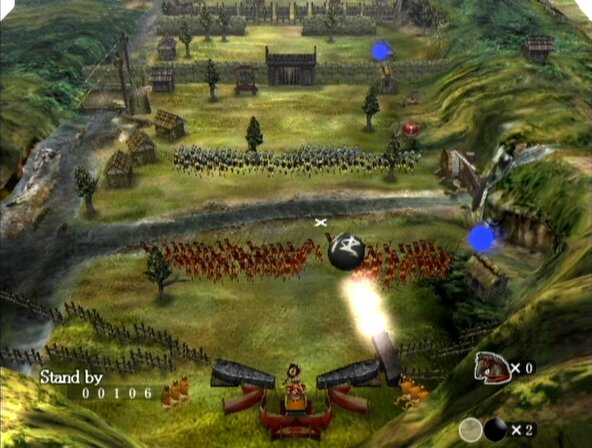
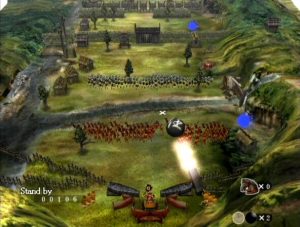 However, one Pinball hybrid stands above the rest in terms of sheer originality, and that’s the 2005 Gamecube oddity Odama. Blending tactical strategy with pinball in an ancient Japanese battlefield, Odama was certainly in a league of its own. Players used voice commands and traditional controls to launch their Odama (pinball) into the battlefield, killing enemy soldiers directly or with the aid of the shockwave producing Ninten Bell. If it weren’t for a punishing difficulty and some issues with voice recognition, Odama may have been remembered as one of the best (if one of the strangest) true hybrid games of all time.
Just plain Weird
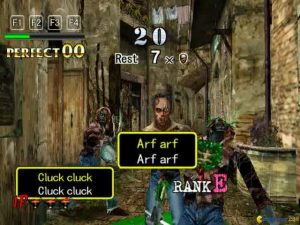 The topic of strange hybrids certainly doesn’t end with Japanese war simulators. Proving that not all crazy ideas make for bad gaming, The Typing of the Dead combined a typing simulator with a zombie blasting shooter in the arcades, and later on the Dreamcast. The scariest part? It was actually quite a good game, and even enjoys status as a minor cult classic. Like the other shooters in the series, players entered the House of the dead and encountered hordes of zombies and other nasties, but instead of whipping out the trusty shotgun, players needed to type in the word or short phrase that would appear in front of the monsters. It was a frantic and oddly rewarding experience, made doubly enjoyable by the Dreamcast’s multiplayer co-op mode.
Finally, no retrospective on hybrid games would be complete without a mention Konami’s quirky Hybrid Heaven for the N64. A third-person action/RPG blend, the game functioned much like a typical action game, full of running, jumping, and puzzle solving, until the player encountered an enemy monster. At that point, the unique battle system was engaged, as the player and monster alternated between real time jockeying for position and turns of traditional combat, until one of the foes was defeated. It was an interesting system, itself a mixture of action and turn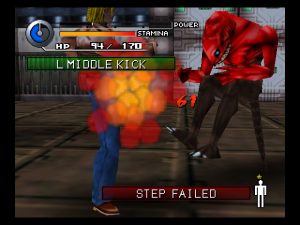 based combat. And like a traditional RPG, there was almost an obsessive emphasis on character building and leveling up, as separate statistics were recorded for the character’s head, each limb, and the torso.
And though it hasn’t stood the test of time as well as some of the other classics discussed here, Hybrid Heaven certainly lived up to its name with some of the most ambitious cross-genre gameplay ever seen. It remains a testament to the hybrid formula, and the idea that mixed gameplay done right makes for better gameplay overall. It’s a lesson well learned, and one that the industry has done well to pick up on.