
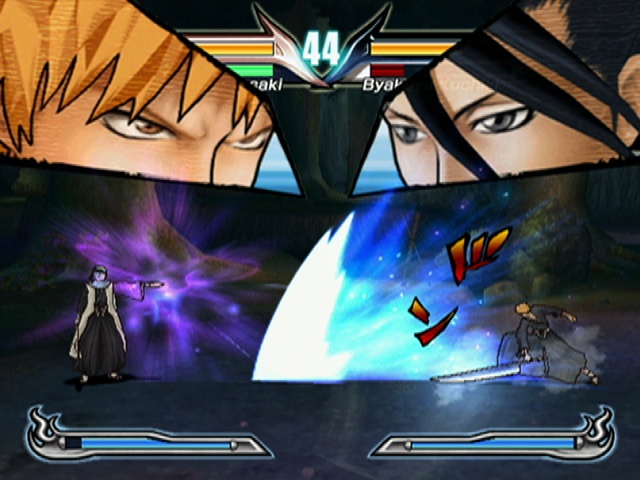
I’ve never watched a single Bleach episode and I never had the faintest idea what it was all about until I heard about the game. I didn’t have to be a fan, I just wanted to try something different, and different is what I got.
Bleach: Shattered Blade is based on the Bleach anime and picks up where the first season ends.
Ichigo Kurosaki, a 15 year old Soul Reaper, embarks on an adventure in search of the thirteen shards of a shattered blade in order to reopen the gate that connects the Soul Society to the living world. Easier said than done, since there are some power-starved characters also looking for the same shards.
So in sum, Ichigo’s adventure is presented by a series of fights with cel-shaded anime storyline intermissions.
The first thing I did was jump into Training Mode since I had no idea how the controls would work out. I’m used to my button mashing combos for fighting games, not actual movements, so I expected a bunch of clumsiness and many lost battles. I must be psychic, because I was right. But that doesn’t mean I didn’t have fun.
The tutorial in Training Mode begins by explaining the basics of how to move around, dash, block and attack, moving on to special and critical attacks. I thought it seemed fairly easy, but I got my ass kicked several times in a row when attempting the Episode mode.
So how does a fighting game controlled by motion sensors work? You use both the Nunchuk and Wii-mote simultaneously.
The Nunchuk controls the character’s movement, C button to dash and Z button to block. Shaking it repeatedly fills up your Bankai gauge, and flicking it when it’s full unleashes the Bankai power-up.
While Bankai is active, you become faster, more powerful, one of your basic strikes turns into a Bankai attack and with some characters you can’t be knocked down.
The Wii-mote is your sword, the Zanpaku-to. You slash sideways, chop up and down and stab by moving it forward. Pressing B while doing any of the movements does a special attack. Pressing A while doing any of the movements performs a critical attack. You must keep an eye on your Spiritual Power gauge, since that is what allows you to attack. If it empties, move as far away from your enemy as you can, since it will refill faster.
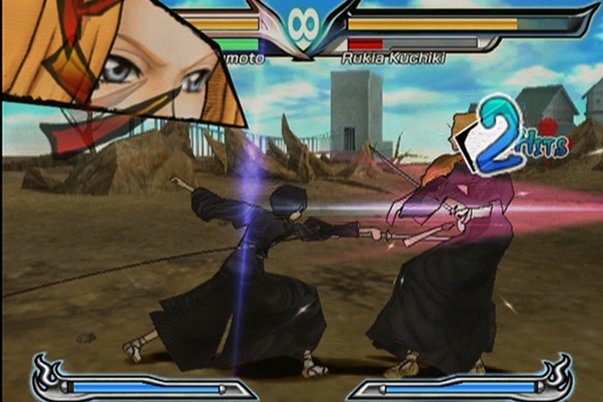
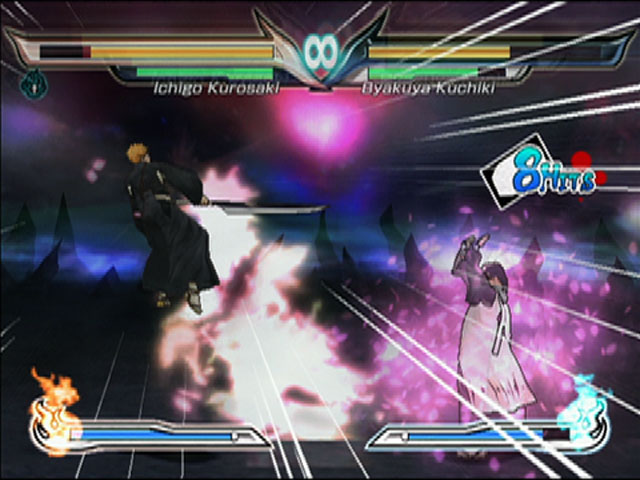
Each of the three basic attacks can counter another, like playing rock-paper-scissors. Chop beats slash, slash beats stab, stab beats chop. This system applies when you enter Clash, a situation when both players hit each other with a critical attack at the same time.
Actually, combat is not so bad after you get some rounds of practice, but the enemies do come at you fast and furious, which made me move those controllers like I was playing the maracas on speed. Eventually I miss a button or shake the wrong one and seriously turn the tides against me.
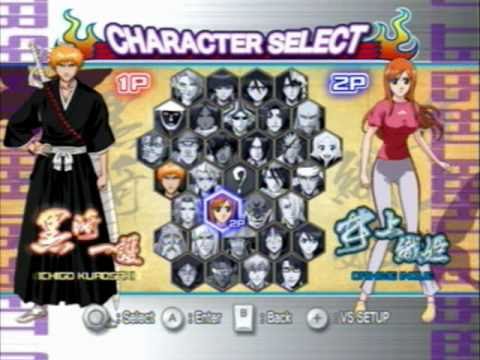
There are three main gameplay modes in Shattered Blade: Episode, Arcade and Versus. Episode takes you through Ichigo’s quest to gather the shards (though you can play as other characters) in the exclusively made for the game storyline, Arcade has you fighting against eight opponents, and Versus places you against a friend or AI opponent.
Playing through the different game modes will award you with money and unlockable characters. Money can be used in the Urahara Shop to purchase items for the Gallery, such as artwork, voices and sounds.
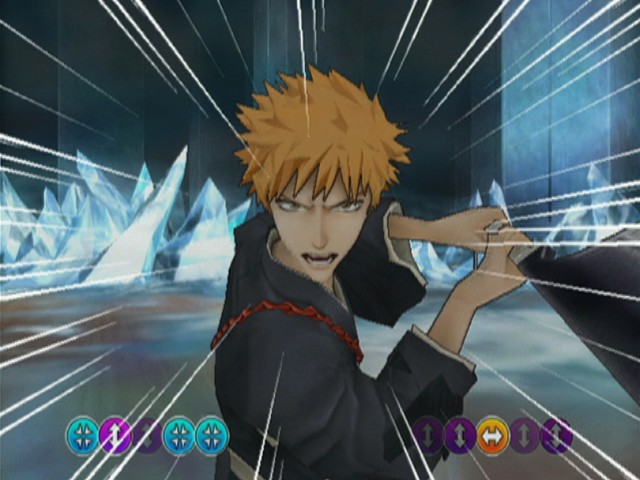
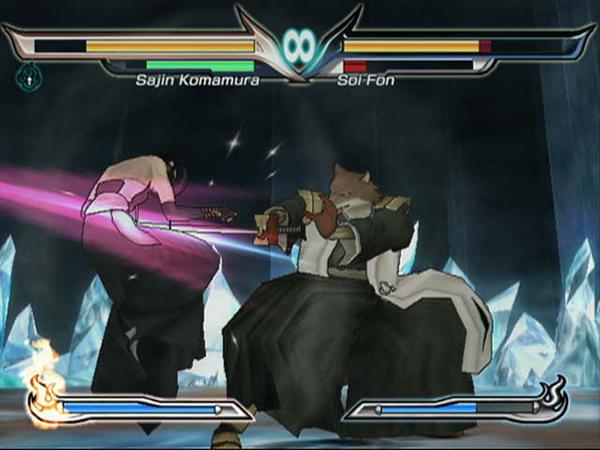
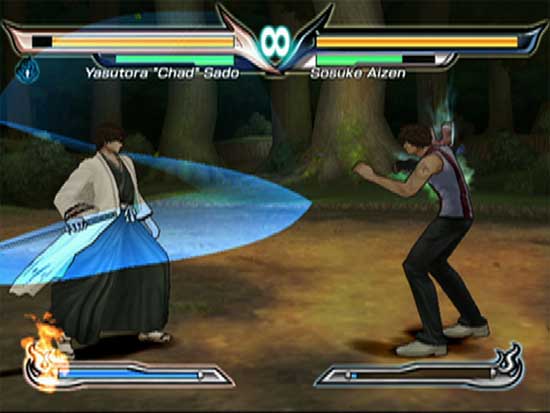
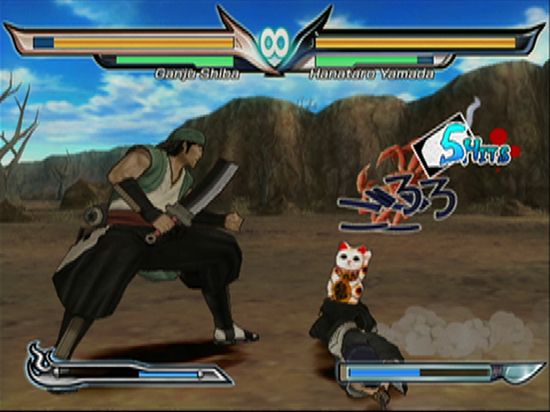
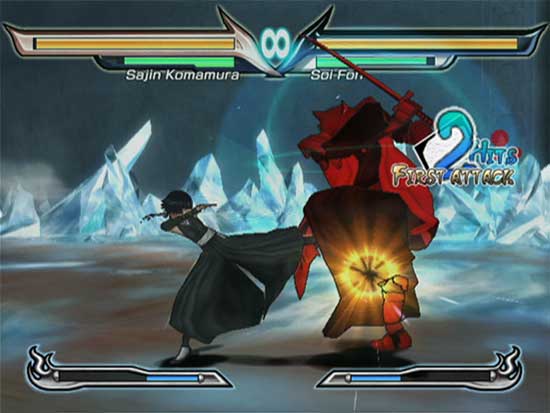
As you can probably guess, the whole game had this huge novelty factor that I truly enjoyed. Not only I acted like an idiot shaking the Nunchuk like it was the end of the world, and slashing and stabbing repeatedly with the Wii-mote until my wrist was sore, but I exclaimed time and time again “Wow, cool!” when watching different characters unleash their Bankai for the first time.
Bleach: Shattered Blade is a lot of fun to play, and I’m pretty sure it must be a hoot watching me play it too. It’s very entertaining, fast-paced, original and you don’t even have to be a fan of the series to enjoy it. Play it yourself, you’ll see.
Special thanks to Denny Chiu, Thu Nguyen and SEGA for providing a copy of this title.