
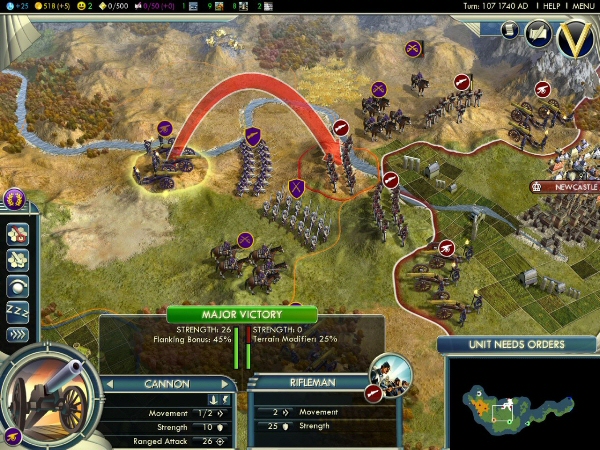
Firaxis Producer Dennis Shirk was our demo guide, as Garrett Bittner, Producer at 2K Games, played the game and showed us some of the features of the next title in the Civilization family.
Every version of Civilization is built uniquely, but always based in the essence of the franchise. Civ V takes the “uniqueness” a bit further though.
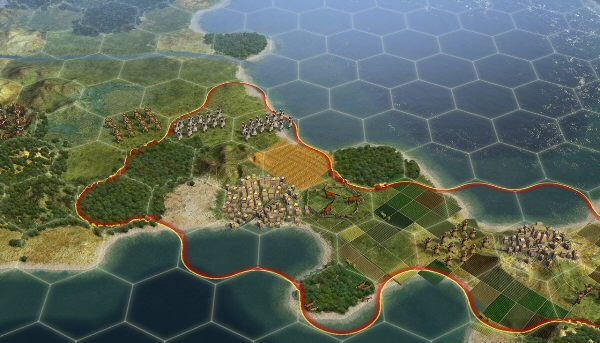
A quick overview of the different terrains showed us something believable, as what we would see from a plane: flowing rivers, forests, plains, snow-topped mountains. The major difference in the map grid is the tile shape, which is now hexagonal. Why hexes? Because when putting together different types of terrain you can obtain more believable and natural shore lines, for example. However, this is an aesthetic and strategic change, since they also make movement around the map easier.
Civ V contains some of Civilization Revolution elements, one being the minimized interface that only contains the essential information you will need at that time. This is a change welcome to newcomers, but there are options to turn on more menus and windows if you choose to do so.
Also from Civ Rev, if you idle or take no action for a while, your advisors will conveniently remind you of what to do next. The interface is also based on Civ Rev, allowing for pop-ups with notices so that you don’t miss important events. But there are many new changes coming, and change isn’t necessarily bad, so keep on reading!
You won’t need to make all your decisions at the beginning of each turn. You can explore the map, monitor things, then come back to the decision making at the end of the turn.
The tech tree is represented branching horizontally, from the Stone Age to the Space Age, which each technology branching out into other possible and already available technologies to research. It makes it easier for you to track what you want to research first and what to aim for next when you see the entire tree spanning the screen left to right.
Community is a part of Civ V, which will support Steam integration. This basically translates into in-game browser, friends lists, friend invites and achievements. A modding system will also be available to players, allowing them to create and share scenarios and maps from a separate application.

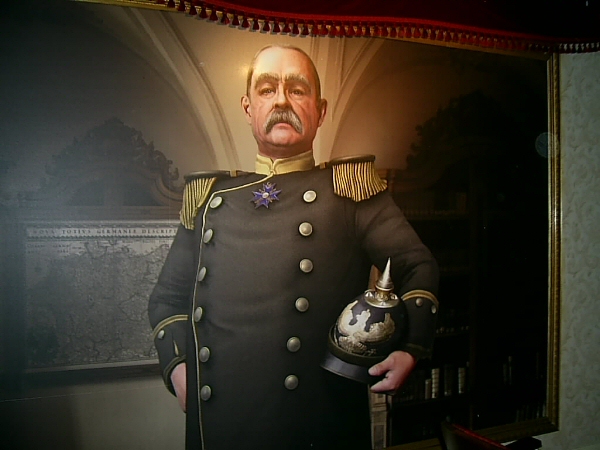

A new interesting feature is the Citizen Allocation Focus, which allows you to order your people to work on food, production, science, culture, gold or a great person. Culture grows a lot differently now, since it pushes out your city borders steadily. If you have more money than you know what to do with, you can buy tiles, but eventually your borders will absorb more tiles as the culture increases. Buying tiles isn’t cheap, but it’s something else to do with the accumulated gold.
As you accumulate culture, you will be able to access yet another new feature: Social Policies. There are ten Social Policies available: Tradition, Honor, Liberty, Piety, Patronage, Order, Autocracy, Freedom, Rationalism and Commerce. These will be available according to the time period you are in, and give you certain bonuses, depending on their “theme”. For example, Honor bonuses will relate to the military (like an attack bonus to your troops) while Commerce bonuses will have to do with gold. You can mix and match elements in the policies, so you’re not bound to just one. Steering away from the need of switching governments, you can now basically customize your own. This also implements another type of Culture victory: fill out 6 Social Policies entirely.
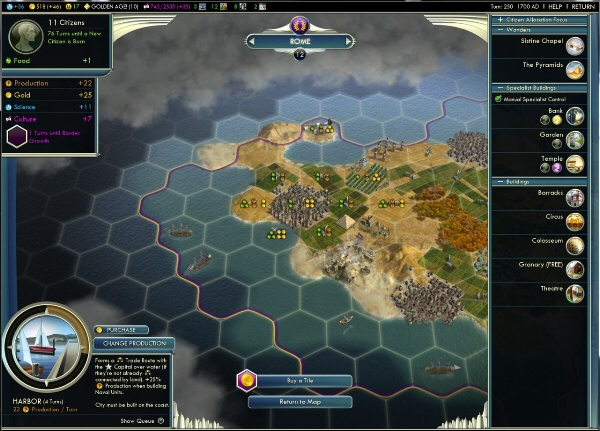
Another welcome change, more on the aesthetic side, are the encounters with the different world leaders. These are no longer just a quick pop-up image of the historical figure, but more memorable scenes, where they speak their own language and are seen in their usual environments: Napoleon on a horse in a battlefield, Bismark is his office, Queen Elizabeth sitting in her throne. They also react to you and your intentions (say, when declaring war or offering a peace treaty) with appropriate voice, expression and gestures.
The addition of City-States allows an empire to never grow beyond a single city. They exist in the game mostly for diplomatic purposes, since you can choose to attack and conquer them, or protect them against other civilizations’ attacks.
City-States come in three “flavors” (militaristic, cultured and maritime) and each offers their own bonuses if you befriend them. If you befriend a City-State, you gain their bonuses, their resources and their allegiance in war, but expect to make some enemies out of that. City-States also cast their vote for a Diplomatic Victory, and you can buy them out if you want. Providing City-States with gifts of gold will increase your influence with them.
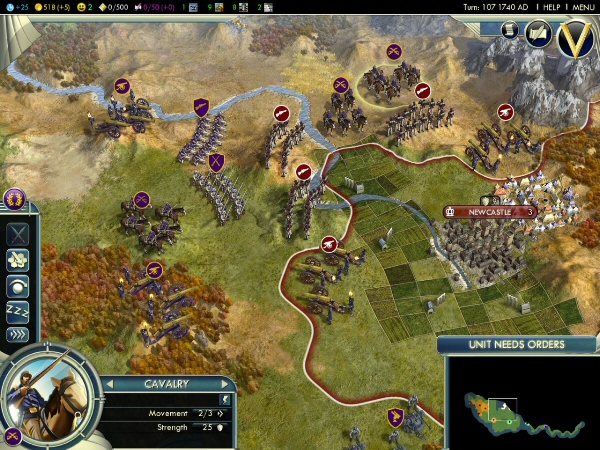
The last bit of the demo was about combat. As usual, we can aim for a Domination Victory by conquering all the world’s capitals. Mobilizing units must be done strategically since there are bonuses for the types of terrain you place them in. You can get a bonus for being on a hill, across a river from the enemies, or having other units flanking you, so make smart use of positioning before attacking. Likewise, your enemies units also get these bonuses.
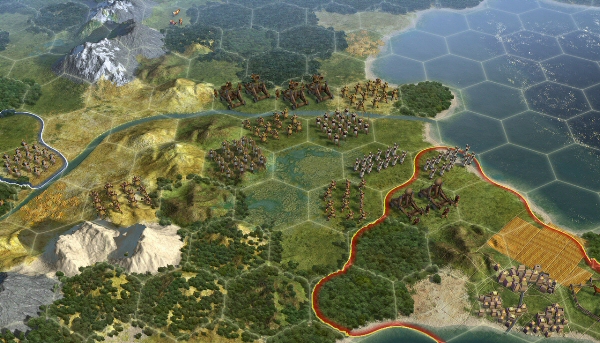
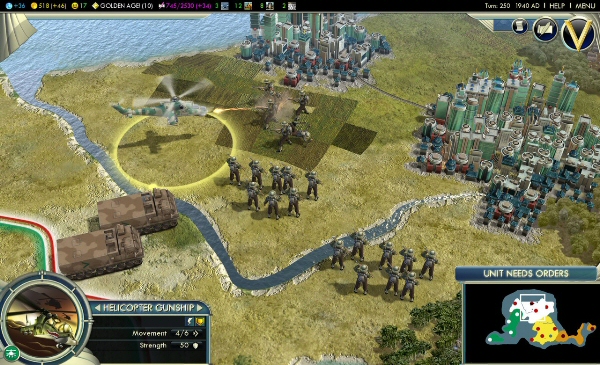
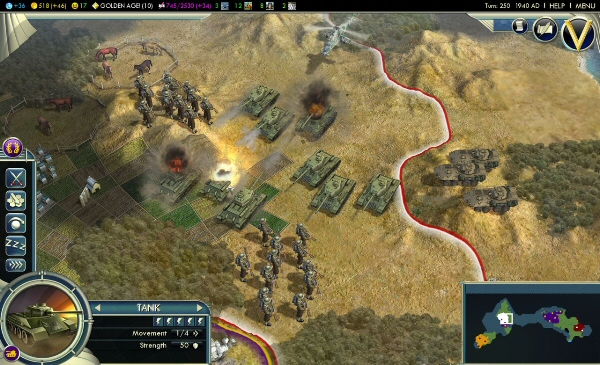
Combat is basically the same: attack with ranged units, protect the ranged units with melee ones, and heal survivor/damaged units as soon as possible. But cities now can defend themselves, by means of walls, castles, melee units placed inside. Even ranged units placed inside the city can attack when you approach on their own turn. One last feature was revealed: when you conquer a city, you have the option to annex it, raze it (burn it) or turn it into a Puppet State. A Puppet State belongs to you, but you won’t be able to control what it produces.
And so ended our thorough demo of Civilization V, coming to a PC near you on September 21. Insert fangirl squeal right here!