
Reviewed by Tiffany Craig
There are vast limitations with the possible market appeal of dancing. Many titles rely on vacuous dance tracks that fuel a market of soul-destroying Ibiza summer collections and quickly fade from history. Who remembers Nikki French right? Yet, publishers keep shoving them at us like canvassers with clipboards on a busy shopping street. But Dance Factory is different; perhaps they realized that dancing game longevity is generally restricted to the fickle pop music audience. Perhaps they just wanted a hook. Either way they’ve given us the gift of immeasurable choice with our darkened living room hoedown.
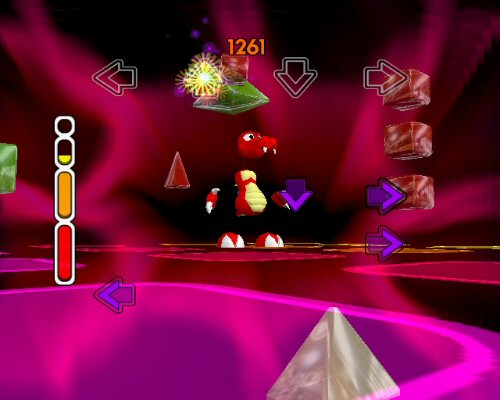
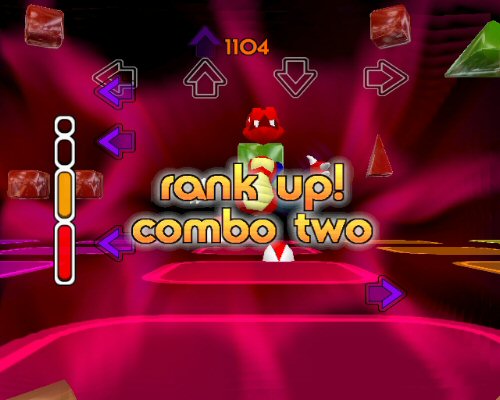
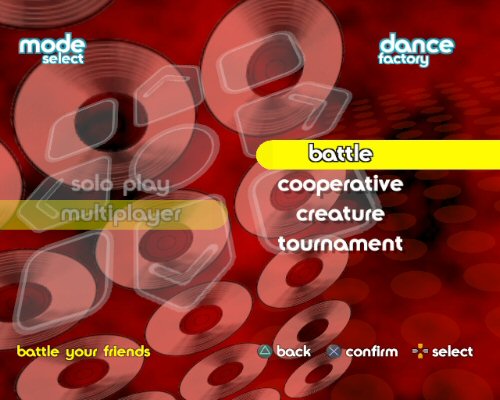
Dance Factory itself is a standard arrow four step with three difficulty modes. Hit the arrows in game mode, fitness mode, creature, multiplayer, EyeToy camera and record. Game mode is what limber 12 year-olds in arcades play worldwide but with the added bonus of using the shop as the game progresses. The more points you accumulate through dancing, the more entertainment possibilities with retina stimulating backgrounds and creature accessories. Fitness mode keeps a calorie counter based on your weight and changes the insults to something suitable for a dieter. Creature, in solo mode, just gives you a strange little dancing buddy to groove with you.
In multiplayer, however, a vicious dancing pet can attack your opponent with special dance combos and leech away their points. In two-player mode, you can either work together or fight it out for dance master of the ‘too much white wine Friday night’ competition. In tournament mode, you can challenge up to 16 people using the PS2’s network capabilities. If you’re good enough, or have a mighty enough threshold for abuse over YouTube, then you can put yourself on a web cam using an EyeToy and show all of your friends how you dance. Record allows you to create your own dances and store them for further adulation or ridicule.
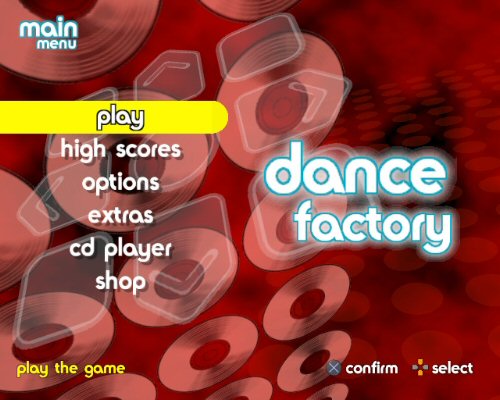
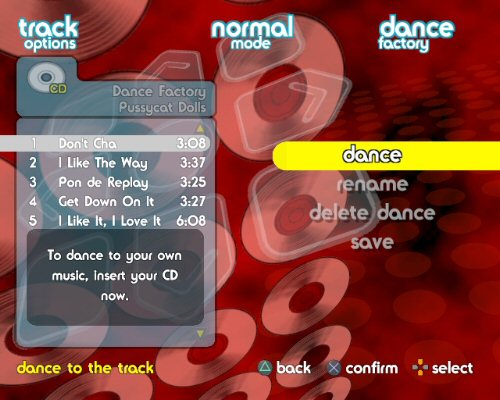
In almost all modes, you can use your own CDs for some dancing. You choose the option during track selection, place the CD into the console and allow Dance Factory to create the moves and name the tracks if you want to use them later. It takes about 15 minutes for an album and a few minutes a track. You can then save the dances to your PS2’s memory card for future enjoyment. I was disappointed to discover that there is no secret Rocky Horror Timewarp code in the depths of the game. I had to make do with standard jumping around.
If you get tired of all of this dancing, there’s an additional mini game in the extras called Cubric. You have to keep your cubes alive using only your prowess with dance mat arrows. With a regular controller, it might be easy. But if your foot to eye coordination is as dire as mine, you’ll find it difficult to keep your cubes going in later levels. Dance Factory also allows you to play Cubric while the tracks load up, no need to stare forlornly at your television while the progress bar rolls on. There’s also an additional CD player, where you don’t have to watch the arrows roll to play your music. Just your CD, some graphics and possibly a character.
Dance Factory will appeal to people who already enjoy dancing games. It’s a solid title, with everything you would expect from this genre manifested in a very simple way. What might push it beyond many similar releases is the freedom from the usual rehash of modern pop tracks. If you’re a gamer, or even someone looking to get fit in the living room and don’t already step on arrows with wild abandon, the ability to do it to the Sisters of Mercy or other more unconventional acts may draw you in.
It’s a great step in pushing the DDR genre into something with more longevity and wider appeal. This is the only dancing game you will need to buy for a very, very long time.
Special thanks to Sam Cordier and Codemasters for providing a copy of this title.