
About 2 years ago, when I sat down to play The Witcher for the first time, I didn’t get up for 7 hours. It’s been that long since a game had me stuck to my seat just to see what comes next, but along came Divinity II and the situation repeated all over again. Except this time, at least, I remembered to get up to pee and get food.
In Divinity II you play as an apprentice Dragon Slayer, a type of human soldier specifically trained to hunt and kill Dragon Knights. Dragon Knights are evil beings at the service of Damian, who can control them by possessing their minds. Dragon Knights are also warriors, but they can transform into dragons. Your journey through the game begins from learning the forgotten basics of being a Dragon Slayer to slowly evolving into a Dragon Knight, becoming what you were initially trained to hate and kill, in order to find a way to defeat Damian.
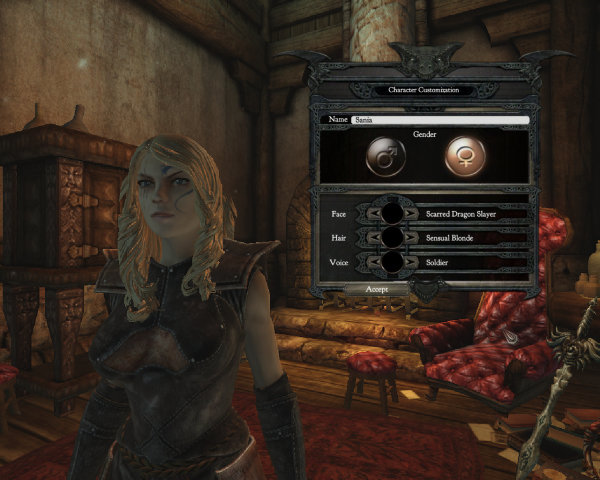
You begin by creating an avatar, male or female, which a few customization options: face (though they don’t differ much from each other), hair style and color, and voice. Name your avatar, and off you go, on your first quest to become whatever class you prefer (basically, your typical warrior, mage or ranger classes).
In traditional RPG form, you talk to everyone, accept quests, kill things, find loot and level up. The storyline develops according to the choices you make, much like in The Witcher. You can choose the outcome of the main storyline as well as several side quests. For example, you will find out a villager has murdered another and kept this secret for years. It’s up to you to decide how the situation unfolds, since you can execute him for his evil deed or turn him into the captain of the guard. In many situations you can talk your way out of a quest by deceiving one of the parties involved, or you can choose to use force instead. Sometimes you will find yourself confronting two people about the same subject, or get in situations where opposing parties will ask you to bring them the same item.
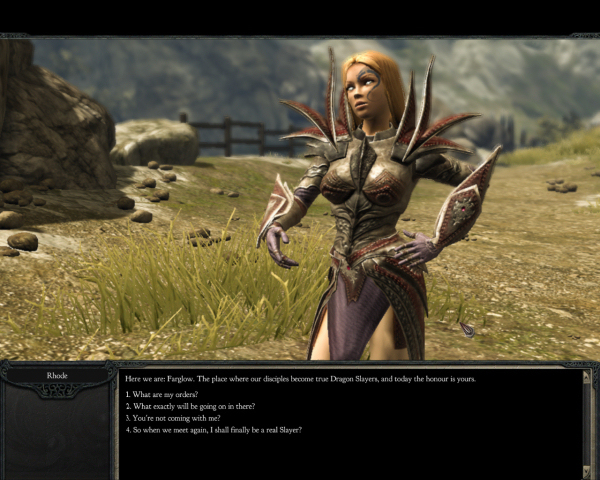
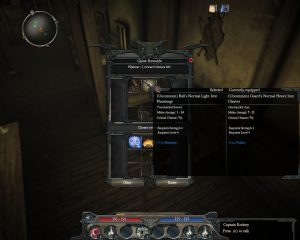
How to proceed is up to you, but regardless of what you do, there is always a quest reward. I liked how rewards are presented at the end of a quest. There is always a basic prize, such as experience and gold or an item, but there are also optional rewards. Usually, there are two or more options to choose from, including extra experience, armor, weapons, more gold and other items. Certain quests let you pick more than just one extra reward too.
I’m the kind of person who could probably get lost in my own kitchen if given the chance, so I’m not sure how I did so well in this game, since the quest hints were many times vague. The map will reveal markers as you find certain landmarks, such as waypoints (teleports to other places) and entrances to dungeons, caves and other passages. You can even add your own markers to the map if you choose so. Although there is very little direction as far as where to go for some quests and it’s easy to get confused when working on many quests at once (hooray for the quest log, even if vague), I found myself oddly enough progressing, even when I thought I was stuck, either by thinking for a while or just by accident. Whatever works, I usually say! But still, there were moments that were downright weird, like entering some place where I got killed within 2 seconds because I was only level 13 and they were two level 27 guys. What is this doing in the rest of the lower level area? And the temple where poison kept killing me as I moved through it, how the hell was I supposed to cross it? Maybe I wasn’t supposed to have been there so soon?
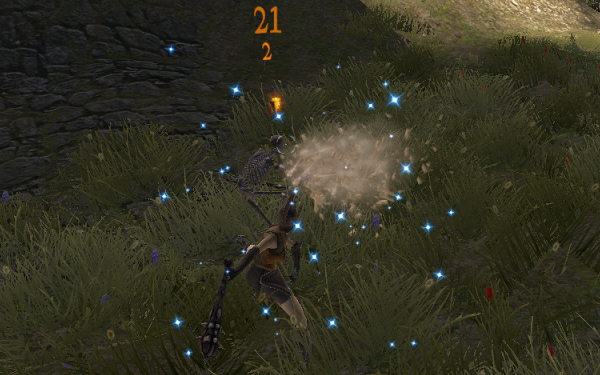

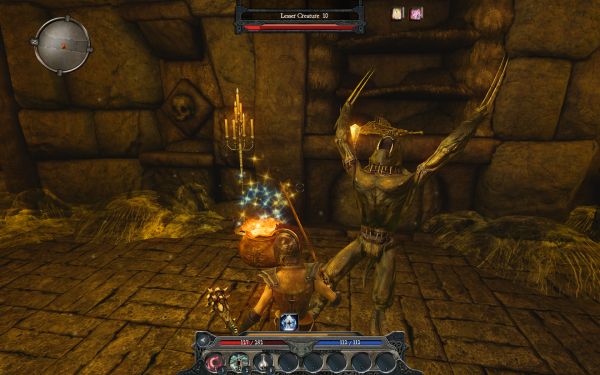
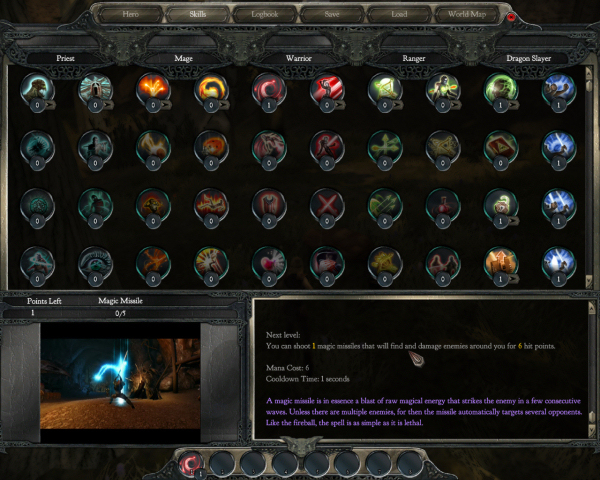
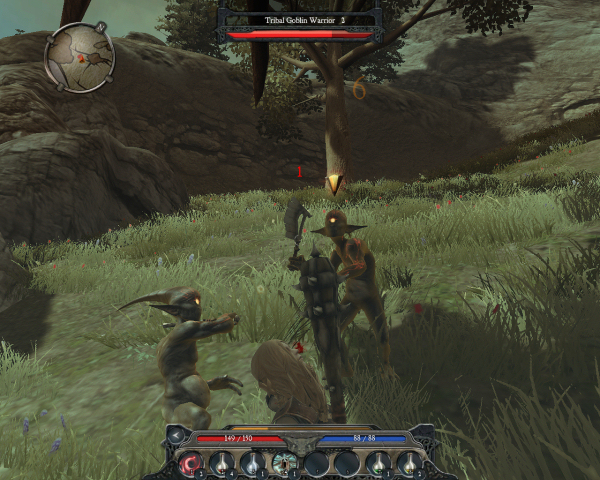
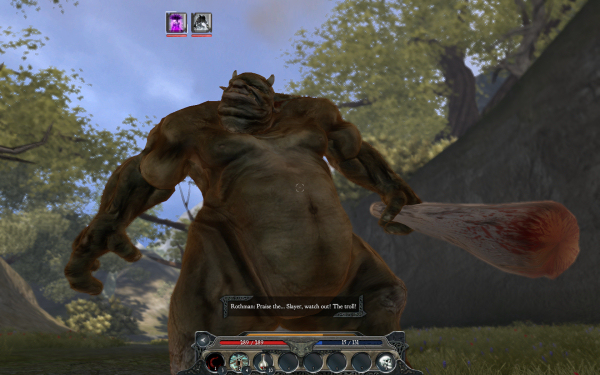
Combat is done by simple mouse clicks. Your skills, spells and items can be dragged onto hotkey slots for easy access. When you level, you receive a skill point and a few attribute points. Skill points are spent in the skill tree (duh, did I actually have to say this?), which has four distinct areas relating to the Dragon Slayer “professions”. You will find skills pertaining to healing and summoning, magic spells, melee attacks, ranged/bow expertise and general Slayer improvement such as lockpicking, mindreading, encumbrance and other useful things. If you click any of these skills, you can see a small video clip at the bottom of how it works, and read some info about it.
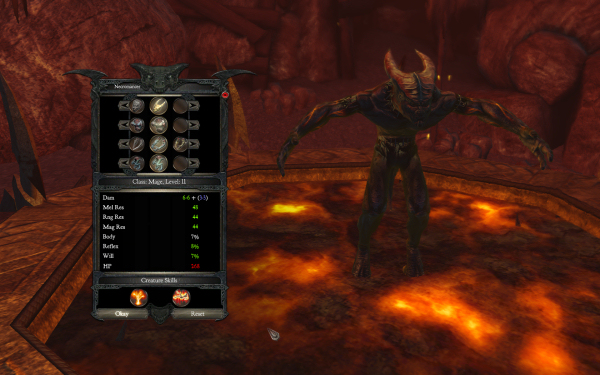
As for your attributes, you can see how each will affect your melee damage, magic resistance and other stats before you accept your point distribution choices.

Although there are no tradeskills so to speak (you don’t really generate revenue from them but use them for character improvement), you can Charm items as long as they have a charm slot and you have the charms in your inventory. Charms will add special attributes to your weapon, armor and accessories, such as increased melee damage or extra ranged resistance. There are also Enchants, which are done by enchanters, a special type of smiths. Enchants require you to find the formulas and respective materials first. And Alchemy will let you create potions, as long as you have the right herbs. Oh boy! Herbs! I don’t know how many hours I spent picking herbs in The Witcher, not to mention I was a herbalist in WoW! Yay, more herbs! Woot! A-hem… yeah… moving on.
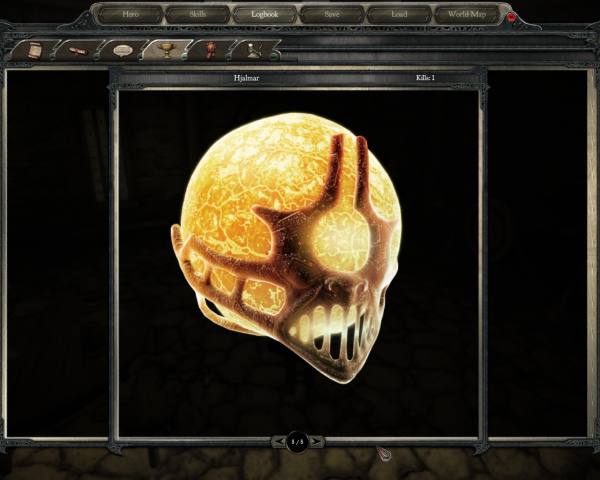
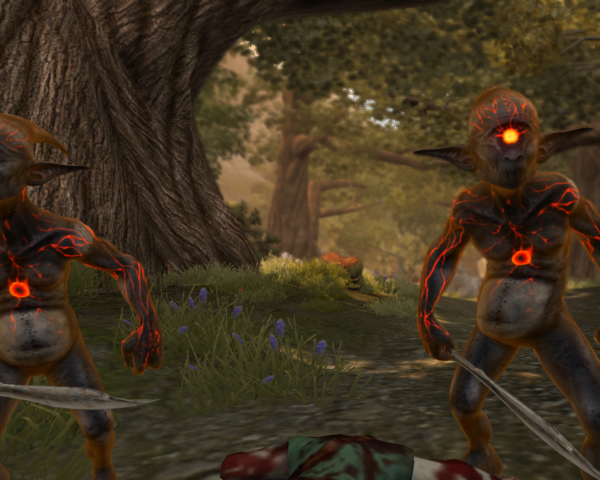
 My favorite combat feature was probably my pet. I should technically say “pets” since I was also using the ghost healer… but what I mean is that you can create your own creature by finding and putting together body parts. So when I accidentally looted some rotted limbs (to what my character decided to blurt out “Oooh! Shiny!”, much to my amusement) I wondered what to do with them until I met the necromancer. Here, you play something like Monster Lab, mixing and matching heads, arms, torsos and legs to stitch them together and create the most powerful creature possible… and ugly too. Something like goblin head, fiery torso and frog legs. This fearsome monster… dude… thing, will follow you around when summoned and attack whatever you attack – or whatever attacks you first. In between, it will stop to scratch or lick itself, dig on the ground… and pee. Many times I was standing there and it would just lift its ugly little leg up and pee, shaking his foot after being done. Yeah. That’s right. I can pat it on the head and go “good boy!” but I can’t potty train it. Oh well. I may be a pee-smelling hero, but my pet still kicks all kinds of ass, if you must know.
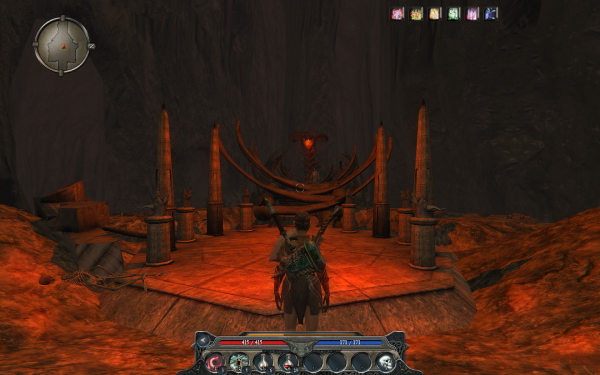
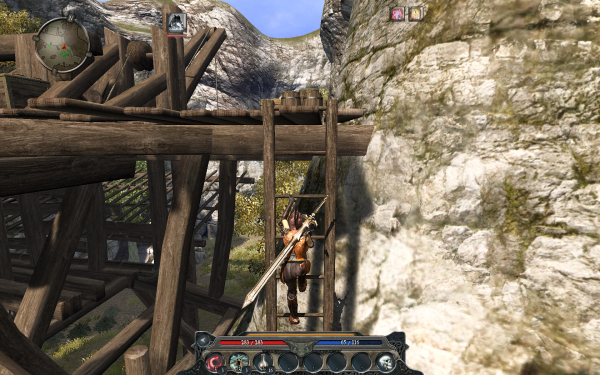
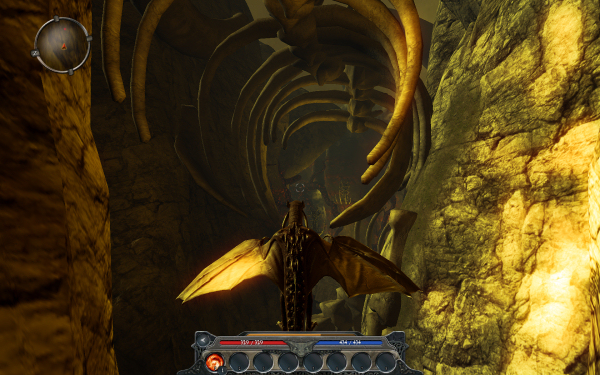
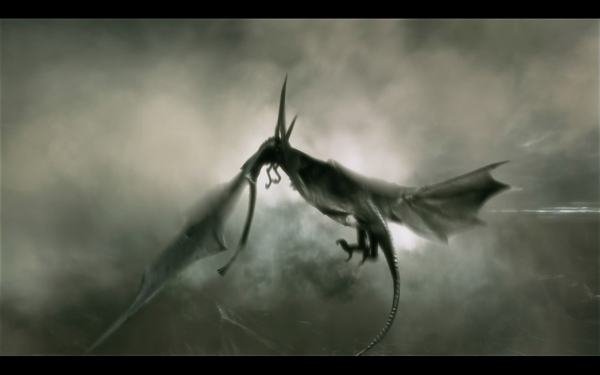
Hacking and slashing is always fun, and the little platform jumping now and again is a welcome change, but becoming a dragon does bring a different style of play to the game. You can fly and soar, customize your dragon as you do your human hero, with skills and armor. Once you acquire the Battle Tower (your center of operations and initial dragonform playground) things become much more interesting. You’ll have scouts to hunt for materials for you, you will be able to enchant your own armor, equip your scouts or heal them if they get hurt, gain access to advanced skills and make use of the enchanter, necromancer and alchemist services. Plus, there is also a handy storage box and you will be able to send things there from your inventory with a simple click.
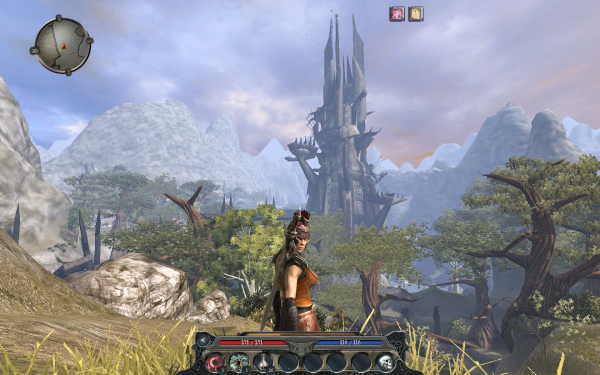
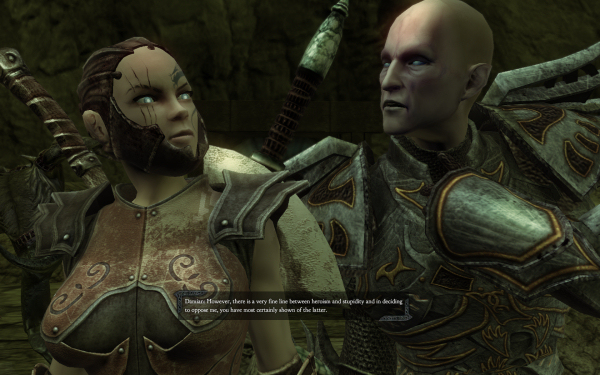
I could go on about how much I enjoyed and had fun with this game. I liked the freedom of movement and openness, even if I got lost and overwhelmed every so often from taking on so many quests at once. I enjoyed the comedic situations with some of the villagers, the crazy wizard who speaks in rhymes, I even loved to hate the lack of understanding from my former fellow Slayers and especially Damian, whose story is quite interesting.
I enjoyed the challenges as well. Some of my favorite bits were the dragon trials, where I’d get a single clue to find my way out of a locked room. For example “a dragon can tell a difference even in a mirror”, where the trial placed you in a room made of what seemed two mirrored parts. The goal was to find the tiny difference between the two, and I admit, it took me almost an hour of looking around blankly until I finally spotted it.
And not just these, but moral challenges as well. Like when you reach what becomes your private island, you are forced with choosing who lives or dies in that island. You must walk around, get to know them, sometimes have them compete with each other to see who is best, but in the end some will have to die, and you know it, and it can’t be helped. It actually made me feel bad about having to choose.

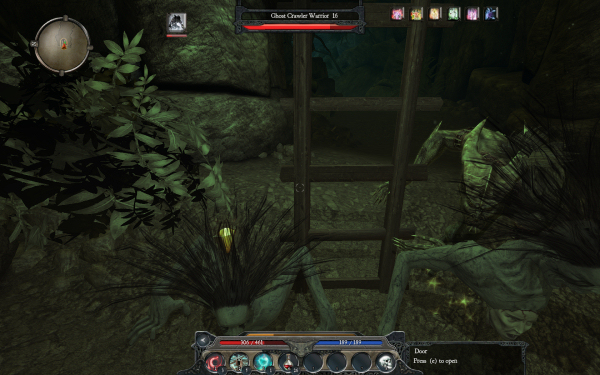

I could go on, really. But I’m sure you get my point as far as Divinity II goes. I’m always happy when a game takes me away from my daily life like this, for hours and hours at a time, until it’s 4 a.m. and I didn’t notice time go by.
I never played any previous Divinity games, nor knew of their existence until I did some research to find out there are actually two other titles: Beyond Divinity and Divine Divinity. However, I was happy to discover I didn’t have to go and play them to enjoy this new installment. Now it’s time for me to go find copies of Beyond Divinity and Divine Divinity to add to my collection.
Special thanks to Casey Lynch and CDV for providing a copy of this title.
For more videos of Divinity II, check out the playlist below: