
Reviewed by Brandy Shaul
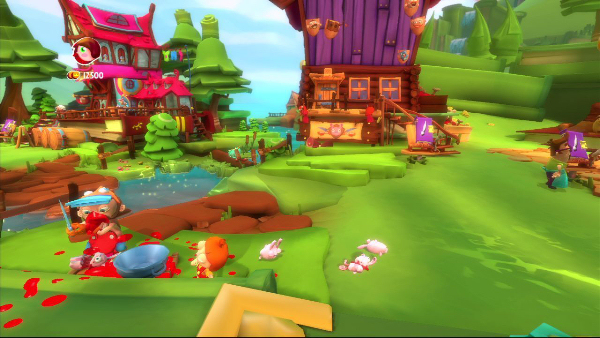
Fairytale Fights has a fantastic premise. Take everything that is good and wholesome about a childhood fairytale – the gumdrop forests, the princesses who are rescued by stunning princes, the now living but once inanimate objects – now cover it with thousands of gallons of blood. Take that pure storybook experience and create a world where iconic characters like the Fairy Godmother and Pinocchio are now corrupt and evil, and where Snow White and Little Red Riding Hood run around chopping pink bunnies in half with garden gnomes. After doing all of that, add in poor level design, an atrocious camera, a few widespread glitches, plus online lag and you have Fairytale Fights in a nutshell.
The game’s story itself is a very loosely structured take on classic childhood stories. The story lacks real continuity between levels, but for the most part is split into two distinct sections: the first sees you tracking down a Candy Witch who has stolen a kettle from the Three Bears, and the second has you rescuing a group of stolen princesses, apparently because you want to marry one of them yourself, but more so because a Giant (think Jack and the Beanstalk) wants to eat them.
The game allows you to pick from one of four playable characters (Little Red Riding Hood, Snow White, The Emperor from the Emperor’s New Clothes, and Jack), but these differ only in aesthetics. Afterwards, you’re thrown into an incredibly repetitive hack-n-slash experience that corrupts the colorful and actually beautiful gameplay surroundings.
The controls here are wonky, forcing you to tilt the right analog stick in the direction you wish you attack, which is downright head-scratching for a hack-n-slash title, in that you’re forced to let the analog stick return to its default position before once again smashing it to the side to take another swing.
The game allows you to equip two weapons and change between them with a press of the shoulder buttons, but the button to pick up a weapon and the button to throw a weapon (in order to injure enemies or to free up a weapon slot) are one in the same, causing unneeded frustration when you accidentally throw something away.
The weapons themselves come in three basic varieties: projectile, blunt and sharp, and can be procured from the corpses of fallen foes or from treasure chests commonly found in each level. The game contains dozens of different weapons in all, ranging from the standard swords and axes to more eccentric items like branding irons, broken lollipops and lampposts. While shooting your enemies with a gumdrop pistol or smashing them with a mallet is all well and good, the most satisfaction comes when using a sharp tool like a chainsaw or pitchfork, in that it pierces enemy flesh, causing amputations, decapitations, or other equally gruesome outcomes, and allows blood to splatter all over your character and the surrounding environment.
This gore becomes more pronounced the longer you play, as enemies are sent to you in higher numbers and are of a greater strength, requiring more hits to slay, and therefore allowing more time for the blood to pour. However, the novelty of sliding around in the blood pools that remain, or even that of watching a gingerbread man or giant squirrel’s head roll across the path in front of you is short lived.
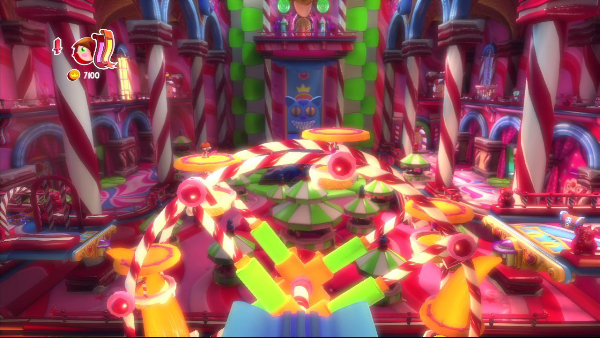
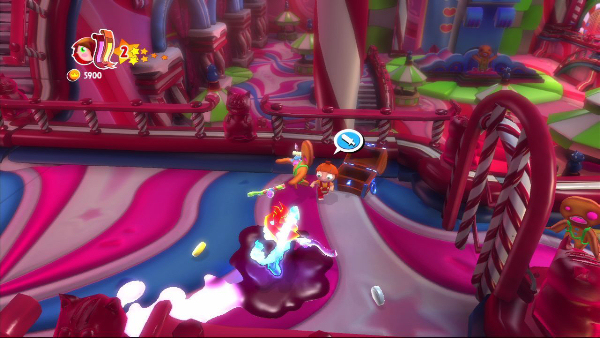
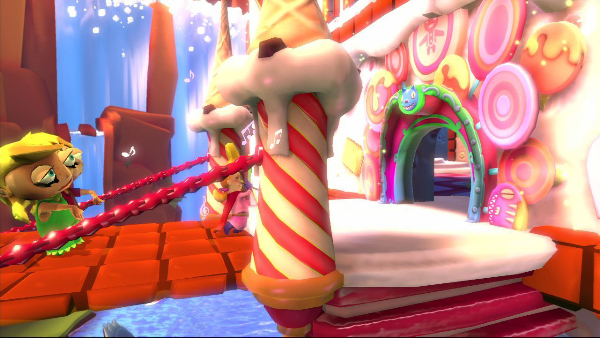
In addition, the game’s levels can take upwards of 30 minutes a piece, but strangely lack a checkpoint system, meaning that if you must leave for whatever reason, you have to start over again at the beginning, and experience what (by that point) would surely be an even more frustrating gameplay experience than before.
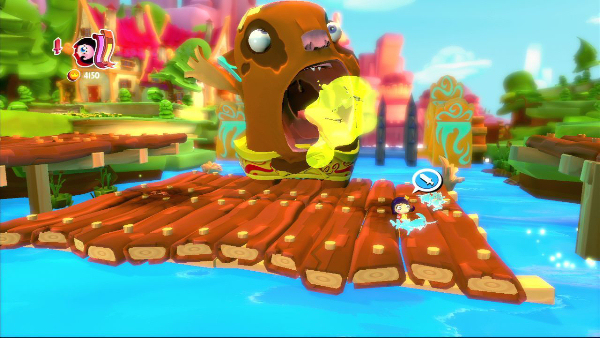
The game takes frequent breaks for boss battles, which force you into combat with characters like Hansel and Gretel and the Pied Piper, with bosses going through a predictable, yet for the most part completely unavoidable series of attacks that cause a ridiculous amount of deaths on your part, before you eventually luck into defeating them. Also, for some reason, you must defeat each boss two or even three times. That is, once you ascertain how to go about killing or otherwise defeating them, you have to repeat the same process multiple times.
Aside from its repetition and odd control mapping, by far the game’s biggest flaw is its camera. The angle is mostly that of a side-scroller, but this changes randomly to a whole host of other angles and zoom lengths seemingly on a whim, which is annoying at best, and at worst is so hard to become accustomed to that you are sent to many a cheap death simply because the camera view was too far away, hindering your depth perception, and allowing you to commit involuntary suicide by jumping to the side of a platform, or over it entirely.
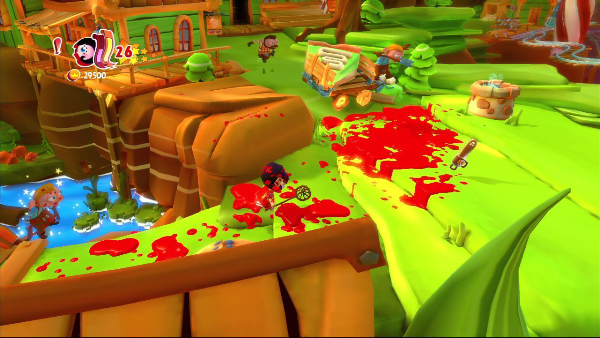
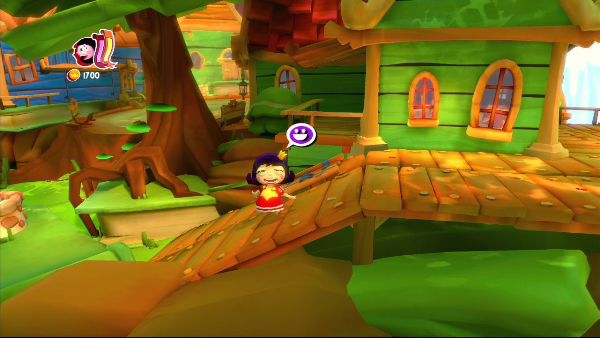
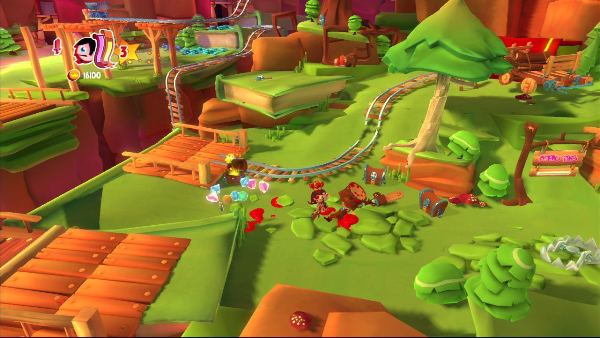
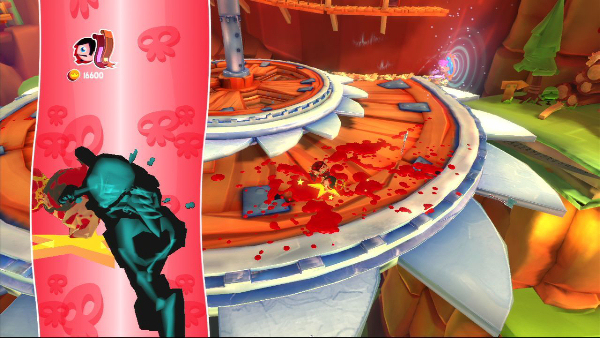
In a somewhat surprising but appreciated move, Fairytale Fights supports up to four player online co-op, but the experience is incredibly laggy, and even unplayable in parts, when the game’s enemies start randomly warping around the playing field, or when you or your friends visually disappear from the screen entirely.
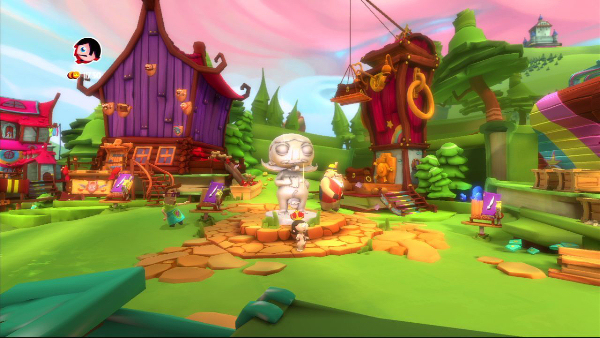
It’s unfortunate that the game plays as poorly as it does, as from a purely aesthetic standpoint the title is quite striking. The environments are incredibly bright and colorful – everything you would expect from a fairytale brought to life, just covered in the occasional burst of red splatter. The soundtrack is also quite calming and peaceful, only to be overlaid by gunfire and the sound of metal clashing with more metal or flesh.
Overall, the premise behind Fairytale Fights is great. If only Playlogic had put more time (or, as it appears to be, any time) into play-testing the final product, some of the game’s most glaring issues might have been resolved, even to the point of making the title appropriate to purchase. As it stands however, the final product contains simply far too many glitches and overall design flaws for me to recommend a purchase.
Special thanks to Danitra Alomia and Playlogic for providing a copy of this title.