
Reviewed by G. Williamson
The result of a Kickstarter campaign, FTL may have gone unnoticed by many. But rest assured that it is worth the purchase and the time invested in playing it.
In this space combat simulation game you control a single ship. You must deliver an important data packet to the Federation ship while constantly deflecting Rebel attacks. That’s about it, but don’t think it will be an easy task.
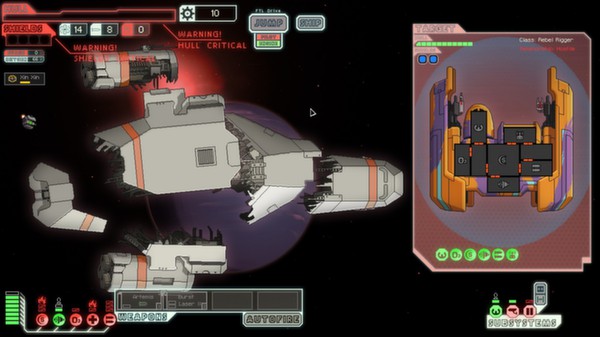
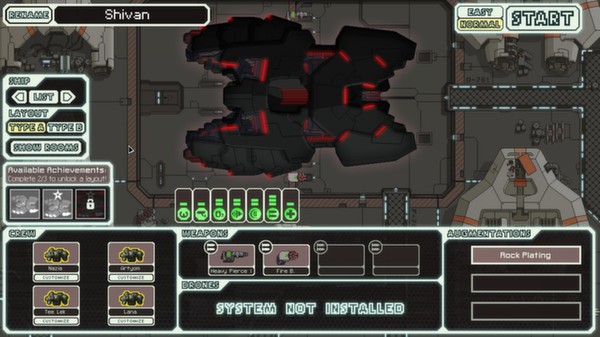
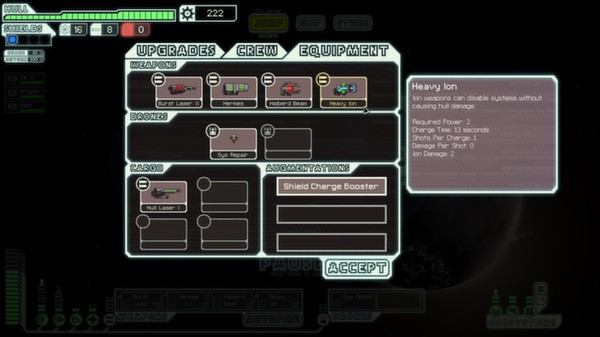
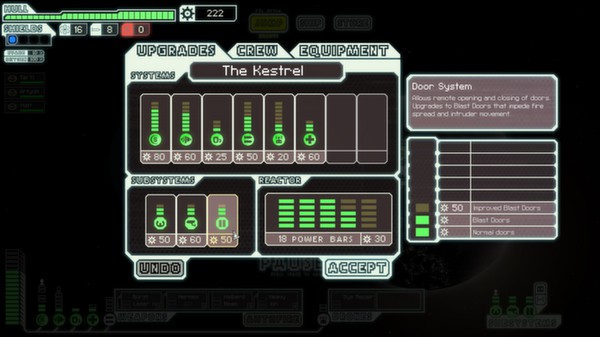
Before you begin you must choose a ship. Ships contain several rooms that house different systems such as life support, engines, piloting, weapons and crew. As you progress through the game, you will unlock more ships with different layouts, starting equipment and crew.
Your course is plotted through 8 different sectors, each randomly generated and composed of a series of waypoints. Each waypoint triggers a different event: sometimes you receive a distress call, many times you’re attacked, and occasionally you may get the chance to trade. There are also stores where you can purchase items, refuel or upgrade your ship’s systems. Whatever way you choose to proceed, the game won’t hold it against you. There are no moral choices to make here, so it doesn’t matter how you see your objective through, but only that you succeed.
The rebel fleet is right behind you, and you must stay one step ahead of them at all times, which constantly forces you to move forward. Since you’re not free to roam around, this isn’t like DarkStar One, where you can go back to another sector and gather supplies or upgrade your ship before moving on. So if you’re in dire need of scrap metal for upgrades, maybe you’re better off attacking that ship who sent you the distress signal just in case they were Rebels, and make the most of it.
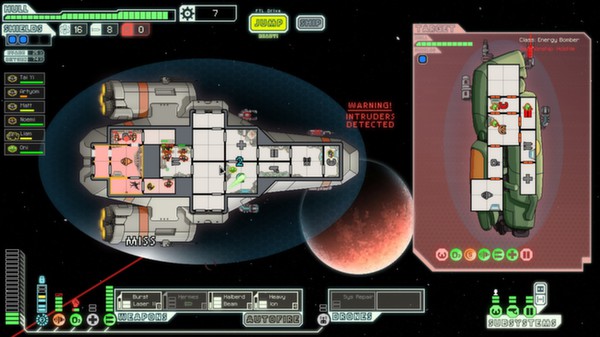
When you enter combat, the game becomes a real-time simulator. You can pause to evaluate your options, and plan your attack and issue commands. While under attack you need to make sure the systems you activate aren’t draining all your power, and that your crew is tending to the station or repairing damage. You can sustain damage in several ways: fires, system failures, hull breach and general hull damage.
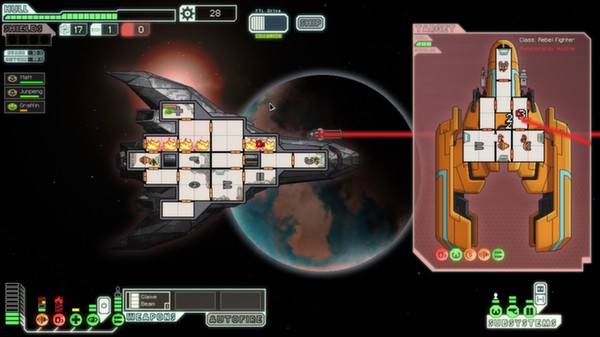
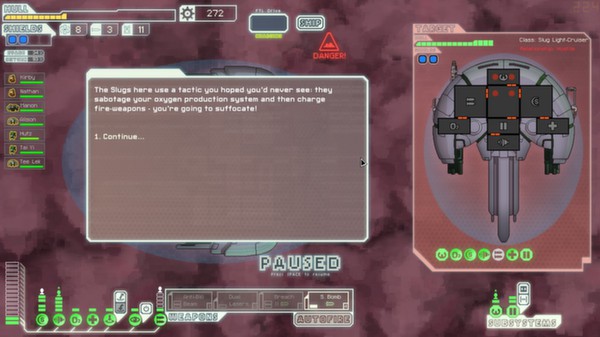
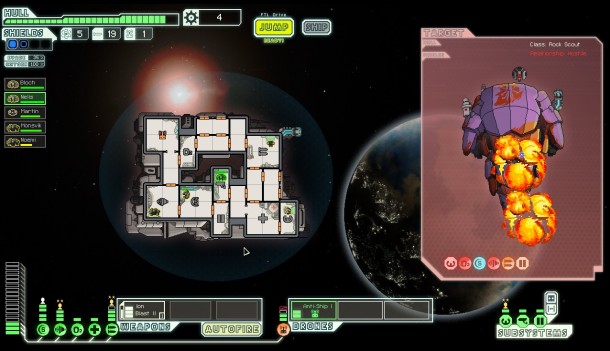
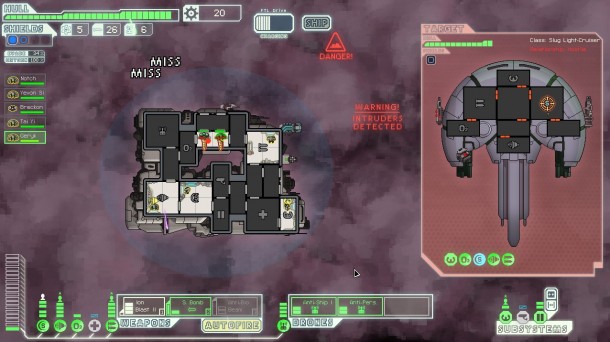
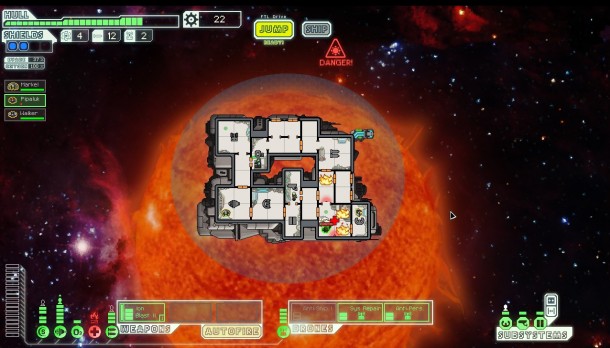
If you don’t want to attack, you can always choose to jump and escape, but you will soon run out of resources. Destroying the attacking ship or its crew will ensure your victory. You can also damage it enough and cause the crew to surrender, which will provide you with resources.
If your hull is damaged enough and your ship is destroyed, or if all your crew members die, it’s game over. FTL sees game over as permadeath, so even if you can save your session, once you die, the entire game is overwritten.
The simplistic look of FTL’s graphics may not be to the liking of some (possibly many) at this point in gaming, especially if you go looking for some fast and furious third-person space combat. However, this doesn’t make the gameplay any less appealing. It works really well combined with the mechanics, the strategic gameplay, the great music and well-written text.
FTL is one of those games that sucks you in for hours without you even noticing. I guess in space – even in this virtual one – time does flow differently, and what seems like an hour of play ends up in an entire afternoon lost to defending a ship from rebel attackers. Any game that makes you lose track of time like that is definitely worth playing.