
Alright, so I didn’t play Magna Carta: Tears of Blood. Typical me, play a sequel without touching the original… But I don’t think that impairs my opinion of Magna Carta 2.
Magna Carta 2 was a Christmas present from my husband, which casually (a couple of hours a day) took me a month to finish. Something like 70 hours, and I didn’t do everything, so I’m actually casually playing through it again.
The game puts you in Juto’s shoes, a young man who – oh, video game cliche, how I love thee – suffers from amnesia and has this aversion to using a real sword. Soon enough, Juto’s simple life in the peaceful Highwind Island is threatened by the somewhat confusing and overwhelming world politics and the resulting conflicts. Juto joins the armed forces to fight alongside the Princess and her allies in what becomes an epic adventure with a lot of predictable moments and a couple of interesting plot twists.
I admit that there is a lot of story to take in. The Northern and Southern forces conflict, the conspiracies behind the war, the evil plans of using human beings for dark purposes, the arranged marriage agreement… there’s plenty of it, but at some point it all seems pointless when the love story starts to develop. It was like a big shift in focus and then the end didn’t seem to make up for anything, really.
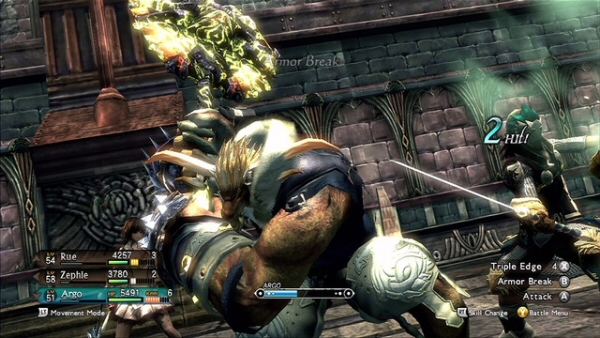
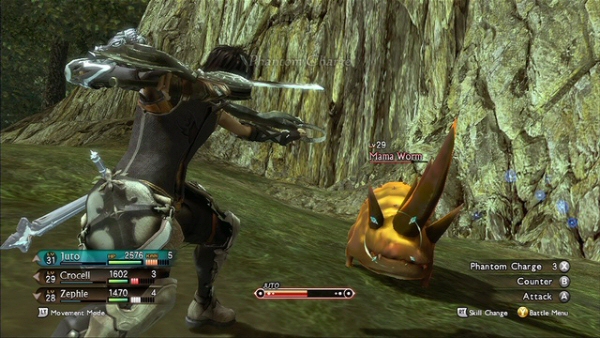
However, I really REALLY liked the gameplay. It does become a bit of a button mashing experience, but it’s an interesting party/combo system that keeps you on your toes if you want to pull off the most efficient attacks.
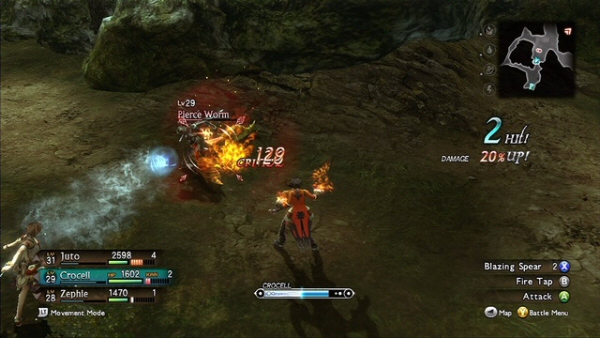
Your party is composed of three people (not right away), with up to three others on standby. You can switch your formation during battle, including swapping someone with an unconscious character.
Each character specializes in two different types of weapons. For example, Juto can use one-handed or two-handed swords; Zephie can use a fan or a rod; Argo can weild a hammer or an axe. Weapon types dictate the type of skills your character can use. There is a skill tree for each weapon, which you develop by attributing skill points to any skill or passive ability on the tree. Using your skills requires Kan, a type of energy produced as you attack.
Kan can also be obtained in physical form, which you can then attach to your weapons, improving your characters’ attributes and/or giving them status immunities or other special abilities such as extra experience or skill points gain.
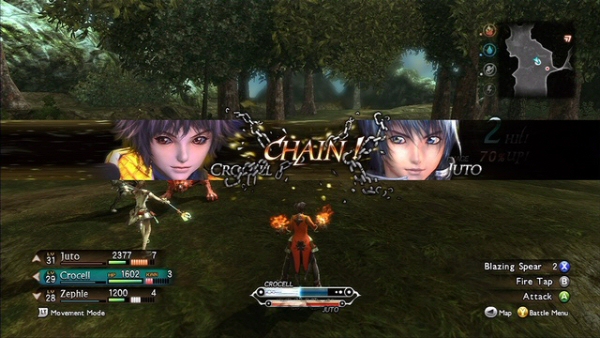
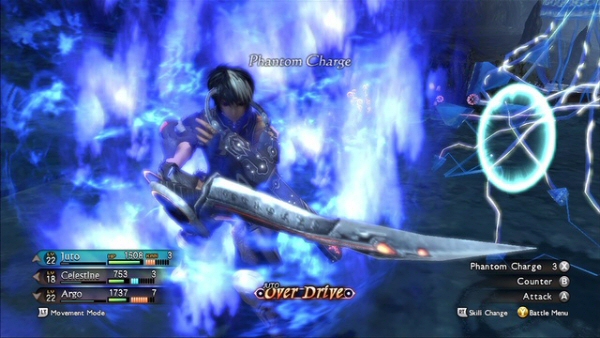
Your characters use stamina as well, so they will get tired and stop attacking to recover. This was particularly frustrating right in the beginning, when Juto was low level, but it works when you have a full party. You need to pay attention to the stamina meters or you’ll end up with everyone too tired in Overheat state, and doing nothing for a few seconds. But if you time it right, you can keep on going by making Chain Breaks happening. How do you do it? Well, you need to attack several times until a character goes into Overdrive and then use a skill. At that moment, you switch to someone else with lower stamina, so they go into Overdrive quicker. Use a skill again while in Overdrive before the previous character gets out of that state, and you have your Chain Break. It wasn’t easy at first, but I when finally got the hang of it by using the right combination of characters and weapons, it was a breeze.
What wasn’t so breezy was the party A.I., which sometimes worked, but most times was a major swearing inducer. Not only they tend to get stuck on just about anything – such as around a bend, behind a fence, vegetation, a small depression on the ground (…really?! REALLY?!?!) – they also seem to be masochistic enough to stand on on affected areas that cause status condition changes, some of them leading to death.
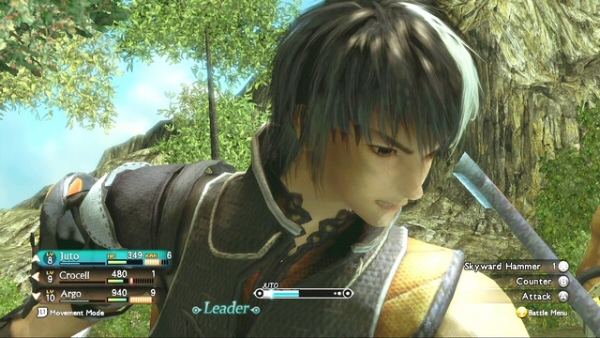
There is an A.I. setting system that lets you tweak their functions a little, but it doesn’t work nearly well enough. Your allies will still pick their own targets even if you tell them to assist your leader, or your designated healer will make you sweat nervously because she will wait until the last moment to cast that recovery spell. That is, assuming she doesn’t get in the way of a serious beating and bites the dust first. The only way I could fins around this problem is to manually take over whatever character and have them do what I want to, which completely defeats the purpose of the A.I. settings.
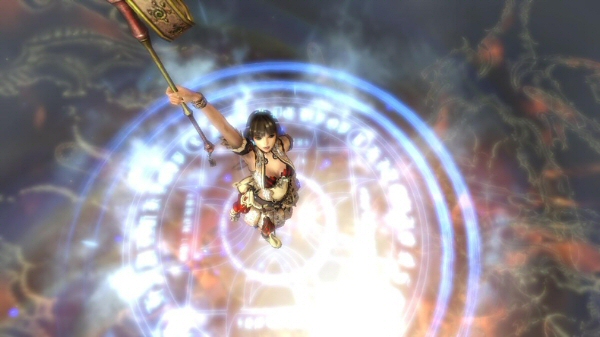
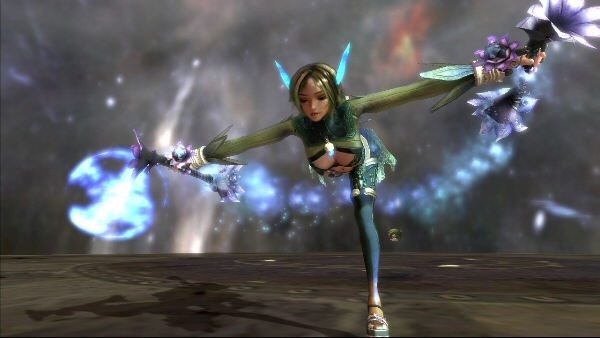
Graphically, Magna Carta 2 is definitely a feast for the eyes. The character models are extremely detailed, be it in their physical appearance or their facial expressions, but they do lack in body animation during their conversations. Character art is equally sharp and detailed, with a little added bonus of getting to see a random character during the loading screens, accompanied by a profile description.
The CGI sequences are gorgeous, the combat animations and spell effects are great, especially the co-op combat moves that you learn as you progress, even though they are pretty lenghty and you can’t skip them.
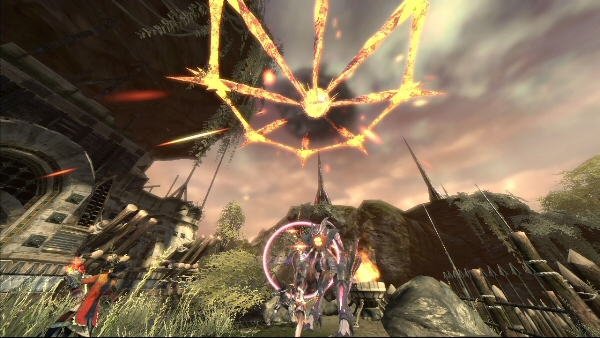
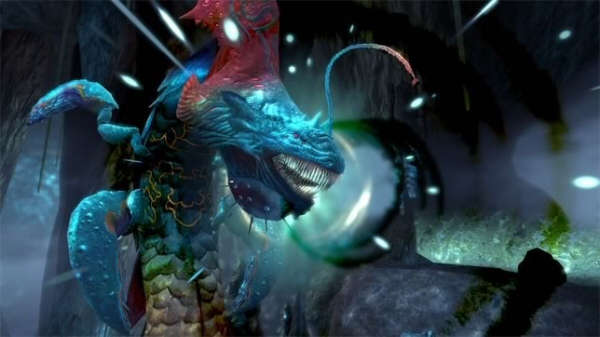
Travelling from one area to another is always a treat as you notice all the little details in the landscape. The creature design is also interesting, with bosses being impressive and intimidating.
On the sound department, the game isn’ too shabby. The voice acting is sometimes over-the-top (Celestine can get particularly squeely and annoying) but won’t make you want to mute the game. The music isn’t overwhelming but it’s pleasant and it does suit the situations; however, it repeats a bit. Out of everything, I think the sound effects during battle are the best bits, even if you might get tired of hearing your characters repeating the same lines over and over as you use the same set of skills.
Unlike my usual RPG experiences, Magna Carta 2 ended up being an RPG that I kept on playing not for the reveal of the story (in fact, I wasn’t particularly happy about the ending), but just to see new sights and kick more ass.