
Reviewed by Rachel McBurney
Point-and-click adventures can create some of the most memorable journeys for any gamer, but they often get a bad rap. The reason for this is that these games are more like movies, less like reaction-based adventures, and players follow around through another person’s life instead of pretending to be that character. Some people dig it, but some people just can’t get into it. Because of this, immersion is immensely important in these stories, which is why the storyline is so crucial with these types of games. From the creator of Gabriel Knight, Jane Jenson, comes the Kickstarter game Moebius: Empire Rising. Working with Pinkerton Road and Pheonix Online Studios, does Jane Jenson bring us another memorable character and enlightening experience? Let’s find out!
The premise of Moebius starts off seeming fairly interesting. It tackles the idea that history repeats itself, and questions whether we actually have a choice in that or not.
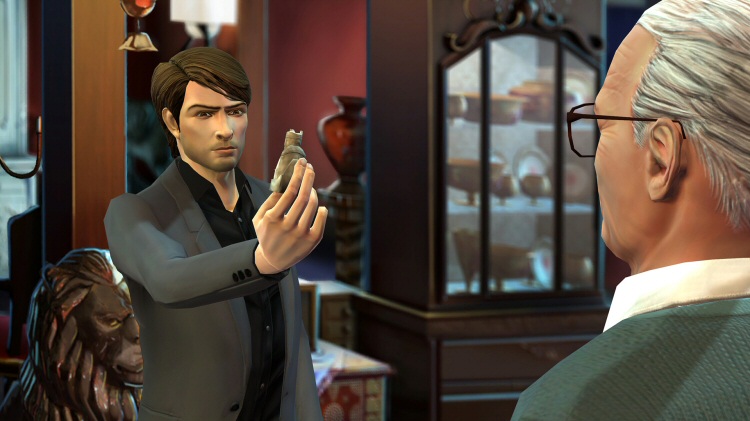
Our protagonist, Malachi Rector, is an appraiser with a very keen talent for deduction. He’s a narcissistic, misanthropic, sarcastic, British genius, who he flies all over the world charging exorbitant fees to appraise priceless works of art. But then, a new client with a different job in mind requests his assistance. An agency called FITA is looking to recruit him to take on the investigation of a murder, and as it turns out, the fate of the United States may be in his hands.
The story seems really interesting, but tends to drag at points. Rector himself feels like a mix of characters such as House and Sherlock Holmes, but with less depth or extremism to his personality.
His matter-of-fact attitude may be his doom, as many of the conversations in the game feel a little lackluster, with highly scripted responses that feel forced in many situations. Rector starts talking about the murder he’s investigating with Barozzi, who apparently knew the family well, and Barozzi starts recounting as if telling him about a piece in a museum, before returning back to discussing the economy and his antique pieces. While the humour in it is that Barozzi’s world is a museum, and every aspect of it is, it makes for a less than entertaining conversation. Later in the storyline things do pick up a bit, especially with the introduction of David Walker, an ex-soldier from the States that Rector seems to know somehow, though he can’t recall it, and ends up being his bodyguard on his journey. David has a lot more personality, and actually seems to humanize Rector more – a good complimentary character. Players will even get a chance to control David along the journey, which was a welcome change.
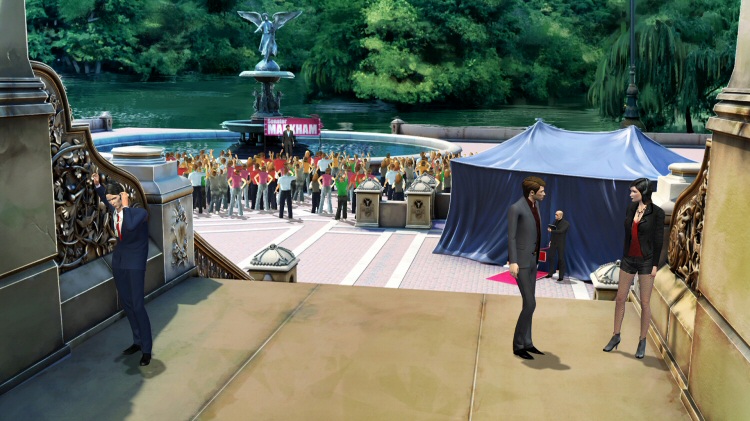
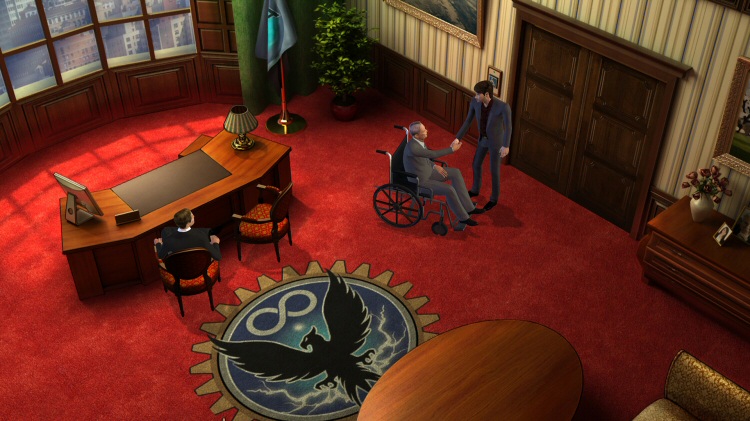
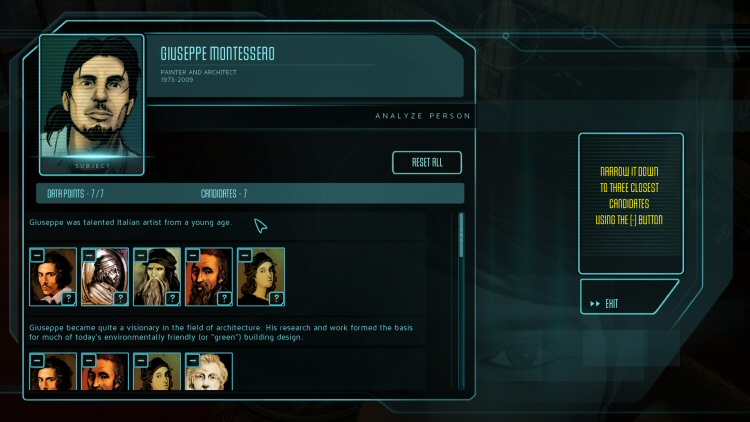
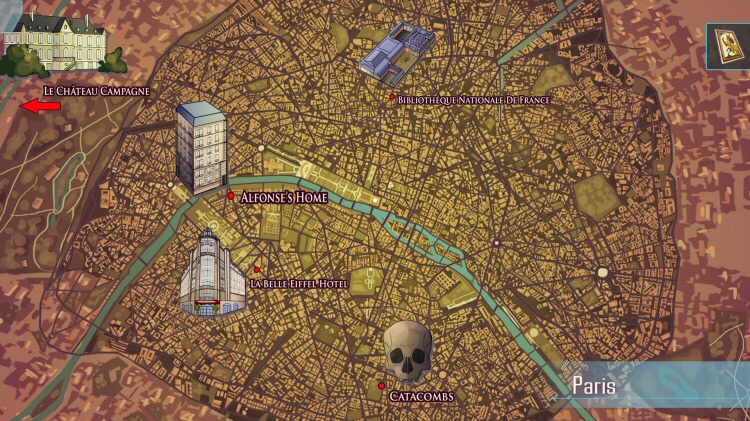
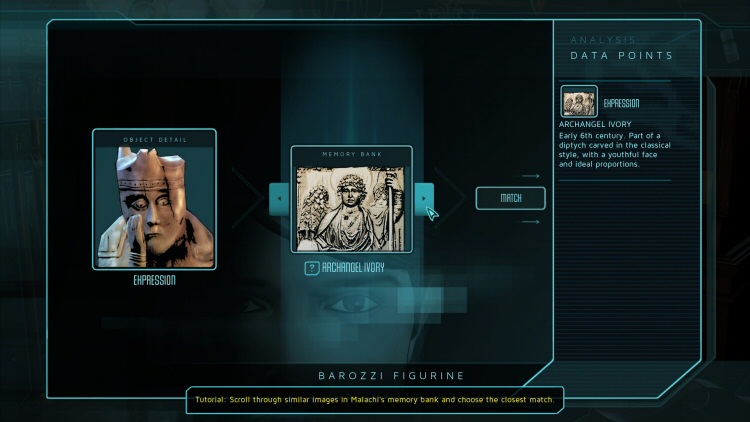
If the story were more compelling, the fact that the puzzles and mysteries in the game are very basic would be less of an issue. I won’t lie, I’m personally always getting stuck on at least a couple puzzles in point-and-click adventure games, and this was the first time I didn’t even scratch my head for a game. Much of the player’s time will be spent doing fetch missions, picking up items that will be clearly used later (a key, a passport, etc), then going back later if you couldn’t or didn’t pick something up before. The game holds typical point-and-click mechanics, with an added feature of profiling different people throughout the game. The profiling attempts to match people to others in history, and feels rudimentary, even sometimes just plain bizarre (a woman wearing stylish clothing is described as clearly being sexually frustrated, with no indication as to why we have come to that conclusion).
Some of the options for choices, however, can make you grin a little. For example, when seeing Inspector Brunetta for the first time, you analyze him and one of the deductions is that he has red eyes. The probable reasons for this are allergies, working long hours, little sleep, or stoned. Clearly if you choose stoned it will tell you the option selected is incorrect, but it’s there to give players a little smile, and those subtleties hidden throughout the game may be what makes this game enjoyable for players.
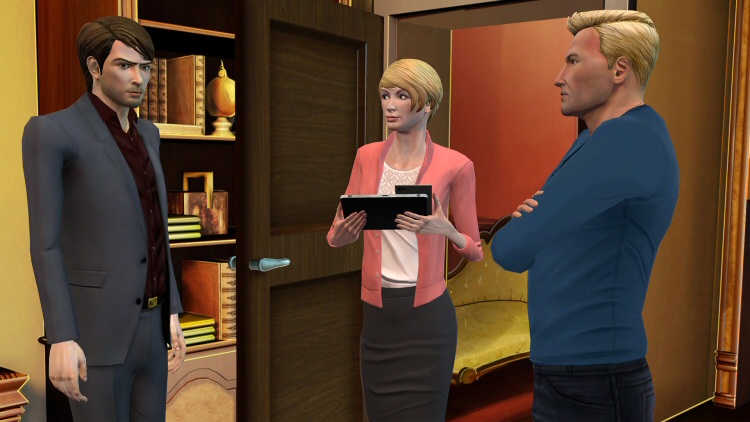

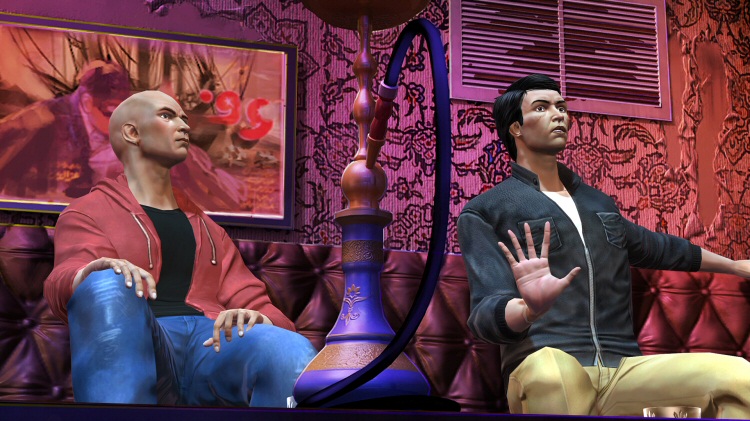
Seamless mechanics and graphics are extremely important to many people in point-and-click adventure games, and Moebius is nearly flawless in its delivery. While the mouth movements in the game are a little mistimed and odd, the characters are well designed, the scenery is, and there is no bleed effect, ghosting, or inaction when clicking on object – which is very typical of most games of its kind. The backdrops are beautiful, with vibrant hues of purple on buildings as the sun is setting, or crystal clear water flowing through a bridge on an empty back street in Venice. The graphics are sharp and give a feeling of depth to an otherwise 2.5D world, and the menu options are easy to maneuver through. To accompany the visuals, elevator music is the best way to describe the musical tone choice – very light, with shakers for percussion, and light guitar in the background. It’s not a bad choice, as Rector himself often feels like he’s clicking through character profiles, in search of that missing mustard he passed by in isle six. Overall the graphics and sound quality in Moebius are excellent for its genre, and is something that makes delivery of the storyline more immersive.

While Moebius: Empire Rising isn’t breaking the mold regarding storyline or difficulty, it’s something that many will pick up to play, especially if Cognition or Gabriel Knight are on a gamer’s favourites list. The game has its moments of charm, and the setup is executed very flawlessly, but some players may find the difficulty level too low and part of the storyline less a compelling reason to push forward. If you’re into point-and-click adventures, it’s worth a try, with about 10 hours of content to play through.