
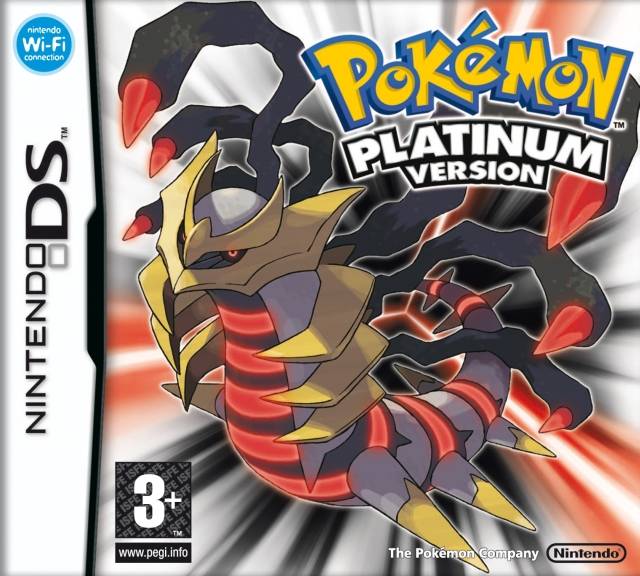
Reviewed by Brandy Shaul
When Pokemon Pearl and Diamond launched in 2007, both I, and millions of fans around the world were instantly hooked. In the two years since the duo’s launch, I’ve sunk over 100 hours into my copy of Pearl and still haven’t completed all of the sidequests within the game, not to mention the many, many gaps left in my Pokedex.
But just because my time with Pearl may have not yet come to an end didn’t make me any less excited about Pokemon Platinum,the third DS title to share the same Sinnoh Region based storyline and ultimate Pokemon Palkia and Dialga. But while more casual fans of the franchise may be quite hesitant to spend money on another Pokemon game, especially one that isn’t a true sequel, there are actually a multitude of additions and subtle tweaks that create more differences between Platinum and Pearl/Diamond than just the name.
Where there are literally dozens of differences (granted, some are very subtle) between Platinum and its two immediate predecessors, the majority of the storyline remains the same. Starting as most Poke RPGs do, you begin your adventure as a would-be trainer assigned by professor Rowan to scour the countryside and all other regions of Sinnoh in an attempt to fill your Pokedex (for those newcomers to the franchise, the Pokedex is like a notepad with a brain) with data about all of the Pokemon there are to be seen. But to help you find Pokemon to capture/study you obviously need one of your own and are given a choice of three: Chimchar the monkey, Turtwig the turtle and Piplup the penguin.
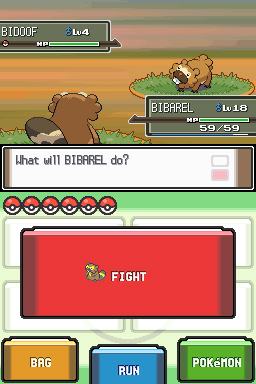
Once you choose your starter Pokemon, your best friend and rival will pick the Pokemon type that puts yours at a disadvantage. For instance, if you choose Turtwig, the grass Pokemon, your rival will pick Chimchar, a fire type, since flames can easily burn leaves, grass, etc. There are many other Pokemon “types” ranging from ice and steel to poison and flying, with options also being available to train certain Pokemon in multiple “type” moves (like teaching a water Pokemon steel type moves, or training a grass Pokemon in the ways of the psychic type).
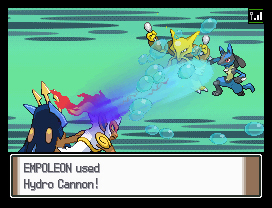
These Pokemon types must be acknowledged throughout gameplay if you wish to find any real success. That is, your level 40 Empoleon (an evolved form of Piplup, the penguin) may be able to defeat most anything with one water type move, but put it in a gym leader battle (as with other Poke games, there are eight gym leaders ? think bosses ? to fight in all) against an electric type (even one of a much lower level), and you can kiss your supposed superiority goodbye.
Gym leader battle or otherwise, they all play out in the same fashion. The touch screen serves as your overall menu, or command center, giving you access to your healing or other battle items, as well as allowing you to give your Pokemon orders while competing. Each Pokemon can learn up to four moves, with stronger moves being unlocked as your Pokemon level up via the experience (EXP) points gained after each battle. As you might expect, the EXP earned per opponent is relative to their own strength, with extreme bonuses being granted after gym leader battles.
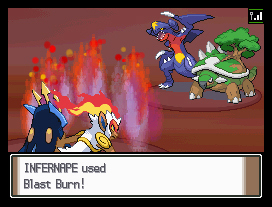
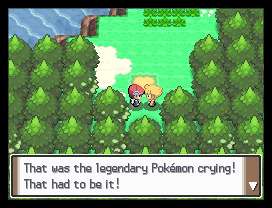
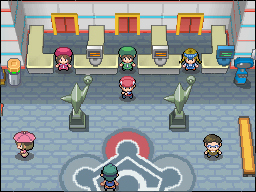
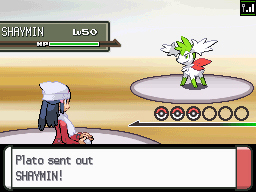
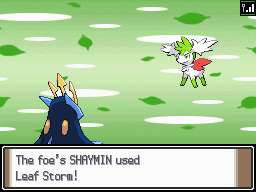
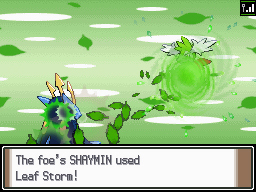
Earn enough EXP and not only will your Pokemon level up and receive stat boosts in the way of increased hit points, defense, attack, speed, and so on, but they will also (species permitting) evolve into even stronger Pokemon.
Evolving your Pokemon is arguably the single biggest time-sink in the entire game, as each Pokemon has its own requirements for evolving. Some may simply require reaching a certain level, while others must be traded between two real-world players. What’s more, some species will only evolve if their happiness level is high (achieved by keeping them as one of your active team) or if they are holding a particular item.
Other than battling to grow, however, there are a multitude of other activities to take part in with Pokemon Platinum, with a little something being available for everyone. Some of these supposed side-quests actually contain small chunks of your character’s mission to defeat the evil Team Galactic before they can take over Sinnoh, while others are strictly for your enjoyment.
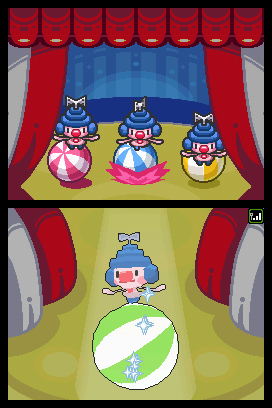
The largest side or mini-game, if you will, will be familiar to those who watch the Pokemon television show: Pokemon Contests. In these Contests, you dress a single Pokemon of your choice to fit the theme of the competition and are then asked to perform some of your Pokemon’s best moves for a lineup of judges, much like a beauty pageant.
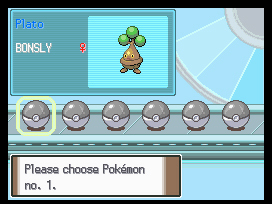
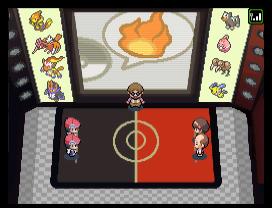
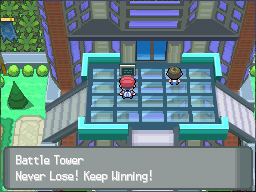
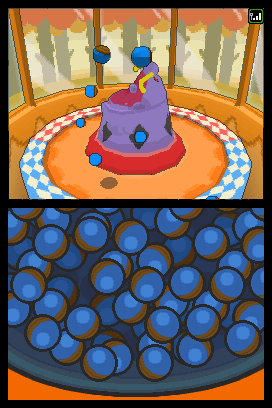
Other options for battle-free fun include gardening, mining, cycling and spelunking, and it is during these non-story driven instances that many of the differences between Pokemon Platinum and Diamond/Pearl become apparent. Some differences are minor, like the addition of trainers that can be battled to Pokemon Centers, and an expanded list of Pokemon allowed into Amity Square, a restricted area where special items can be found, but others are more far-reaching, including the appearance of a few dozen more Pokemon to the Sinnoh Pokedex.
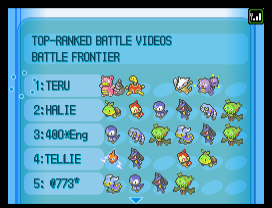
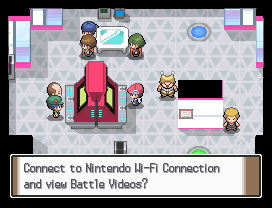
Another large set of differences comes from the multiplayer side of the game. Where trades between two real life players has always been a option, certain multiplayer components now support up to 20 players, as well as offering new mini-games to be played with friends via Wi-Fi (both local and otherwise).
But that’s not to say that the differences are reserved simply for those non-story based entities within the title, as the story itself has received some changes as well. As with most of the visual changes (read below for more), most of the storyline changes are so subtle that only the most observant of fans would be able to notice them (changes like a switch in non-vital items given to you by NPC’s or the change in a certain character’s level or Pokemon’s stats: increased attack power, decreased speed and so on), others do have more of an impact on gameplay, like the addition of new Team Galactic bosses that must be defeated before moving on, or the simple fact that Team Galactic is far more dastardly in this game than ever before.
 But perhaps the largest difference between the two games is the addition of Distortion World to Platinum. Distortion World is, as the name suggests, a distorted version of reality, with moving platforms and scalable 90-degree walls that defy the laws of physics. Giratina, Platinum’s main legendary Pokemon, resides here, making it a must-see location for those who wish to add such a rare Pokemon to their Pokedex.
Finally, a very large section of differences are based solely on the aesthetic properties of the title. The most noticeable change comes in the overall environment of the Sinnoh Region, which has cooled significantly since the days of Diamond and Pearl. This causes snow to appear in areas that were once tropical, and forces an attire change on most characters (including your playable character ? regardless of whether you choose to play as a boy or a girl) to be better suited to the cold weather.
While the main look of the game is retained, that being a bright and colorful angled overhead view of the landscape, they have received quite the boost, with buildings and other environmental components like flowers and trees being much crisper and detailed this time around. Furthermore, players are given new customization options to change the pattern surrounding all menu boxes, certain gyms have been given interior design makeovers, and all of the sprites within the game (both Pokemon and human) are now given much more detail and movement within battles.
While this is already a large list of differences, it only scratches the surface when compared to how many changes have actually taken place, as it would be impossible for me to list them all in the space of this review. One thing that hasn’t changed however is the soundtrack that remains as satisfying and epic as ever.
If, for whatever reason, you’ve yet to jump onto the Pokemon bandwagon, Platinum is without doubt the ultimate Pokemon experience, and not only provides a great entry into the series for beginners, but contains within it enough incredibly addictive gameplay to make it worth a purchase for long-time fans who may already own Pearl, Diamond or both.
Special thanks to Allison Guillen and Nintendo for providing a copy of this title.