
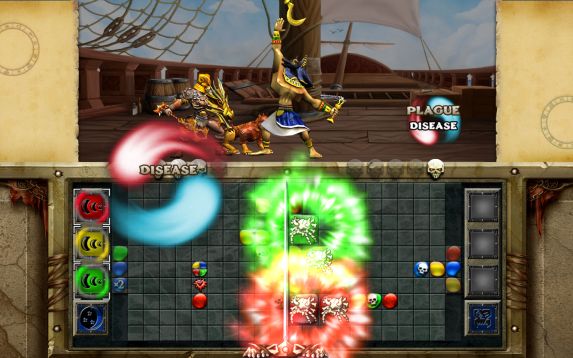
Puzzle Chronicles caught my eye because of the similarities with Puzzle Quest, Super Puzzle Fighter and Igor The Game (DS version), with a mix of puzzle boards, “special moves” to attack your opponent, and quest/RPG gameplay.
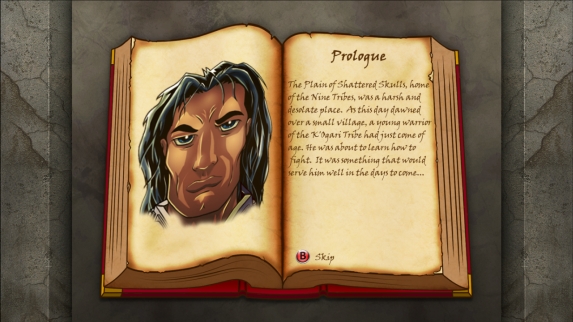
You play as “insert name here”, a slave turned hero romaing the lands of the Ashurin Empire as you search for clues regarding the fate of the people of your tribe.
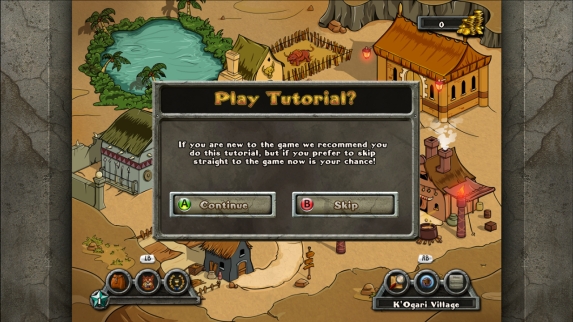
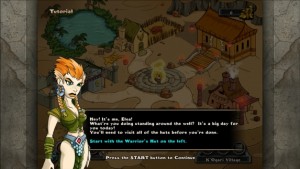
Progressing through the adventure map, you will first become acquainted with the controls and puzzle mechanics by completing a series of tutorial lessons. Soon enough you will be out on your own, fighting enemies and taming beasts to fight by your side.
The main difference between Puzzle Quest, Igor The Game or Super Puzzle Fighter is that the puzzles aren’t played vertically, but horizontally. Instead of having pieces fall from the top of the puzzle field, they enter from the left and are “dropped” to the right.
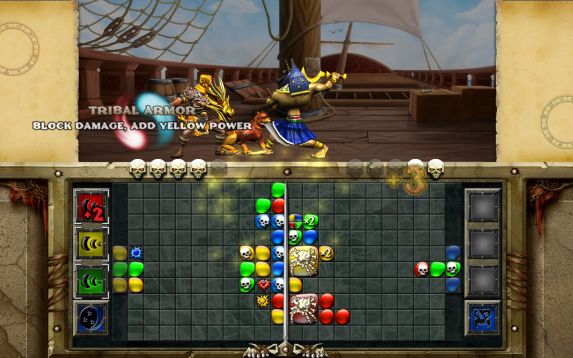
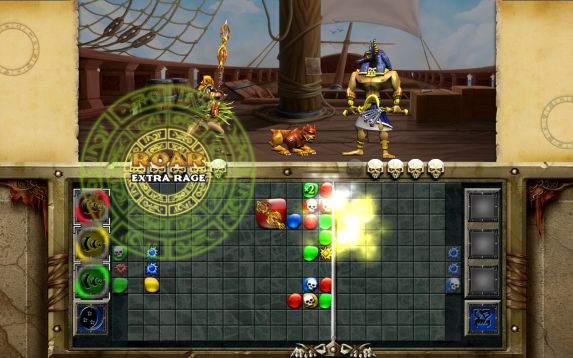
The puzzle “battlefield” is divided vertically in two. Your section is on the left, while your enemy appears on the right. The middle bar isn’t static though; depending on your progress, it will move to the left (if your enemy is winning) or to the right (if you’re winning). The goal is to shorten your enemies’ battlefield so that they won’t have space to place gems anymore, and thus lose the battle.
But how does the bar move, exactly? Combos, of course. As the three-piece stack of gems comes in from the left, you can rotate it or drop it to place it in the spot you want it to go. Battle gems (they look like a star, of sorts) will break all connecting gems when they touch a gem of the same color. The skulls are your Rage gems; destroying five of them will push the dividing wall towards your enemy.
Combining four gems of the same color in a 2×2 square creates a power gem of that color. Destroying these power gems will activate a piece of equipment corresponding to the color: a red power gem activates your weapon and gives you rage; green activates your shield and makes you temporarily invulnerable; blue and yellow correspond to whatever trinket and ring you have, activating their respective powers.
 Destroying gems is also how you accumulate power in order to use your warbeast’s abilities. Think of it as Puzzle Quest’s spells or one of Igor DS moves. Once you have enough power, you can do an attack. Depending on how you train your warbeast, you can “equip” different abilities, such as stun, rage or scrambling your enemy’s gems.
What makes the puzzle combat more exciting is the absence of a turn-based system. While your making your moves, so is your enemy, and sometimes things can turn in the blink of an eye.
Story progression is fairly linear. There is even a golden sparkly trail that appears every time to tell you where to go next. This is a bit superfluous, as you could just as well do with a simple glowy feature on the next location, instead of waiting for the trail to appear, make its way there, and then fade so you
can move again. However, there is no excuse for getting lost.
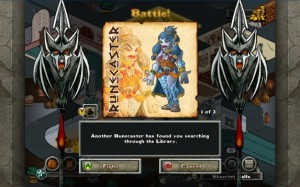 As in Puzzle Quest, you also have puzzle variations for leveling up your beast, hunting for treasure and crafting items.
As for replay value, revisiting locations sometimes lets you unlock a dungeon, which means you can go there any time to fight as much as you want. This is part of the achievements, as are other special locations. Completist gamers will find enough to do around the world map. But there is always local and online multiplayer to keep the competitive spirits going. Furthermore, no matter in what mode you play (Versus, Quick Battle, Single Player or Mini-Game), your character remains the same and you will still gain experience and be able to improve your skills and stats.
While the art style seems to be quite a bit of a mixed bag (3D animated characters fighting, colorful 2D backdrops with some random animation, and a very pixelated ship in the distance of one of them…) and the characters and story don’t seem to be as compelling as those of Puzzle Quest, the game mechanics themselves were what kept me going.
For me, there’s nothing like an addictive puzzle game, and even if Puzzle Chronicles isn’t extremely original, it still offers enough challenge and a good chunk of replay value. Those who enjoyed Puzzle Quest will find this more modest successor entertaining.
Special thanks to Steve Willis and Konami for providing a copy of this title.