
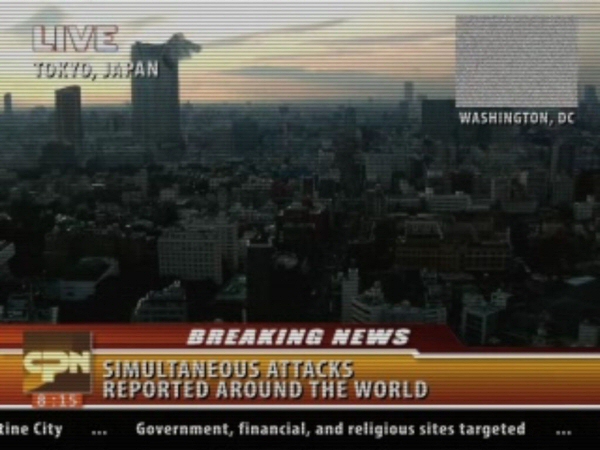
An important news bulletin announces multiple explosions taking place in key locations around the world. What caused it? Who is behind it? Flashback to before these events, where Ed receives a call from a distressed Dr. Morales, the scientist in charge of the Resonance project. The misuse of potential useful science becomes an issue, and as Ed, we can understand both and try to reason with the professor. This is how Resonance begins.
You take control of four characters, alternating between them to make the story progress. All of them are realistic, very well-written and excellently voiced characters. Research assistant Ed, doctor Anna, investigative reporter Ray and detective Bennet begin their stories separately, but eventually they all converge in the same direction to become directly connected with the main story.
You control one character at any given time, but sometimes you will be able to use more than one in the same scene to transfer items and help solve a single puzzle. All characters play just about the same, with the exception of Ray who has special hacking abilities.
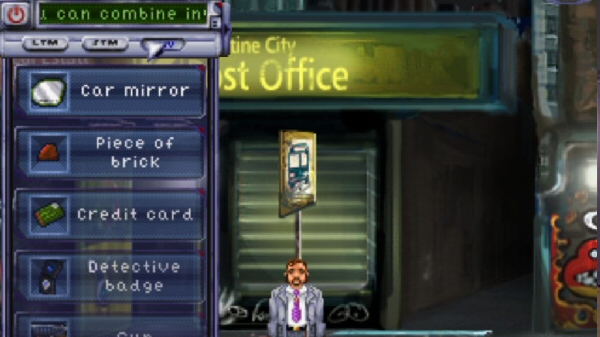
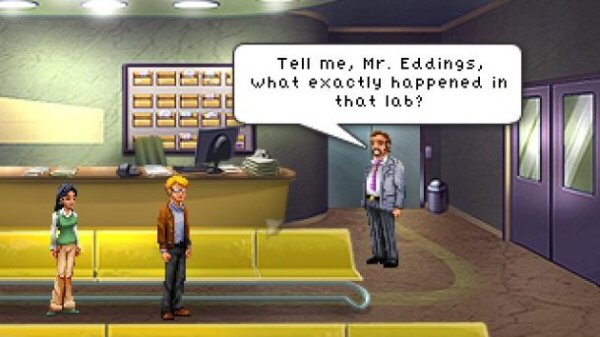
Resonance has an interesting dialog feature that can at times be frustrating. It works a bit like an inventory, since you can click things that belong to your surroundings and drag them into the short-term or long-term memory categories. You can then “unlock” new dialog options by dragging these icons into the respective box and talk about specific things with someone. While this introduces a different interface and game mechanic, sometimes it can be annoying to figure out what goes where to use now or later in a conversation. In a way, it had me wishing for the typical dialog trees.
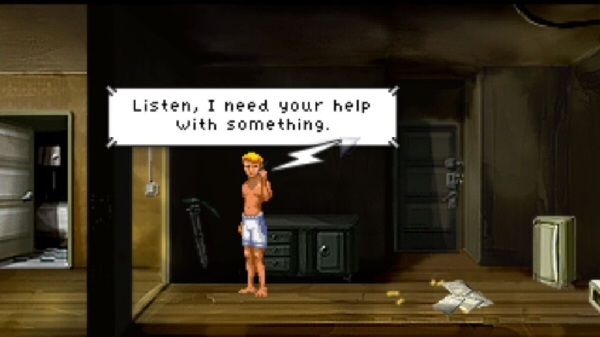
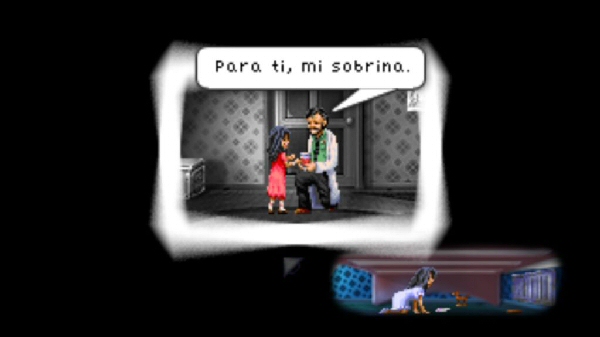
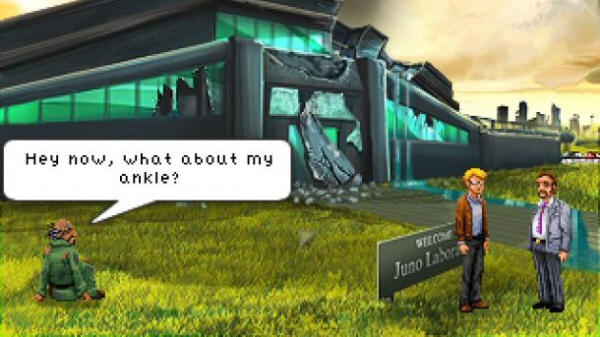
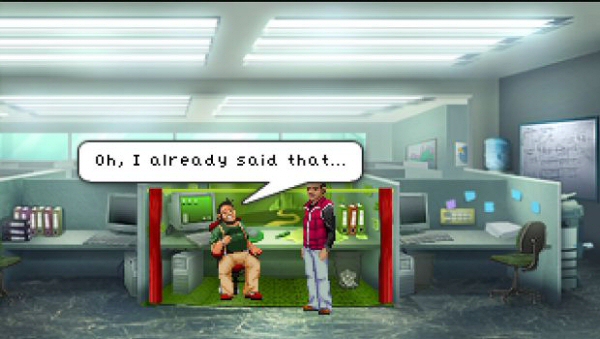
Also somewhat hidden in the inventory and memory storage is the character selection tab, which you can pull out to alternate between characters. Hovering over the interface for memory items, inventory items, and characters all in a short space can get a bit awkward at times, but what is most annoying is Ray’s cell phone, with all the bouncy icons all over the screen constantly changing positions!
Another interface item that baffled me was the score. Why was I earning points? What was I supposed to do with them? And then at some point I died and noticed the score going down, and a rewind feature placed me back at the beginning of the scene that lead to the choices which caused said death. To sum it up, points are your “continues”.
The story moves at your own pace. Depending on if you like to click everything and inspect everything, combine this with that and see if it works (Resonance fortunately doesn’t depend on weird item combinations), or just plain fail miserably at figuring out what topics to talk about (like me!), the adventure can last you anywhere from 4 to 8 hours.
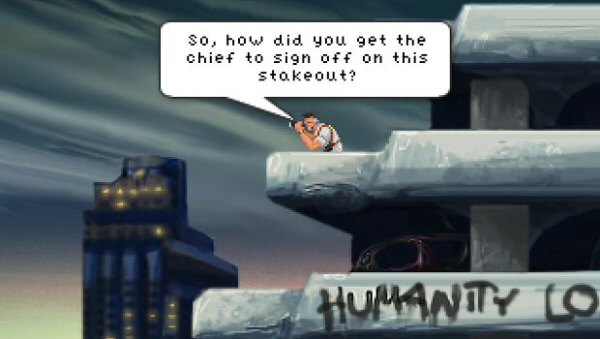
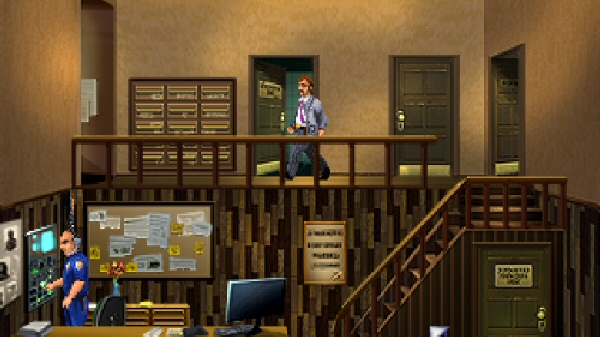
Resonance never felt cumbersome, boring, nor did it ever make me feel completely lost. There are subtle hints that lead you to the next step without requiring overthinking. The most overthinking you might do is when you need to reach somewhere with a certain character and a specific memory, or how to create a distraction with a character while the other does what is meant to be doing.
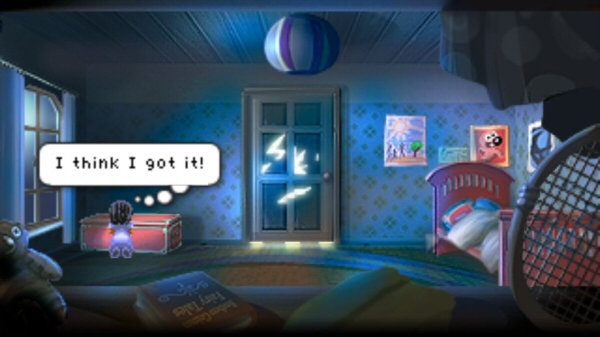
The best moments of Resonance are those that make you think or stress out. A particular scene with a young Anna right near the start was especially intense, as you scrambled trying to find a way out on a time limit. Seeing the plot reveal itself little by little is extremely satisfactory as well, and it can lead to one of multiple endings depending on certain choices.
Good things can happen in low resolution and old-school pixelated graphics, and while at first glance, Resonance may seem extremely outdated – something that will probably turn off certain people right away – there is a deep, intriguing, mature story and a good modern mystery waiting to be solved. Give it a chance and you will be pleasantly surprised!