
My first contact with the Persona series came from the playable demo at E3. Right then I was surprised with the focus of the game on socializing, but I really didn’t know what to expect since I never played any of the other games before. But that wasn’t really setting me back as far as story goes, since Shin Megami Tensei: Persona 3 explains everything fairly well.
In Persona 3 you play as an orphan boy who has just transferred to Gekkoukan High School, into a separate dormitory where only members of a group called SEES live in. Shortly after his arrival, he is attacked by strange Shadows and finds his ability to summon a special creature to help defeat them. The SEES is composed of a group of students who also have this special ability and manage to stay “awake” during the Dark Hour. This happens every night at midnight, a period of time when time itself stops and the city becomes a gloomy place, people turn into coffins, and a strange place appears where the school usually is. The Shadows roam the city and there are reports of many deaths and several cases of Apathy Syndrome, so SEES is out to try and control the situation.
The gameplay is split between the daily life of a student and the nightly exploration and battles. There is an actual calendar and different times of the day during which your available activities will vary. In the morning you go to class, after school you are free to do whatever you want, at night you can either go back to your room or go out and adventure.
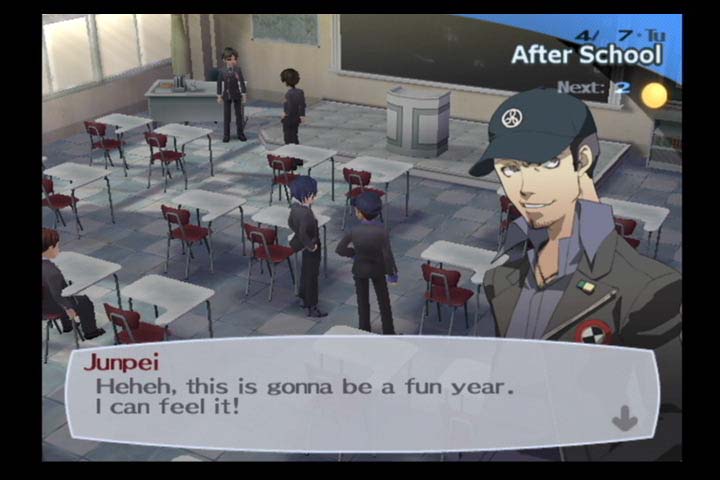
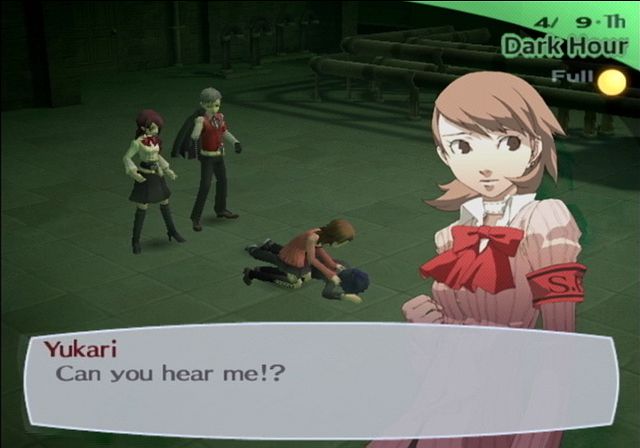
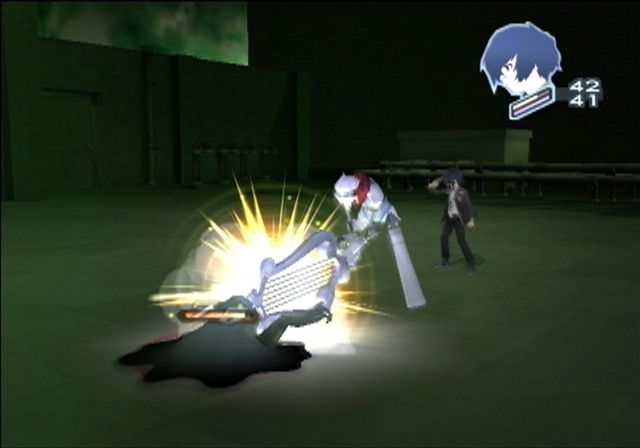
The social aspect is as important as the RPG combat, and it’s pretty easy to get distracted with it, concentrating on building relationships instead of leveling up. But the catch it, they are connected.
The main character will come across several options during his day, be it dozing off or paying attention in class, whispering the right answer to a classmate, joining one of the school clubs, hanging out with a friend after school, playing a game on his computer or simply study.
There are many locations you can visit, and pretty much every action has a consequence. Studying increases your Academic skill. Helping others in class or answering questions correctly increases your Charm, and it will also help when it comes to taking your exams (yes, you will have to remember what you have learned). Singing karaoke at a bar increases your Courage. You can visit the different places on the map and interact with people everywhere. Some of them will build friendships with you, and that is extremely important to strengthening your Personas.
Social links are actually quite interesting, since depending on your actions and answers, you will know more about someone, get along better (or not) and increase the level of a specific social link and respective tarot arcanum. The higher the arcanum, the bigger the boost to a Persona that belongs to it. And there is quite a bit of character development as well, since you start learning more and more about the people you talk to. I particularly like the sad story of the couple who owns the bookstore. Besides, the more you improve your basic skills, the more chances you get to meet new people.
I was completely taken in by this side of the game, and kept wishing there was more time during the day to do more things, since there were times where the after school options were many. It also makes for a good break from the dungeon crawling in Tartarus.
At night, you can choose when to go out fighting, except for some scheduled events. The Tartarus is a very strange place indeed, and the only dungeon in the game. Every five levels, there is a portal that opens up a shortcut from the entrance to that floor, which makes progression up the tower a lot easier.
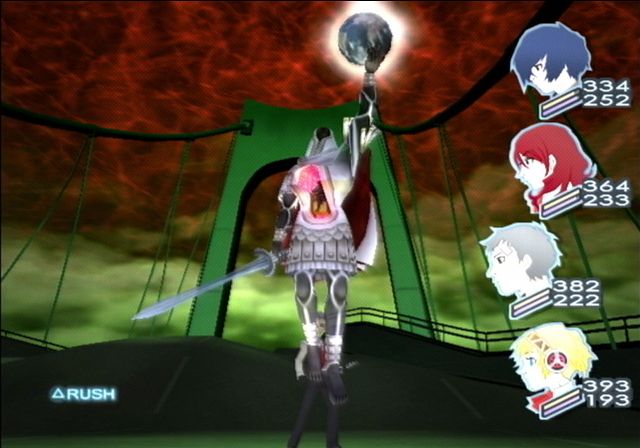
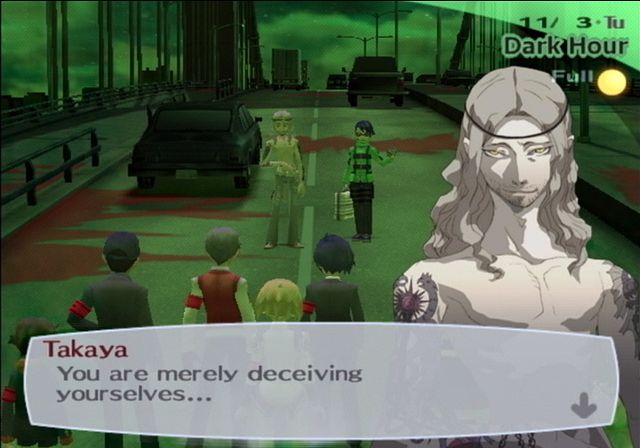
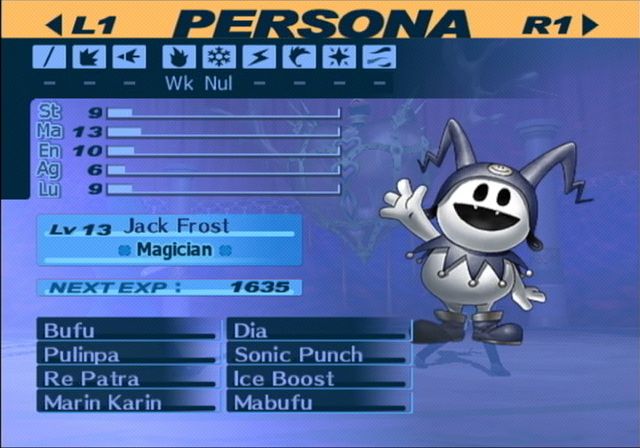
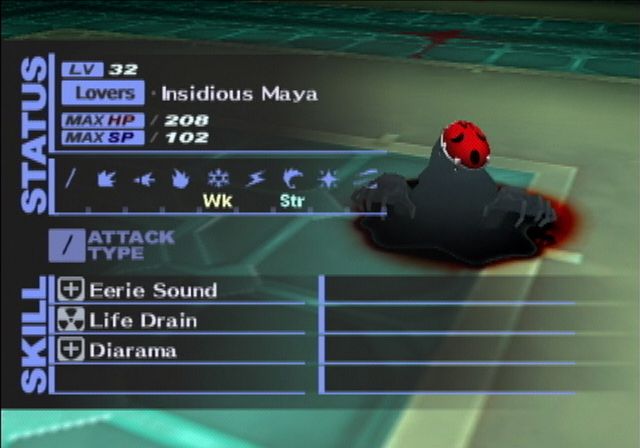
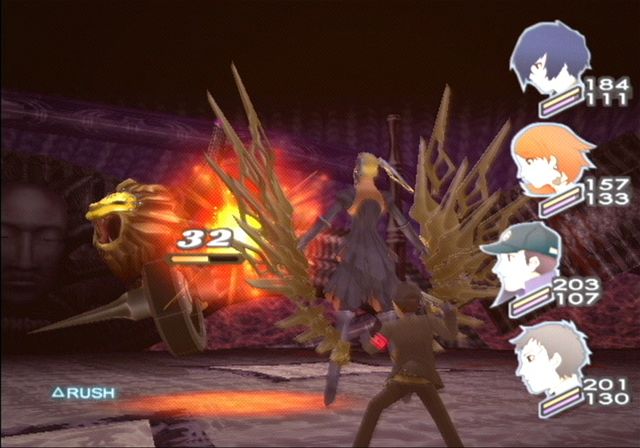
The monsters are visible on the dungeon floors, and if you try to catch them off guard by attacking them before they attack you, you get a player advantage in battle. Battles are the traditional turn-based RPG, but expect to fight anything but traditional RPG creatures.
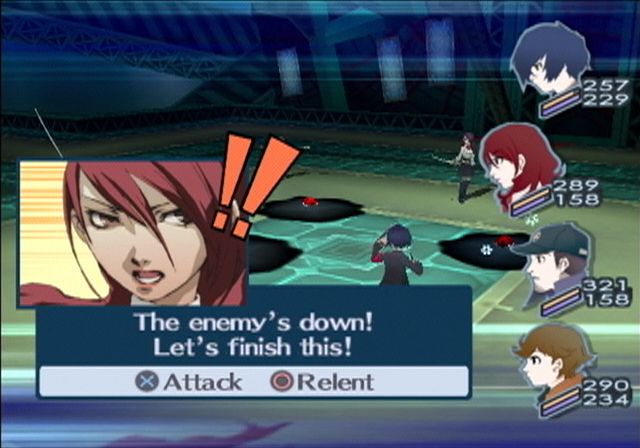
The Shadows are weird, and some of them are actually creepy. Your Personas will shine in combat, since each will have different abilities. Shadows also have weaknesses, so you can swamp Personas at any time during battle without losing your turn, and experiment to see what works best. If you find the weakness of a Shadow, you get an extra attack. If you managed to find the weakness of all the Shadows in a battle, your party has the ability to do an All-Out Attack, which is a combo attack where everyone jumps in to do some massive damage.
However, you don’t control the other party members directly. You only give them basic commands (support, attack specific target, act freely, conserve SP) and they will do the rest.
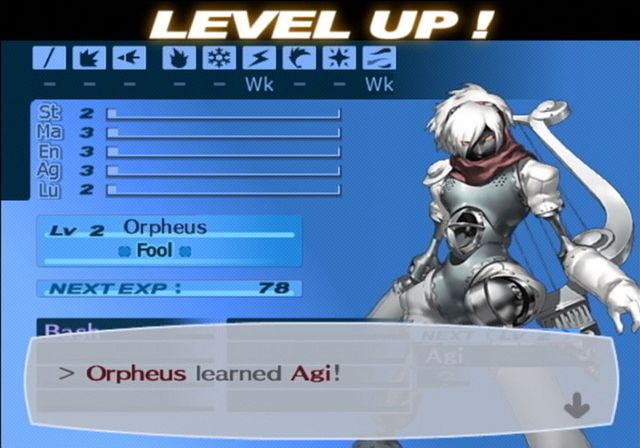
At the end of the battles, sometimes there are little events where cards are offered to you. You see what the cards are, they scramble, and then you pick one. Some of these are heals, experience boosts and even Personas. Initially, you can only carry a limited number, but later on that will increase and you will even have access to a “storage” where you can purchase other Personas. There is a special place, the Velvet Room, where you can get quests and fuse your existing Personas into new and more powerful ones, so there is a wide range of possibilities.
While the game doesn’t seem to be making full use of the system, it doesn’t look bad at all and the character art is fantastic. The voice acting is pretty good too, and as you can imagine, with so much social interaction, the dialogs are nicely done – even the “leet speek” from the MMO chatting.
SMT: Persona 3 had me from the initial anime scene. It was like watching any anime show on TV, it’s that cool. I like the freedom of choice to do whatever I feel like in a given day. I like interacting with other characters and finding out more about them. I like the weird story, the strange music the unusual monsters. And I just love the added touch of seeing the characters shooting themselves in the head to summon their Personas.
I’d recommend it to anyone looking for something other than the usual rated T fantasy RPG. The dark story is sure to draw you into an unforgettable adventure.
Special thanks to Aram Jabbari and Atlus USA for providing a copy of this title.