
Reviewed by Brandy Shaul
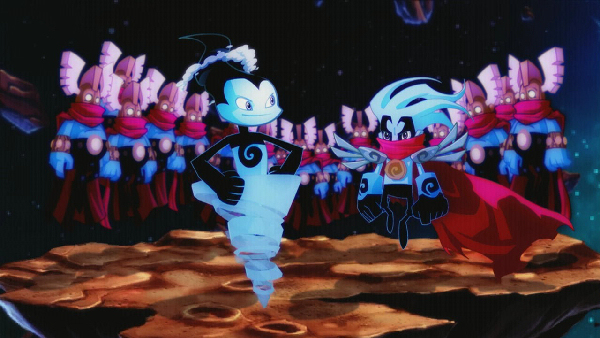
In Tornado Outbreak, you take on the role of a Wind Warrior named Zephyr, who has been hand-picked by the group’s leader Captain Nimbus to take over the reigns of the group and continue the Wind Warriors’ goal of creating sustainable atmospheres on otherwise lifeless planets.
However, before Zephyr can be fully promoted, a creature named Omegaton begs the Wind Warriors for assistance. Claiming that he has been betrayed by a group known as the Fire Flyers, he convinces Captain Nimbus, and by extension, you, into helping him retrieve his orbs of power that the Fire Flyers have hidden on Earth.
The game’s story plays out in short cutscenes before and after levels, but due to the fact that most players will be able to predict the game’s ending after just watching the opening cinematic, getting from A to Z lacks the draw that most storylines contain.
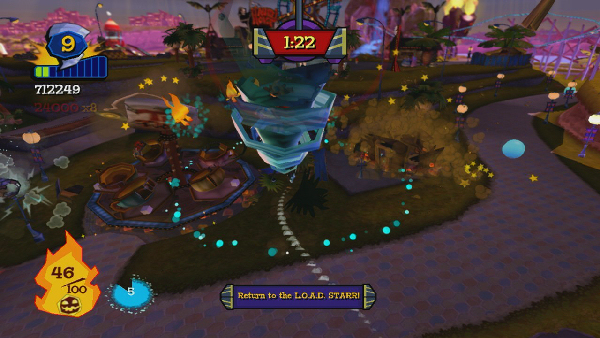
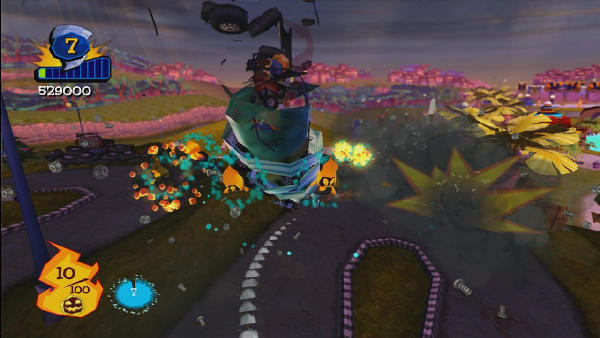
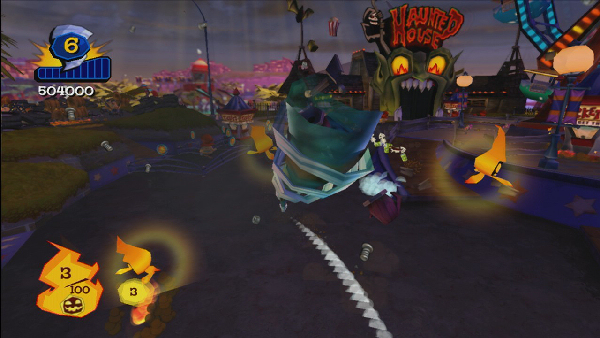

As such, the enjoyment level here rests solely on the shoulders of the gameplay, which is a surprisingly solid (and more importantly, fun) take on the Katamari Damacy formula.
Tornado Outbreak is a level based experience, with each level being broken into five stages. The first three stages are for Fire Flyer collection, while the fourth and fifth stages play out as mini-games.
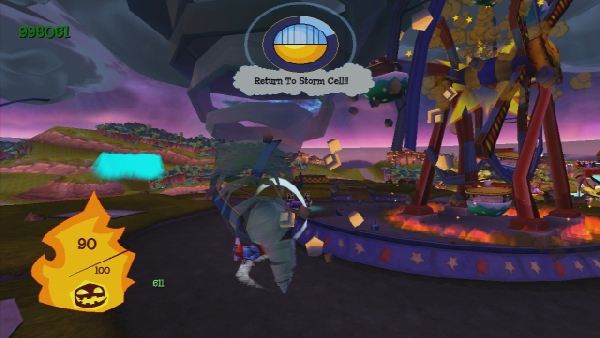
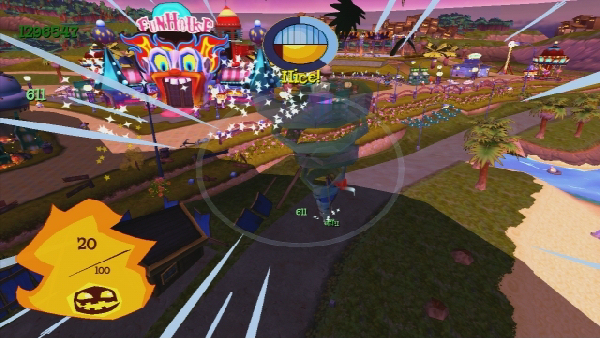
In the first three segments, you are tasked with collecting a wide variety of random Earth objects, which cause your tornado (Zephyr’s “tail,” if you will) to gain in strength and size, allowing you to pick up larger items. As you progress, the ground beneath certain objects will take on an orange glow, indicating that a Fire Flyer is hiding within it. By sucking said object into your funnel, you expose the Fire Flyer and automatically collect it, and can move on once you have collected at least 50 in each stage.
There are a few factors that add to the complexity of these stages. Most importantly is the fact that the sun’s UV rays are deadly to Wind Warriors, forcing you to remain in the shade through the entirety of the game. Shade is created by an object known as the L.O.A.D. STARR, but only for a set amount of time, adding a time limit to your activities as well.
After finishing each of the first three portions of a level, your actions trigger the growth of large totems from under the ground. This allows you to move onto the fourth stage of the level, where you take part in Vortex Races.
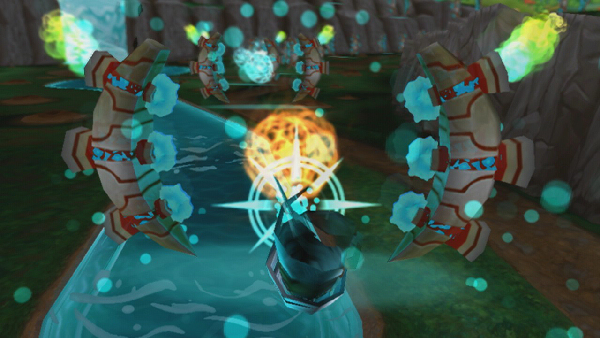
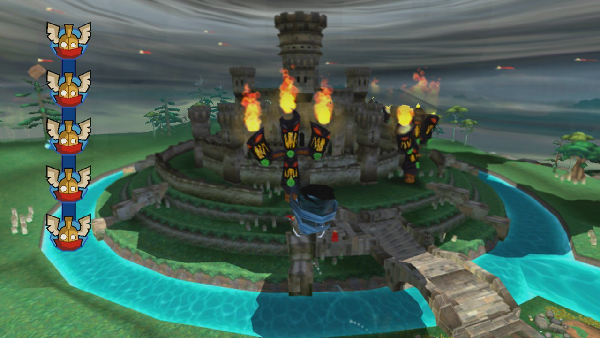
In Vortex Races, a ring of gates is situated around the newly exposed totems, and by activating the gates, you create a massive storm (or vortex) above the landscape, complete with moving clouds and patches of sunshine. The final section of each level then, sees you destroying the totems by navigating the moving clouds (think Frogger) until you reach the totems and destroy them via a button mashing sequence.
While the level designs are highly varied, taking you to three continents (North America, Europe and Asia) in search of Omegaton’s orbs, the gameplay itself never really changes. It’s a repetitive experience that maintains its charm through its humorous graphical design – a clever cartoon theme that features humans and animals with disproportionate features (small head with big noses, small arms with big bellies, and so on), and oddly shaped buildings and plant life that tie the look together.
The game’s difficulty also never really makes it past the casual level – even in the game’s climactic boss battle, if you somehow manage to die (which in itself would most likely only come about due to your own carelessness, rather then you hitting a rough patch) you are allowed to restart with all of your progress intact instead of reverting to the beginning of the stage, which makes the title very accessible to younger players.
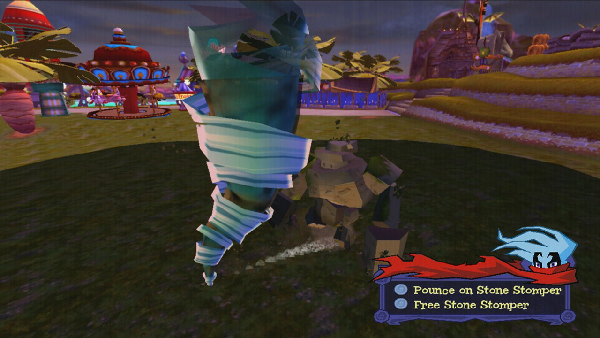
Helping draw in the older gamers are the hidden elemental creatures in each level, the finding of which require the utilization of two special moves: stone stomping, and dashing. Stone stomping is just as it sounds, and sees you bashing on the A button when you see a broken rock elemental, thus returning it to life, while dashing allows you to rescue water elementals in groups of two by breaking the bubble holding one and quickly dashing your way to the other before time runs out.
All of that being said, Tornado Outbreak is a relatively short experience that can be finished in two or three sessions, depending on how much patience you have for its repetition. There is a substantial amount of replay value here however, in that you only gain the ability to save elemental creatures after playing through a large chunk of the game, requiring that you revisit previous levels to save them all, and the fact that the vast majority of the game’s achievements are unlockable with enough practice.
All in all, Tornado Outbreak is a humorous take on the item collection genre that tries its best to set itself apart from its competitors via the addition of a few mini-game-like aspects, but unfortunately suffers from repetition in ways that something as absurdly random as Katamari Damacy does not. However, with the game’s ease and relatively inexpensive price point ($40), it’s an enjoyable way to spend a few hours time.
Special thanks to Brandon Cox and Konami for providing a copy of this title.