

Reviewed by Tiffany Craig
From Star Trek the Next Generation’s holodeck to the bleakness of the Matrix trilogy, virtual societies have inspired imaginations. The idea of our fantasies becoming reality entices us, who wouldn’t want our ideal worlds to seem real? But the undercurrent of mistrust we direct at our creations takes over and we also see a virtual world as the ultimate tool for our oppression.
Reef Entertainment / Parallax Arts Studio‘s Utopia City realizes these desires for tangible dreams and suspicions about our inventions and exploits our pessimism. Here it’s all gone horribly wrong. Megalomaniac manifestations have trapped humanity and now the planet is falling apart in their absence. Your quest is to destroy the ominous Mastermind computer system and drag your fellow humans back into reality so the world will survive.
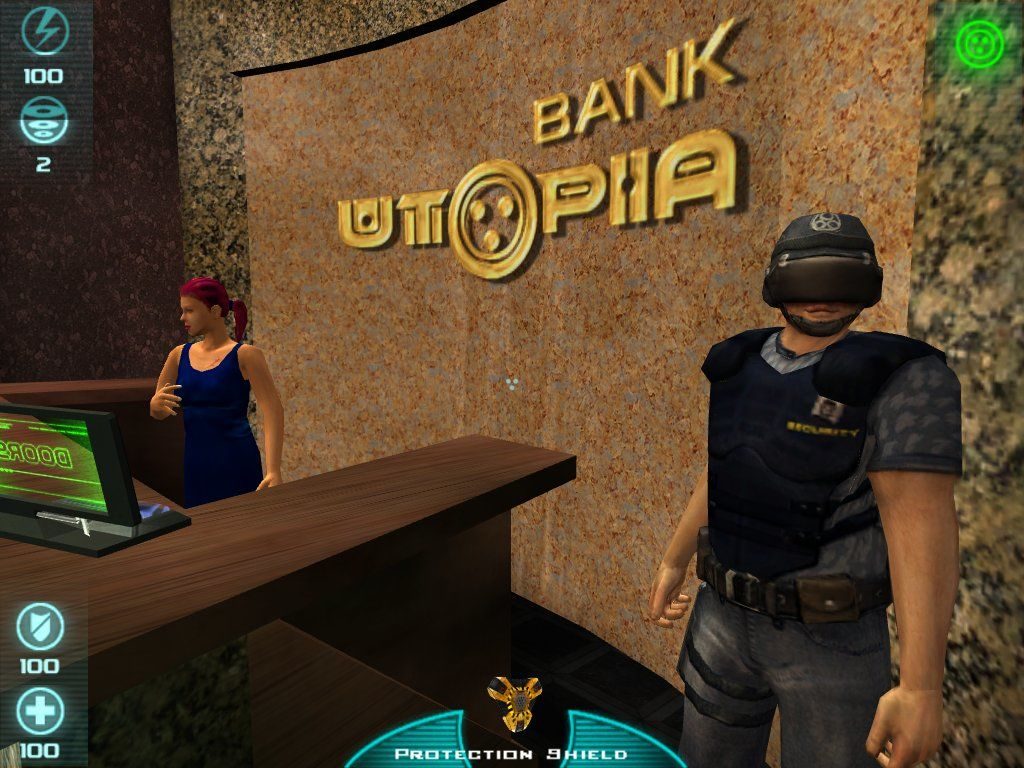
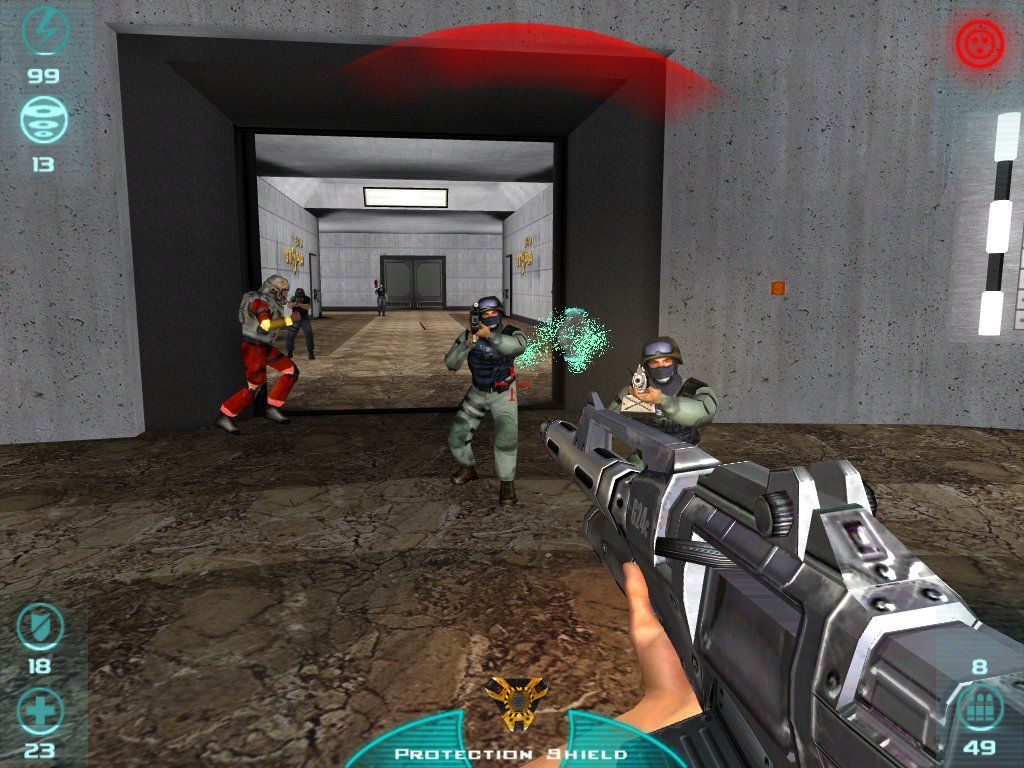
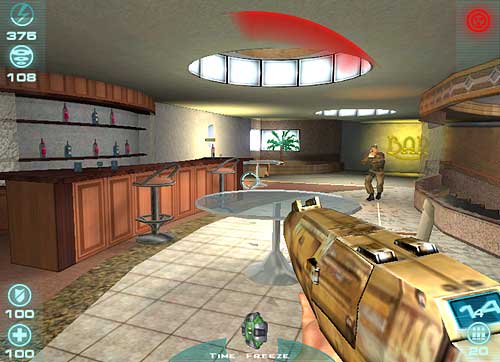
Choosing your way of heroically rescuing people from the clutches of a baneful super computer was never going to be easy. Yet, for some completely unfathomable reason the developers decided that point and click wasn’t going to be the way that you shimmied yourself around. Instead, they’ve complicated matters and you’re stuck with a keypad setup that’s unresponsive and awkward. Whilst the options say you can change the controls, the reality is Utopia doesn’t allow for the easiest and most common option of mouse movement. This makes even the most basic actions like walking left take what seems like eons.
Be prepared for a whole lot of trial and error within the actual game after you cipher how to walk. Evidently, a victorious outcome is from a combination of two styles of game play. The first is to go into a stealth Thief-esque mode where you crawl around in heating ducts and rely on your cunning to solve puzzles. The second is the shoot’em up, which I prefer but the enemies seem to be more fertile than frogs on Viagra and never seem to let up. Once your “Utopia City is angry” indicator goes red, it’s usually best to run, run away and come back to try again.
In combat situations against the plentiful guards, the best you can manage is the old two handed hunt peck and shoot approach. One hand hovers over the keyboard trying to move our hero, whilst the other one frantically uses the mouse scroll button to try to get your gun up. After you’ve finally lifted it, you can shoot your enemies. In the future, supercomputers have adopted the British standpoint and think random citizens carrying guns is a bad thing, so you can’t just wander around packing heat. Actually, the computer has a similar response to loitering in hallways, so you also can’t just stand around and sort out what to do. If you deviate from the game’s linear programming of where you should be and what you should be doing, then someone comes and tries to kill you. And again, you’re stuck fiddling with the inaccurate and slow weapons wondering what was the point to begin with. The subsequent frustrated pounding migraine after your 50th attempt at getting to the 4th floor makes it nigh impossible to even get past the first level.
Presentation of the game’s NPCs could influence your decision to keep fighting at all. They greatly resemble rejects from Something Awful’s Photoshop Phriday with their pixelated bodies and heads made of mangled cylindrical photos. They speak with exactly two different bored voices with about five babbling phrases. The one that makes sense, “no, don’t do it”, reminds me exactly of how I protested capture when playing army with some rowdy babysitting charges. Other sounds are intangible and mostly drowned out by the thin beat of the repetitive soundtrack. The worlds themselves aren’t innovative either; the whole thing wouldn’t have looked out of place as an original Duke Nukem level.
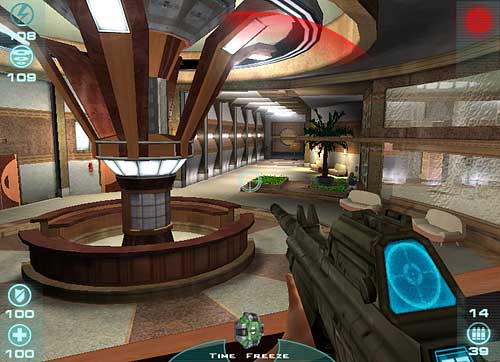
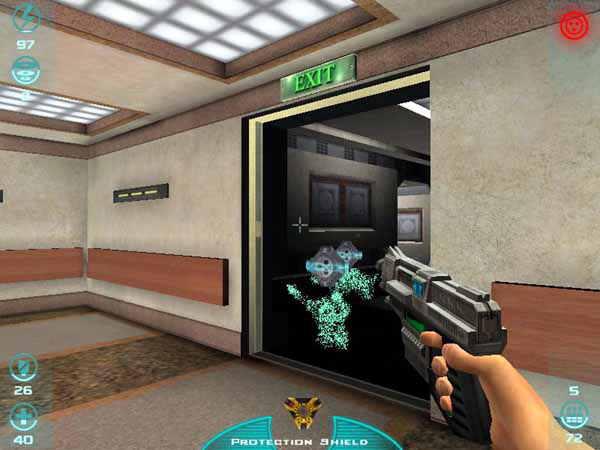
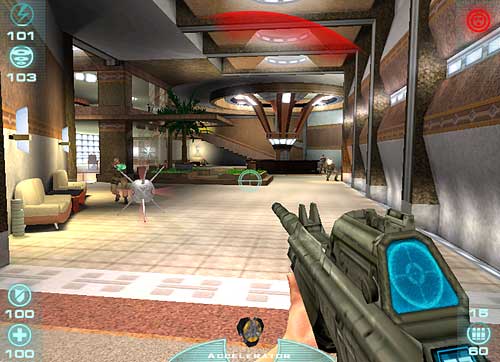
Taking inspiration from virtual reality nightmare scenarios, as tempting as it is, may have been unwise. Like many of the entertainment predecessors to tromp in the same territory, Utopia City looks dated. In comparison to other strategy or first person shooters, it falls miserably to the wayside in every single category that would inspire even a remote likeness. It might have been commended as an amateur effort, however, this game does nothing to justify the almost 30 GBP price tag.
There are some genuinely interesting ideas, like the choice between an artificial peace and freedom, or the ability to rescue people by adopting their programming. Unfortunately, Utopia City doesn’t allow expansion on these thoughts thanks to its many unforgivable faults.
Special thanks to Frazer Nash Communications and Reef Entertainment for providing a copy of this title.