
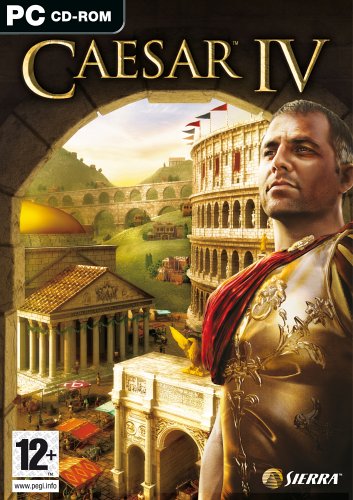
Caesar IV had my attention because of the developer, Tilted Mill. Being another city-building game from the same team who created Immortal Cities: Children of the Nile, I couldn’t wait to get my hands on it.
Like other games of the genre, Caesar IV is all about building and maintaining a thriving city while achieving certain goals in the process.
The Kingdom Campaign is aimed at new players, and the first stages are simple tutorials about the basics of building a functional city. This campaign spans through five stages of a career type of gameplay and it’s great to learn the interface and discover what makes a city work and how.
And while the interface may seem complicated at first glance, you will find it intuitive. The icons are self-explanatory and there are mouse-over messages that give you more info on what each button does. If that isn’t enough, you can get plenty of help by meeting with your advisors, who show you all kinds of statistics for labor, finances, trading, population, etc.
Aside from the Kingdom Campaign there is another one available from the start. The Republic Campaign is aimed at more experienced players, and completing it gives you access to a third one, the Empire Campaign.
In each stage you begin with an empty map with only a few roads. Look around and find your resources so you can plan ahead. You will soon discover that placement is very important, especially in terms of desirability of an area, so you don’t want your upper class residences next to the farms and factories.
You need to start small, because your city’s prosperity will depend on its citizens and the social classes they belong to. Social status is very important in the game, since each class has distinct jobs and functions. Plebs will be the main working force, providing food and basic goods such as wood and clay, as well as certain services such as engineers (they maintain your buildings) and prefects (the Roman firefighters and police).
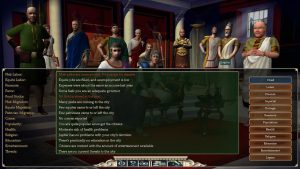 Next there are the Equities, which are the middle-class citizens. They work in healthcare, education, religion and entertainment, but they are also your tax collectors, and you really want those! They require more commodities than Plebs, for example fountain water and more diverse food and goods.
The Patricians are at the top of the social pyramid and although they don’t work, their needs ensure that the rest keep working and they pay taxes unlike the Plebs and Equities.
You can’t just pause the game and start building everything right away though. You must attract the lower classes first, so a few insulae and a well will provide them with a decent place to live. But you have to create jobs, so a few resource gathering outposts, factories and farms should keep them busy.
As your city evolves and with it the needs of your citizens, you must create living spaces for the upper classes by providing domus and villas as well as luxury markets, reservoirs, aqueducts and fountains, bath houses, clinics, theatres and so on. If people are unhappy, they will leave.
I found the greatest challenge to fulfill everyone’s needs resided in the size of the maps for each stage. Many times I would have to restart just because I couldn’t find enough space for everything or because my planning wasn’t good enough to keep everyone happy (read: no room for gardens to improve desirability). It’s like trying to cram a pile of clothes into a messy closet. You can’t do it without organizing first, and although a bit frustrating, it’s challenging enough to be rewarding at the end.
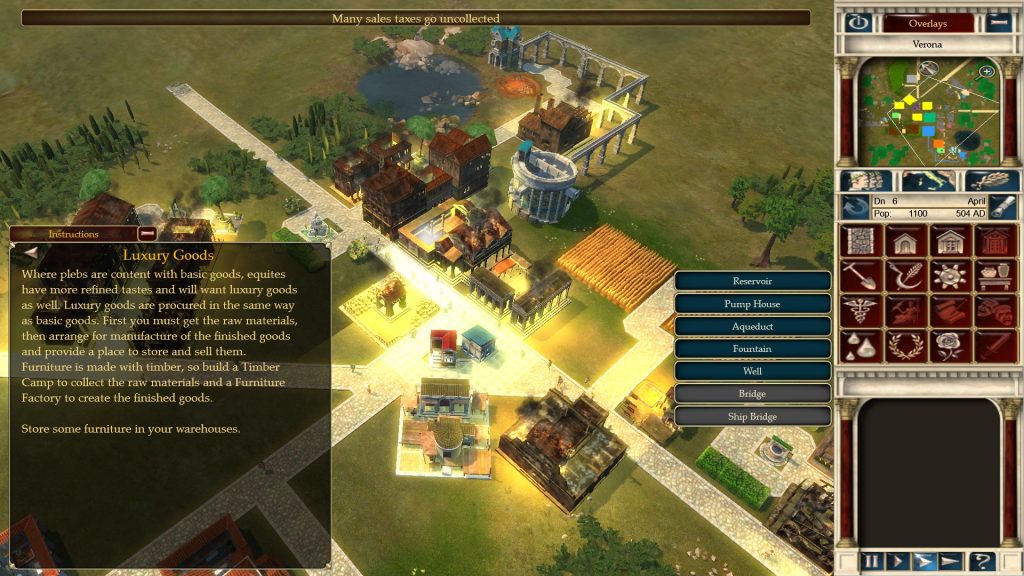
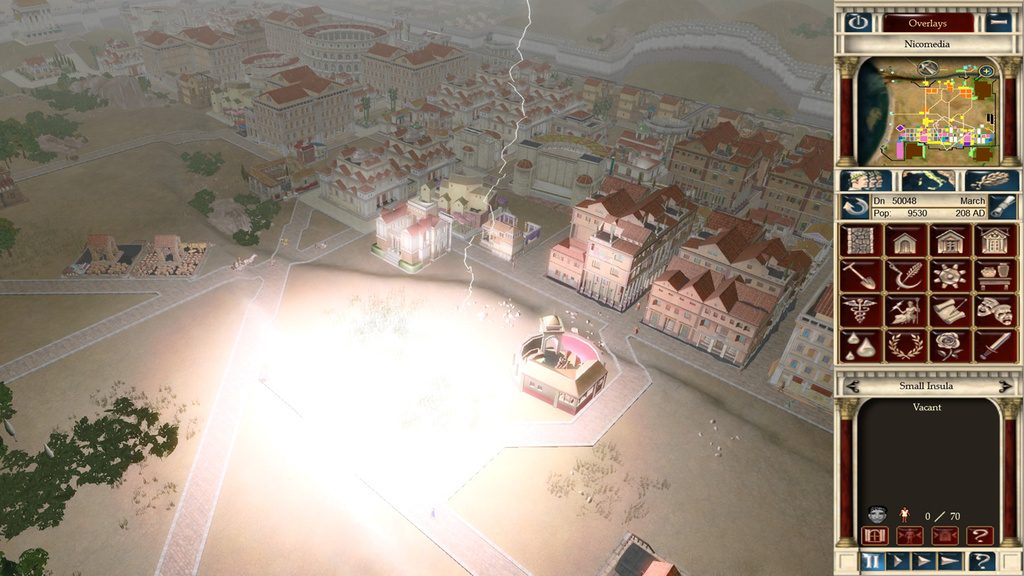
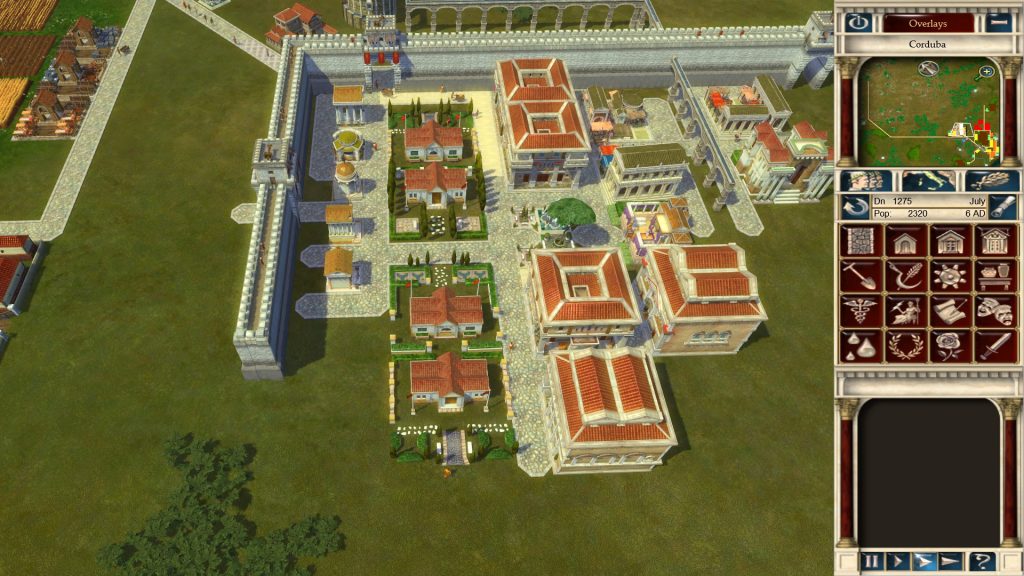
Also, not being able to just move buildings is a bit annoying, since I had to delete them and build them again someplace else, which turns out to be a big money loss when “remodeling” a city’s landscape. And I’m never happy with my city’s landscape, since I constantly think “this would look better if…”
Balancing the three social classes can be tough, especially since the lower ones can evolve into higher classes. It’s a really good concept and there are so many factors involved into keeping them all happy that at times you might find them too picky.
For example, when you start taking into account what the Patricians need, you will notice that you have to do a lot more than just build things. Sometimes you will have to establish trade routes to get the exotic goods they require and that generally means you will need to produce something to trade as well.
Trade is a very important part of the game, since it’s how you gain favor with Rome. As it turns out, the citizens of Rome sometimes lack a certain product and they will demand you send a certain type of goods. If you fail to send the orders within the time limit, your favor will decrease. You can also send a gift to Rome by using your own salary (as a Governor, you earn a small salary) and earn a little favor in return. Favor is many times a requirement to complete a scenario, so you have to pay particular attention to the orders, the time you have left to complete them and if your economy can support those orders.
I still can’t grasp the trading concept very well. I had pottery orders from Rome, and although I had plenty of workers gathering clay and lots of it stored in the warehouse there wasn’t enough pottery coming out of my factories quick enough to fulfill the order in time. I wish there was a way to speed up manufacturing by allowing more workers to work in factories.
The economy in the game needs a lot of micromanagement, so you have to keep an eye out on factories, markets and especially warehouses to see how you are doing.
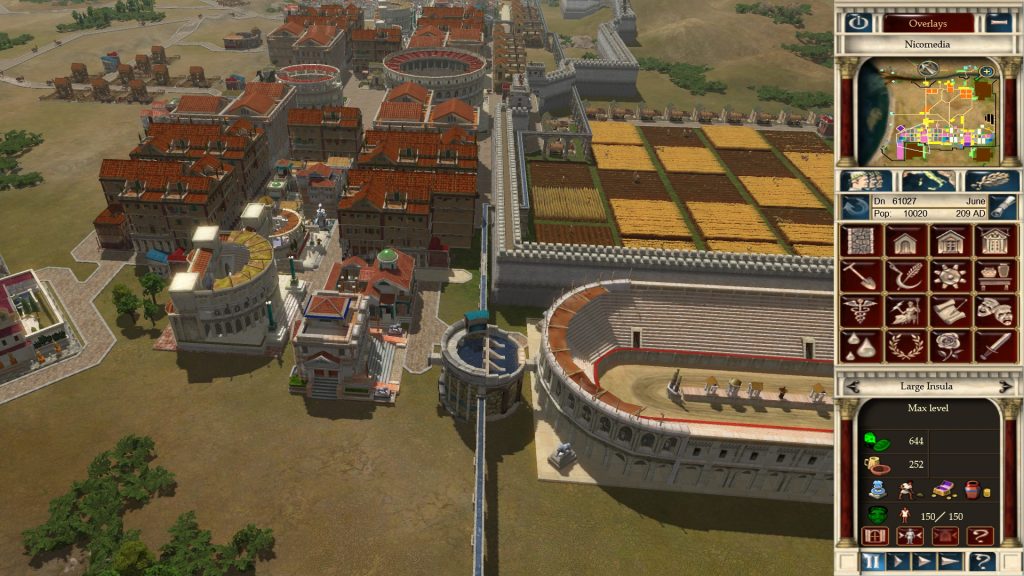
Caesar IV also has a small military component, but don’t expect too much of it since this is a city builder after all. In some cities you will have to deal with hostile neighbors, so recruiting legions is a must. You can also have city walls, but again, the landscape restrictions get in the way of building them unless you are willing to destroy parts of your city to build a piece of the wall.
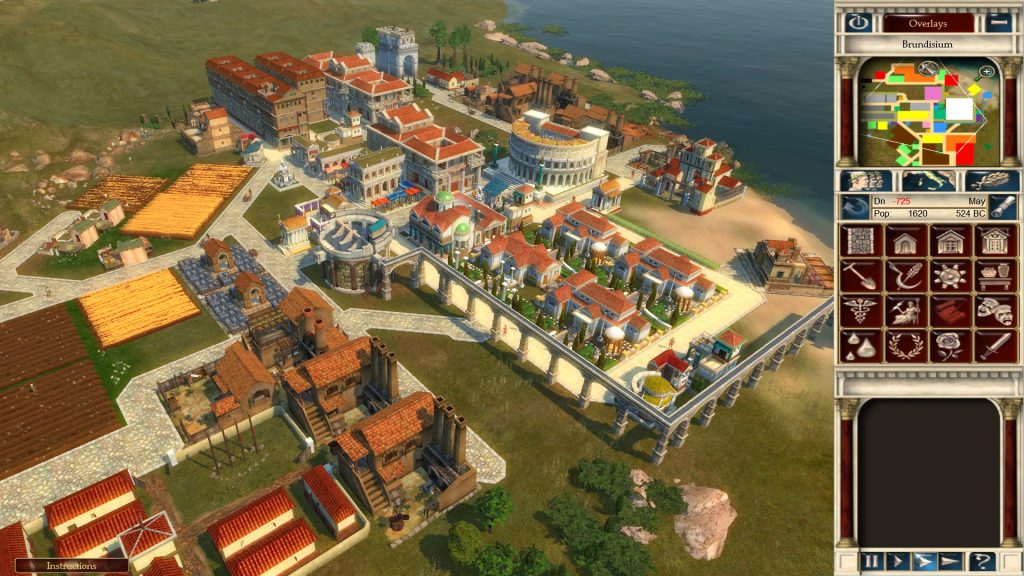
What I really enjoyed was to see how buildings evolve and how each class behaves on a regular day. You see Plebs heading out to the fields and harvesting, Equities getting water from fountains, Patricians going to the theaters. In some cases you can see what goes on inside the buildings, like an actor practicing at the school or people relaxing in the bath house. The cities look very much alive with its busy streets, boats coming and going, people carrying their belongings when migrating.
Aside from Campaigns, you have single scenarios to complete, a scenario editor, and there are even a series of online challenges where you compete with players around the world for the best score, most money, most population and so on. You can even download user made scenarios!
In the visual department, Caesar IV is very pleasant. The dynamic lighting effects for the day/night cycles are great, depicting early morning bright sun, to reddish sunsets, to dark nights. The water and its reflections look great, and looking at the buildings in the closest view is a delight, since you can see different instances of the same type of house and how similar yet different their elements can be (pillars, windows, balconies, arches). The only complaint I have about the graphic aspect is the character models, they seem a bit blocky. I would also have liked more control over the camera.
As for the sound, there are tons of lines that your citizens will utter when you click on them. And the musical score is really good, blending in with the game and adding to the atmosphere.
Caesar IV is one of those games I like to get lost in. The kind you play and what seems just a little later you look at the clock and realize hours have gone by.
I came, I saw, I loved it.
Special thanks to Eddiemae Jukes, Joe Selinske, Tilted Mill and Sierra Entertainment for providing a copy of this game.