
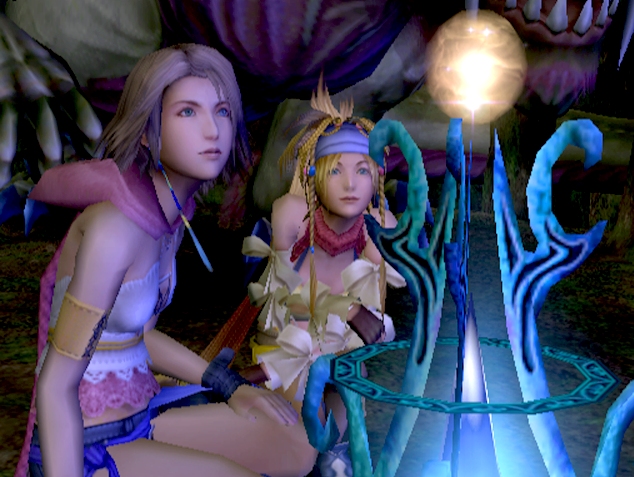
This review is more of a preview as I have just started playing this game since its release. If you are big into Final Fantasy X, be prepared for a shocker. Except for the general graphics of the game, it feels like a completely different experience. First off, you will have to get used to the weird J-pop funk guitar music playing in the background, which gets annoying sometimes but it’s easily tuned out after a while. Not to say it is all that BAD, but it is totally different from all other FFs since the usual composer is working on FF 12. The music is kind of fun to groove to but some of it gets kind of old quick (though it’s fun to watch Rikku on the airship as she stands in place and grooves herself!)
The overall structure of the game is completely different from other FFs – it is mission-based, which allows you to explore much more freely. However, there are certain locations designated as “Hotspots” which are places you need to go in order to advance in the general storyline. Plus, you don’t really want to just go to the Hotspots because there are many other places to visit that have tasks. It’s kind of nice that you start out with your airship instead of having to get it later in the game. If you’ve played FFX, most of these locations will be quite familiar to you. Even some of the secret side paths are still there (and still may have secrets).
In every FF game, Square needs to have some kind of flashy cool special battle animation sequence. In FFX it was the Aeons – in FFX2 it is the “dresspheres”. If you were worried about this game seeming kind of “girly,” well, I guess that’s understandable. But don’t think of it as the girls changing outfits to match their lipstick – think of it more like changing job classes as in past FF games you may have played. It lends a whole new complexity to the game as each of the girls can become different classes, their stats change when they change. These dresspheres are “equipped” into what is called a “Garment Grid” (I know, I know). The Garment Grid has slots where the dress spheres fit, and during the battles you can change into different outfits but only whichever ones are adjacent to the current outfit in the grid. Most grids have statistic boosters which add to certain stats during one battle, or added abilities as you change from one outfit to another. Some grids have effects that are present while you are using that grid (which you can only change outside of battle).
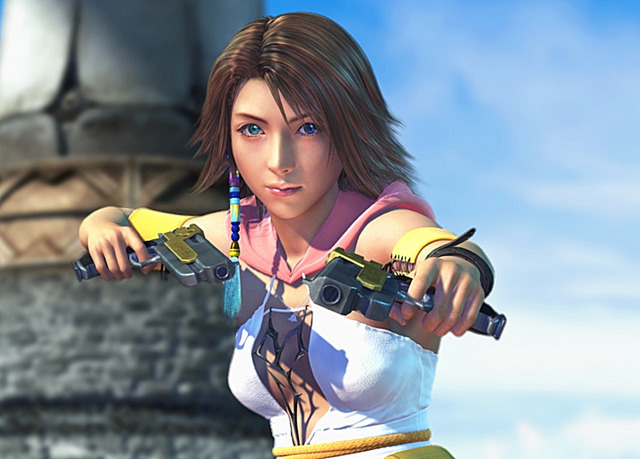
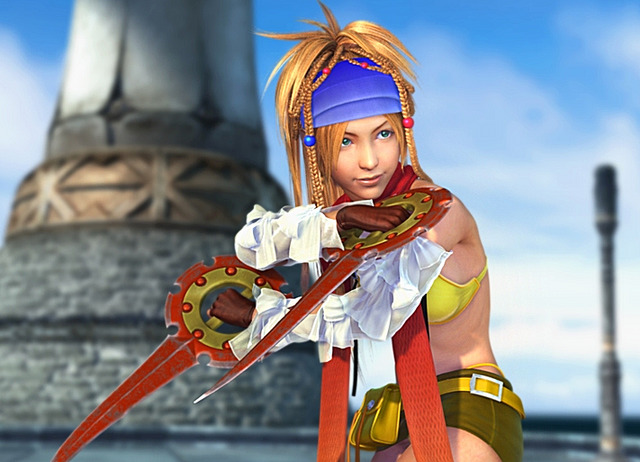
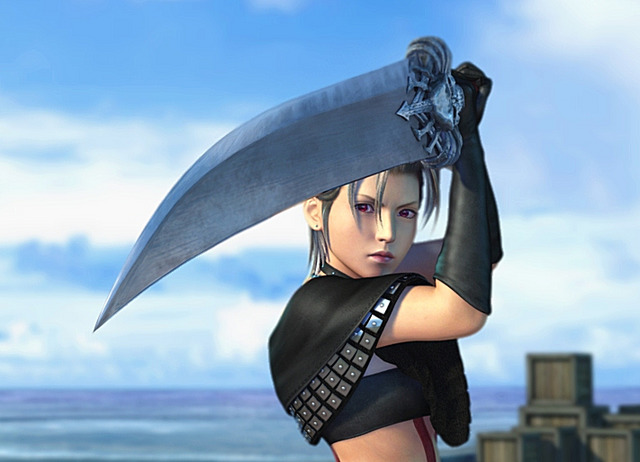
Also, as they wear the outfits through gaining experience, they learn new abilities for that outfit. So it behooves you to try to plan in advance who you want wearing what most of the time, especially as you gain more dresspheres, so that you can maximize your abilities amongst the three characters.
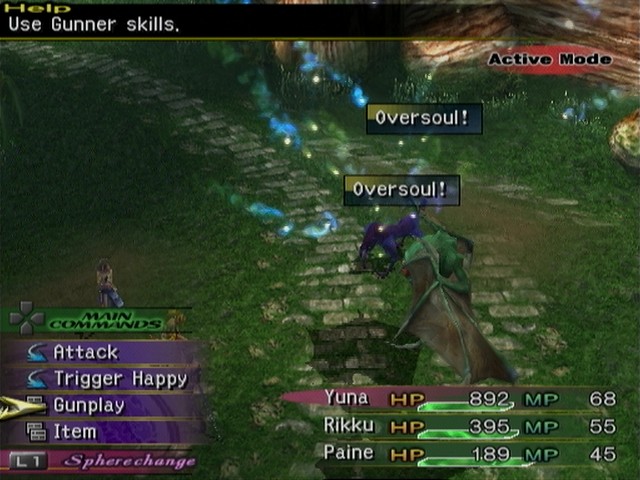
Active time battle is back! However, it is also more complex than the ATB that we all knew from previous Final Fantasy games. Different outfits and abilities give your characters different time gauges. Also, using items is not immediate either – that too is subjected to a time gauge whose length depends on the item. There is also the concept of “Chain Attacks,” which happen if you attack with one characters right after another and causes more damage than usual. Also, a character can get interrupted by an enemy hit during her turn – the good side to this is that you can do this to the enemy as well. FFX-2’s battle sequences seem to be more “real time” than its predecessors, as there is no waiting for one character to finish a turn for the next as long as you issue commands quickly enough, and it’s possible for your characters to attack simultaneously. Plus it’s kind of nice when you can squeeze that extra “Cure” right after the monster is dead! Another strange aspect is that your characters don’t stand in the same spot they started in – this can get a little annoying since there doesn’t seem to be a way to rotate the camera angle and sometimes it’s hard to see where everything is, though the game does rotate the camera for you when it deems necessary. Location does have an effect – if you are far from the targeted enemy, your run time is increased so there is a better chance you may be interrupted en route.
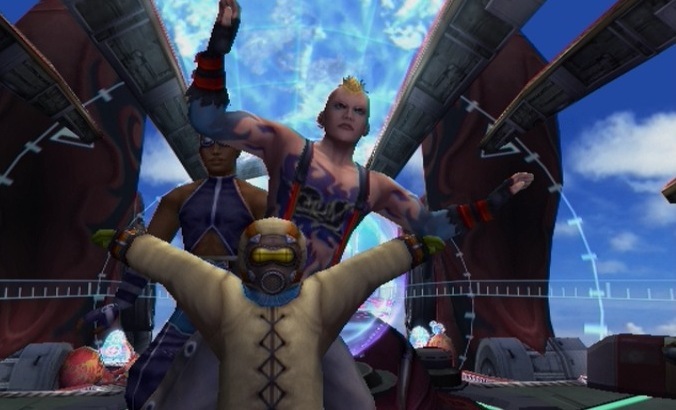
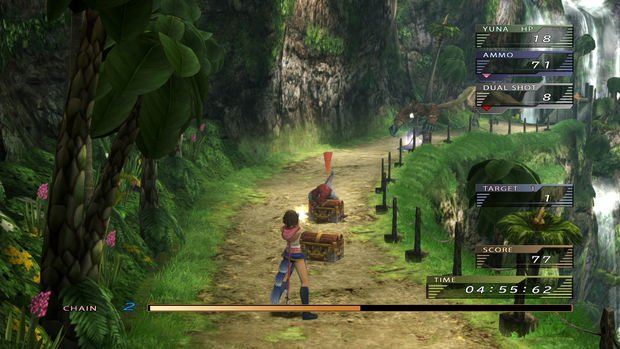
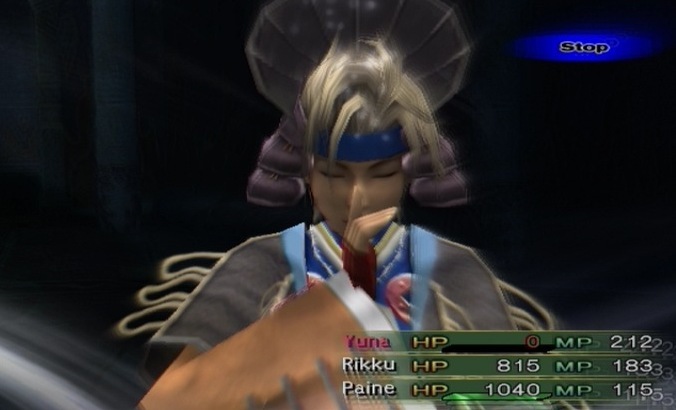
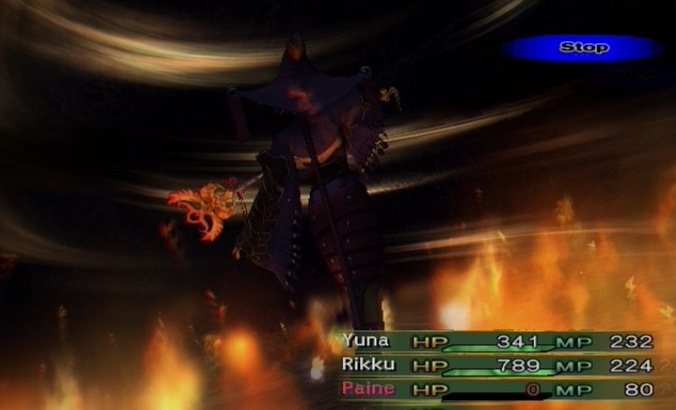
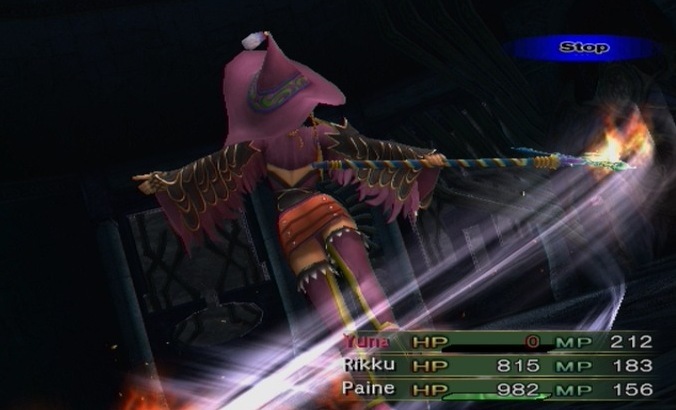
Another interesting addition to battles is the “Oversoul.” If you remember Overdrives from FFX, this is kind of the same idea, except for the fiends, not your players. What happens is that if you kill a certain number of one type of fiend (also I think the total number of fiend kills adds to this), the fiend goes into Oversoul and is much stronger than normal, though the pilfered gil and stolen items are also better than for the regular version of the fiend. This can happen anytime during the fight, not just at the beginning, which can throw you off a bit.
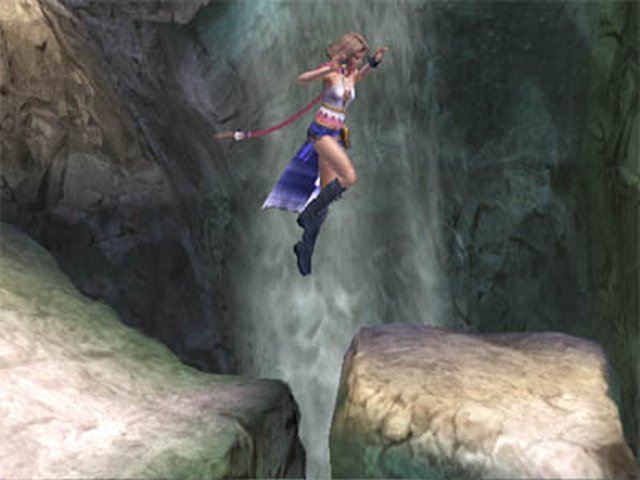
In certain areas, you will need to make Yuna jump or climb instead of just running. In some previews I saw, it seemed like this was a no-brainer since she would stumble a little if you ran her up to the edge without jumping, but she wouldn’t actually fall off. However, there ARE locations I have seen where you can also walk off the ledge and down instead of jump. This makes finding secret treasures all the more difficult! Jumping and climbing however are kind of dumbed down – it has nothing to do with actual timing of when you hit the jump/climb button, but as long as you have it held down as you approach the jump/climb point. Of course, in FFX in order to run you held down the same button, so you might be used to doing this already (running is automatic – to walk you have to press the analog stick lightly).
Throughout the game, you will see how much of the storyline you have completed in a percentage. Completing missions obviously contributes to the percentage, but there are many other little things you may miss because they seem trivial. Also it’s rounded to the nearest whole percent, even though many tasks contribute only a fraction of a percent, which makes it even harder to figure out what affects the storyline. So don’t miss out on places you haven’t visited before visiting a Hotspot, otherwise you may miss out on crucial percentage points. There are different endings to the game, depending on how much of the storyline you completed, though you can win the game without 100%. Of course, you will strive for 100% to see the “best” ending, and this is possible in a single game. What’s not possible is to see every single scene of the game, as there is a certain point where the storyline splits off and affects future scenes. There is a new feature that enables you to keep all your dresspheres, garment grids, Al Bhed primers, etc. when you start a new game.
There are mini-games again – and there seem to be more than what was publicized. I mean, a lot more. And yes, Blitzball is back – but it doesn’t seem to have as big of an impact on the game as the previous version. It is also a bit different, but I will have to talk about that when I get to it! There don’t seem to be any mini-games so far that have as huge of a part of the game as Blitzball did. Sphere Break probably comes the closest – which is basically a game that tests your basic math skills.
Overall this game is very promising – it has such a different feel from FFX in terms of its fast pace, and they have definitely improved on the graphics, which seem crisper. It’s still odd that there are some scenes that seem to be more detailed in facial expressions than others – but it is still worth it for those enhancements. Also, I was impressed with the intro FMV, which appears to have been redone to better match the English translation (the rest of the regular game so far doesn’t seem to be retouched quite as nicely, though). The script is also light-hearted in general and sometimes pokes fun at itself (“She doesn’t look pregnant.” – Rikku, in reference to the fact that Lulu’s character doesn’t seem to have been re-rendered to accommodate a baby). The game concepts seem a bit complicated at first but you can get the hang of it easily enough.