
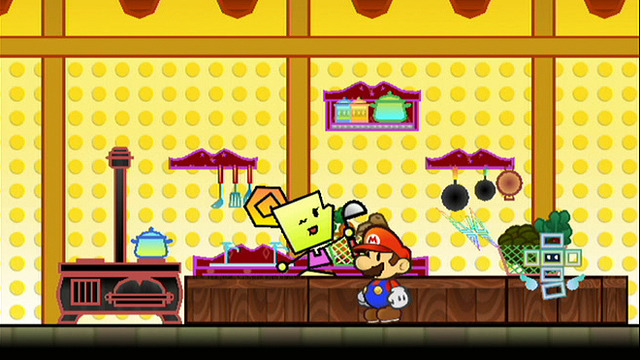
As traditional as the story it can be, Super Paper Mario begins with news of Peach’s kidnapping. But this time, Bowser isn’t behind it, and soon enough the real villain appears and kidnaps everyone else… except Mario. The villain, known as Count Bleck, is forcing Peach to marry Bowser in order to create a Chaos Heart, a mysterious artifact that threatens to destroy the universe. It’s up to Mario to save the day, but fortunately, he won’t have to do it all by himself.
A butterfly-like creature known as Tippi the Pixl wakes Mario up and tells him she’s there to help him find his friends. In the town of Flipside you learn that Mario fits the description of the legendary hero, the one who can gather the eight Pure Hearts and restore the world’s balance.
Most of Super Paper Mario is conventional 2D platform gameplay. However, early in the story Mario finds someone who teaches him how to flip into 3D. Flipping into 3D turns those flat-looking levels into something very cool, showing you secrets that you couldn’t see before in 2D: hidden paths, platforms, coins, blocks, sometimes even certain key characters. It helps you progress through what initially may seem like impossible obstacles. However, there is a time limit to be in 3D mode. The meter gradually decreases as you walk around, and if it empties, Mario will lose HP.
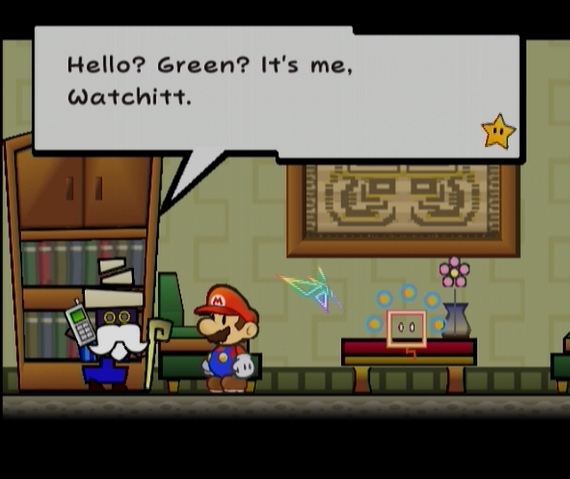
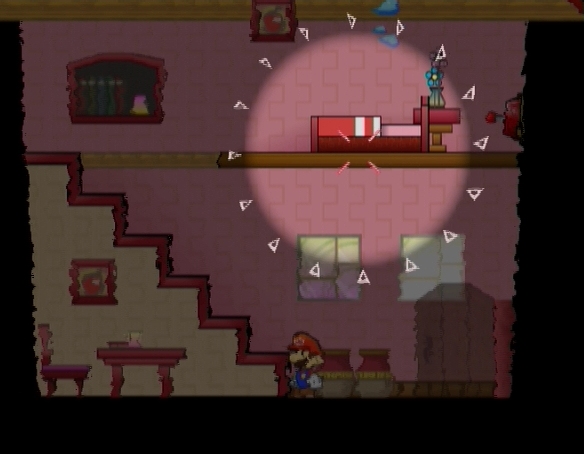
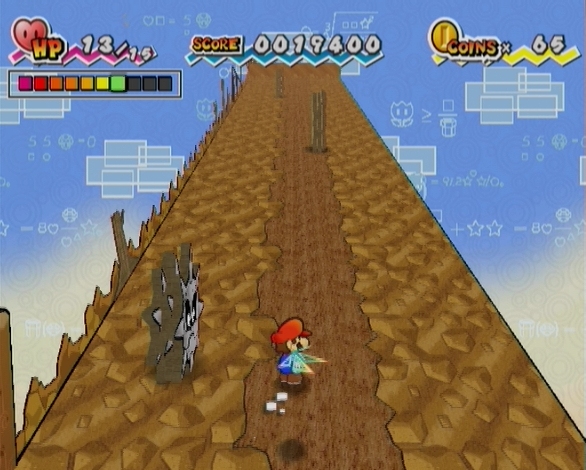
The game controls by holding the Wii-mote sideways, moving with the D-pad and using 2 to jump and 1 to activate the current Pixl helper. Shaking the Wii-mote while attacking makes Mario do some cool moves that give you extra points. Pointing the Wii-mote at the screen activates a help feature: Tippi will tell you about whatever you point at and she can even reveal secret doors or platforms that you can’t see.
There are many Pixls to help you along the way, but you will have to find them or rescue them first. Thoreau is a handy little fellow that picks up enemies and objects and lets you throw them. Boomer is a bomb that you can use to break cracks to find hidden passages or attack enemies, even flip switches. Slim lets you turn sideways, which lets you squeeze into narrow passages and prevent from taking damage as long as you stay still. Carrie is a floating platform that can safely carry you across spikes. Fleep can turn pieces of the background around to reveal secrets. Thudley lets you ground-pound to activate certain switches. Cudge is a hammer that can break large yellow blocks. Dottie shrinks you to flea-like proportions.
You can only have one active Pixl at any given time, not counting Tippi. In later levels, you will switch between them a lot so you can advance your game.
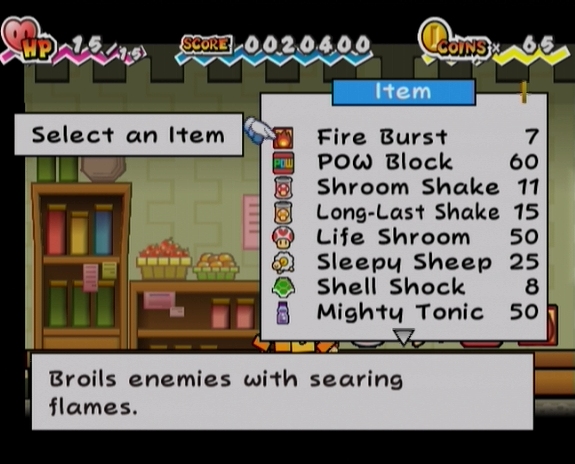
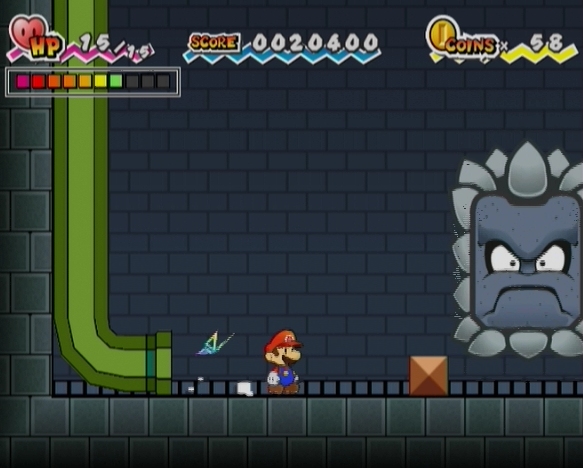
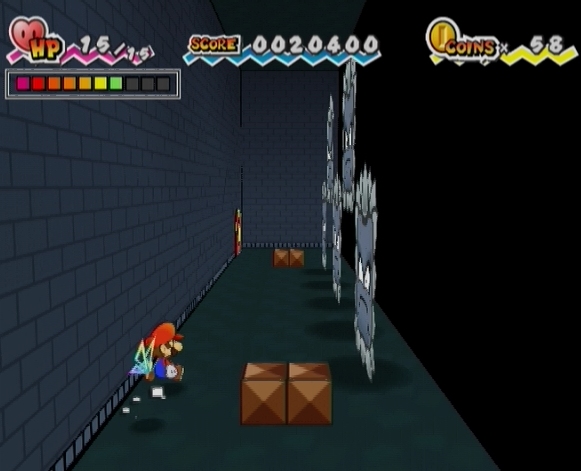
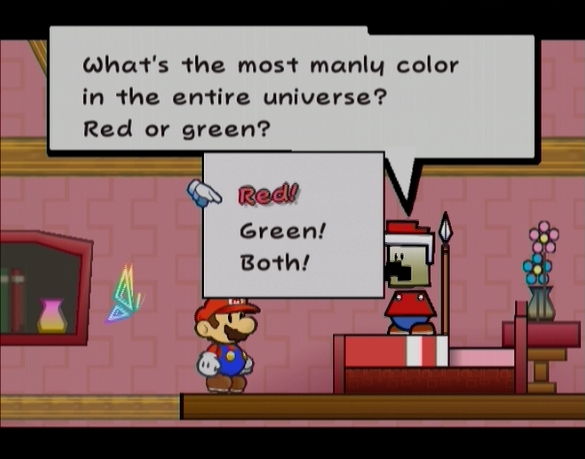
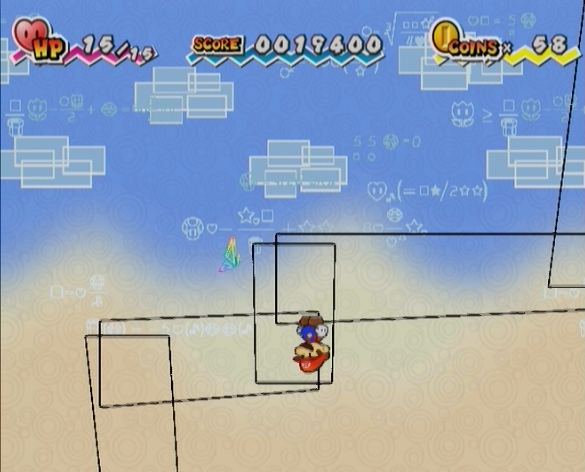
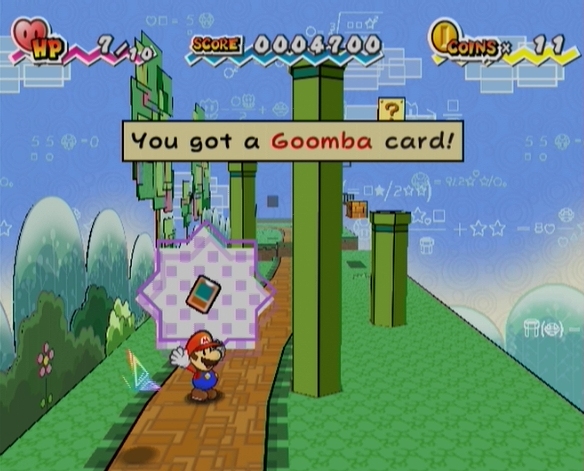
Many RPG elements have been added. There is an inventory where you can hold useful items (restorative, attack, defense) and there’s a store where you can use your coins to purchase some of these items or sell what you don’t need. There’s a recipe system that lets you create more powerful healing items by using certain ingredients. There’s a huge collectible card list as well. The level-up system is represented by your total score, you gain points by defeating enemies and breaking blocks. By leveling up, your character’s HP and attack will increase. There’s even an inn where you can spend the night at to restore your HP to full.
There is also a party, although you only get to control one character at a time, each with his/her own special ability: Mario can flip into 3D, Peach can float to jump longer distances, Bowser spits fire and has higher attack, Luigi’s jumps can reach higher places.
All the characters can use the Pixls as well, so you will mix and match all the way through the eight chapters to solve those environmental puzzles and defeat the bosses with everyone’s special abilities.
The different worlds of Super Paper Mario are very vibrant. I especially like the initial presentation of a world as you enter it, and the scenery sketches and then colors itself in.
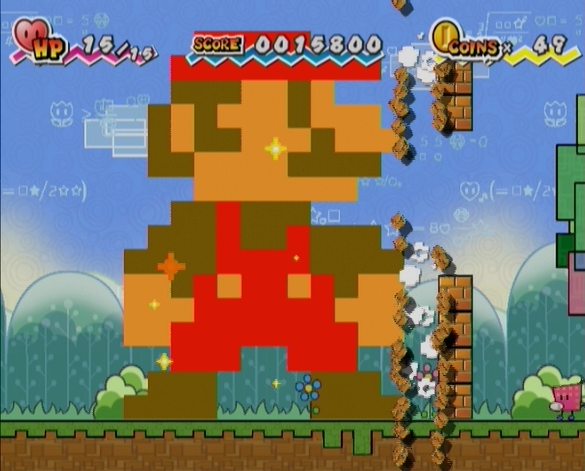
The characters are colorful and some of the levels are reminiscent of those in the original Super Mario Bros. A few other elements of the classic Mario game have also been included, for example, when you pick up a Star, you grow to gigantic proportions of an old pixelized version of your character and destroy everything in your path.
The cast of characters is as colorful as the graphics themselves. Most of them are just plain hilarious, and some of the dialog (all in text, unfortunately) is extremely humorous. I mean, what other game has an Italian character singing in a bathroom stall, in space, asking for toilet paper? And no, it’s not Mario.
The sound effects are music are pretty cool and fit the light tone of the game. I especially like the sound Mario makes when you flip to 3D and fall, it’s a cute kind of panic.
Two nice touches that I found in the game were the Arcade in Flopside where you can play a few mini-games, and a sort of hint system coming from the town’s psychic. If you’re stuck, she will look at the Crystal Ball and tell you what to do next, but it will cost you!
Super Paper Mario is fun to play, easy to control, has an interesting plot and sub-plots, and offers a great deal of challenge with so much puzzle-solving all over the place, some that actually leave you scratching your head in amazement. The 2D to 3D transitions are amazing and the level design is extremely clever and well done. For the completist, there are all those recipes and cards to find and Arcade scores to beat.
Super Paper Mario is a pleasant game with lots of charm that you really don’t want to miss.
Special thanks to Julia Roether, Allison Guillen and Nintendo for providing a copy of this title.