
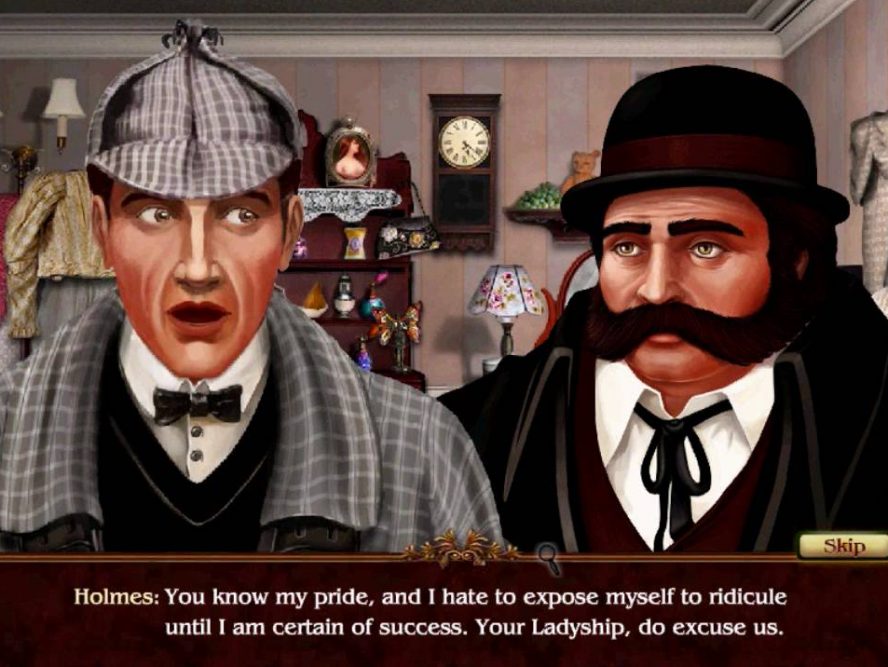
A casual mystery/puzzle based on Sir Arthur Conan Doyle’s famous Scotland Yard detective, The Lost Cases of Sherlock Holmes actually presents us with several interesting cases, stories and characters.
In the game, you play as Sherlock Holmes and Dr. Watson as they work together to solve the 16 mysteries around London.
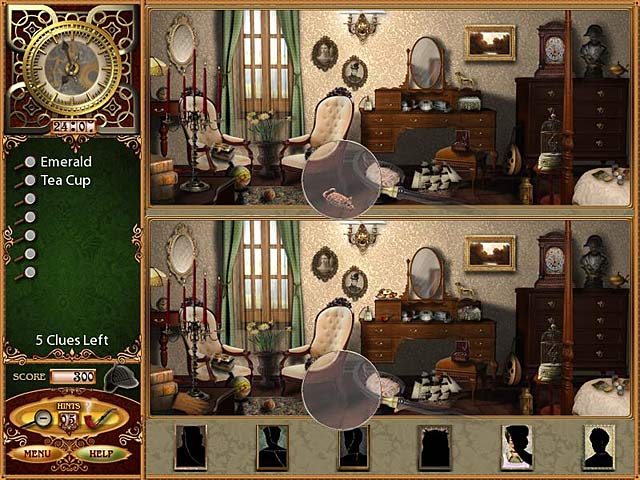
The basic gameplay for solving a case is composed of a mix of several activities, starting by spotting the differences within a time limit. Here, you are given before and after photos, and your job is to find what is missing, what was added, and what was moved. The little magnifying glasses on the left will indicate how many you still need to find. You can use the magnifying glass to zoom in on something. A few extra items – Sherlock Holmes’ hat and pipe – are usually hidden in the scene. The pipe gives you an extra hint, and the hats will unlock the Laboratory game. Clicking on wrong places several times will deduct time from the clock, while finding several differences quickly will give you a speedy bonus.
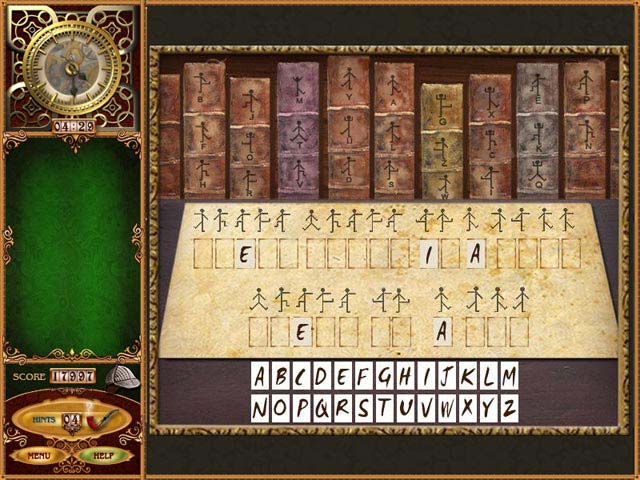
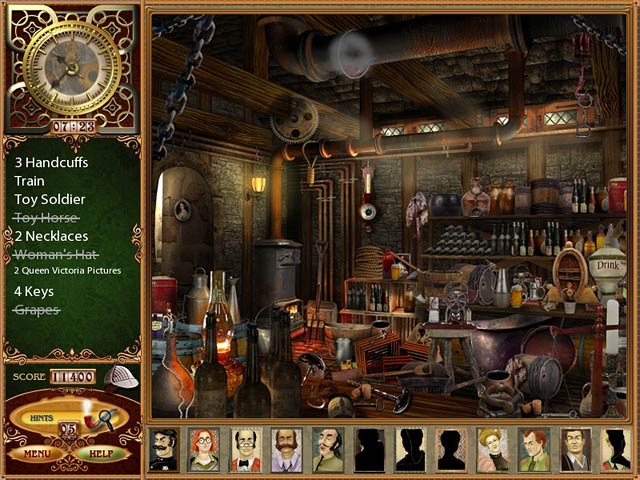
Some of the objects you find trigger mini-games, always in the form of puzzles. For example, put a ripped sheet of paper together, open tricky locks, place the pieces of gems on their respective spots on a collar, arrange items in a container in a way that they don’t overlap, and so on.
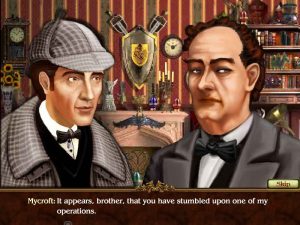
As you find the differences, these will add up to a suspect. Once there is enough evidence to suspect someone, there will be a dialog scene about what that person may have been doing at the scene.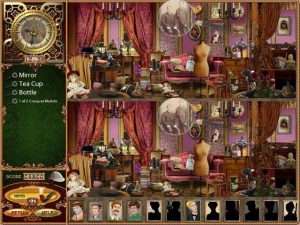
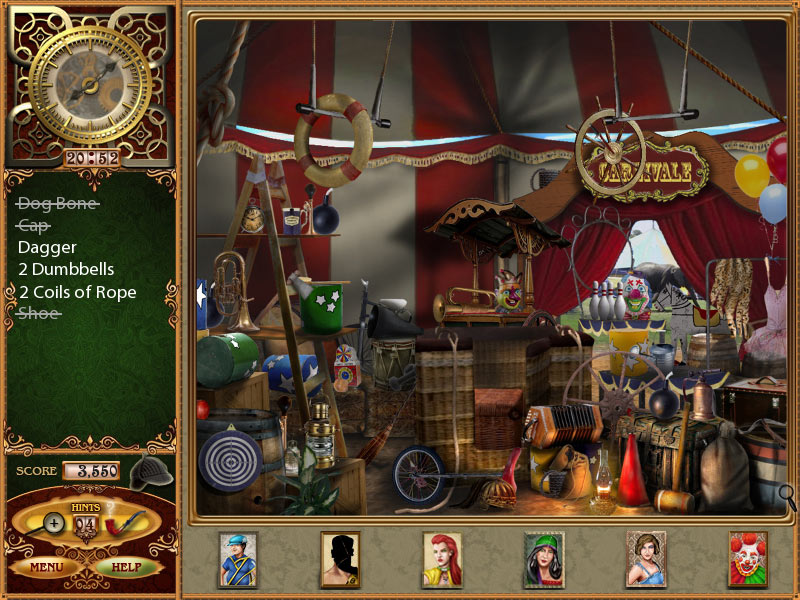
The next step is to look at another scene and find a list of items. Some are fairly obvious, others are hiding so well and blending in with other objects in such creative ways that you will be glad you found those pipes for extra hints.
The last step in a case is organizing your suspects by rows and columns. Each row and column will have a particular attribute, and you must match each person with the correct ones, always by swapping two of the pictures. For example, the row is “female” and the columns are “glasses”, “white hair” and “blue clothes”. You must arrange the photos you were given and place everyone in the appropriate spots.
 After all suspects have been “categorized”, each will be associated with an object. You have to memorize those objects and who they belong to, and in the next step, one of the objects will change. This starts an elimination process to find the actual culprit. Once you do, there will be a scene with a summary of the case, and you move on to the next, back to the area map to begin solving another mystery.
Keeping in mind that this is a casual game, I found that The Lost Cases of Sherlock Holmes looks quite nice and there is a lot of detail in the object finding scenes. The character artwork isn’t too bad, the voice acting – yes, there is voice acting! – is very well done, and the dialogues are extremely well written.
Granted, finding hidden objects and solving clever puzzles isn’t for everyone, but these Lost Cases are worth being found and played.
Special thanks to Lauren B. Tascan and Legacy Interactive for providing a copy of this title.